Market outlook
Stable Outlook 7/10
The card’s value is supported by Charizard demand and nostalgia, but it is not constrained by vintage-era scarcity. Modern premium reprints typically hold value best in high grade and sealed-product context, while raw copies tend to stabilize as supply enters the market.
Next months. Likely to remain range-bound with modest price swings tied to grading supply and sealed product visibility.
Long term. Likely to appreciate gradually, especially in graded 10 or equivalent gem-mint condition, but with lower upside than vintage Charizard cards.
History
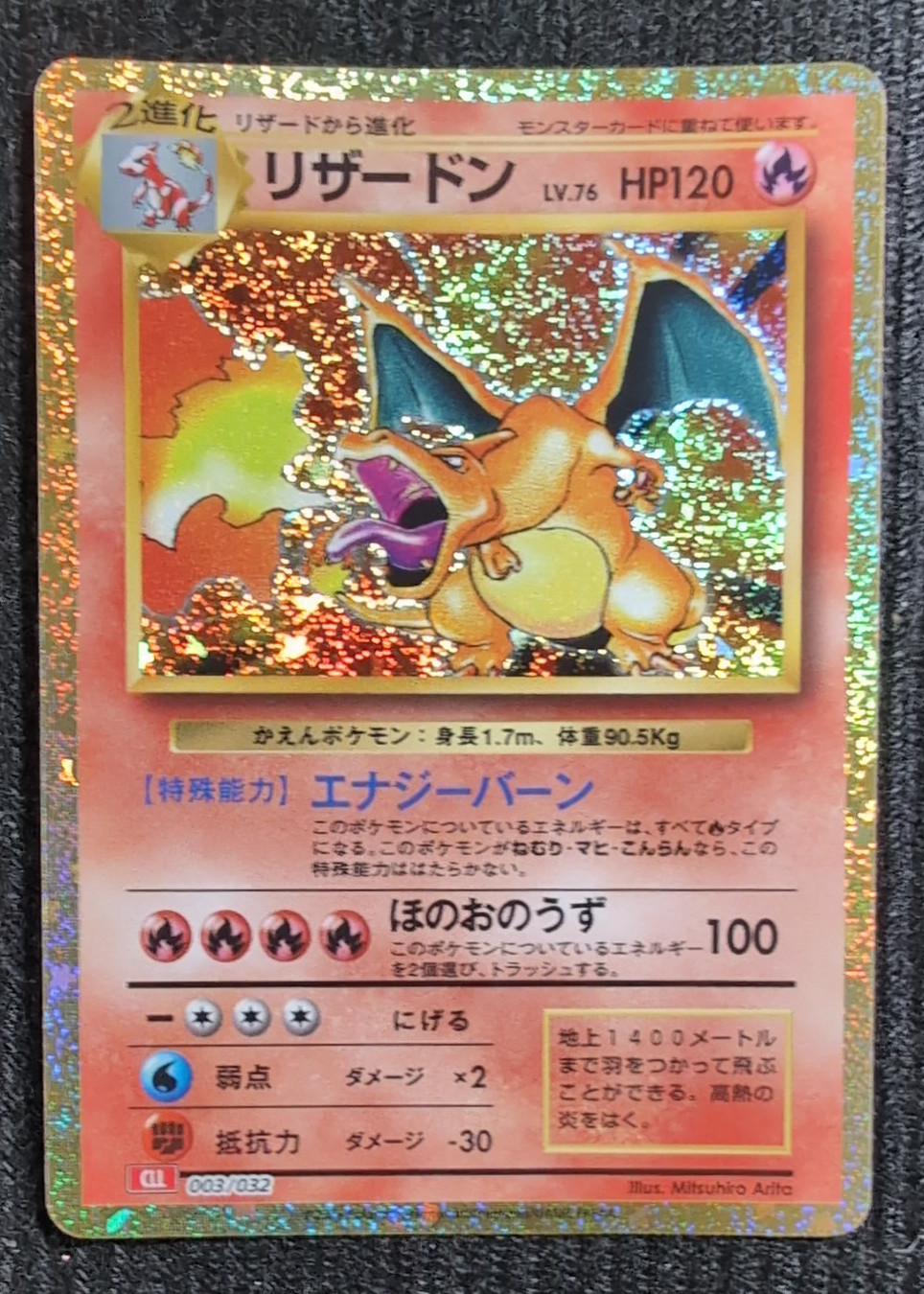
Charizard is the final evolution of Charmander in the Pokémon franchise, introduced in the original 1996 video games and widely recognized as one of the series’ most iconic starter-line Pokémon. In the Trading Card Game, Charizard became the flagship mascot for early high-end Pokémon cards because its Base Set holo was among the most famous chase cards in the hobby, and its artwork by Mitsuhiro Arita has remained one of the most enduring images in Pokémon card history.[2][10][12]
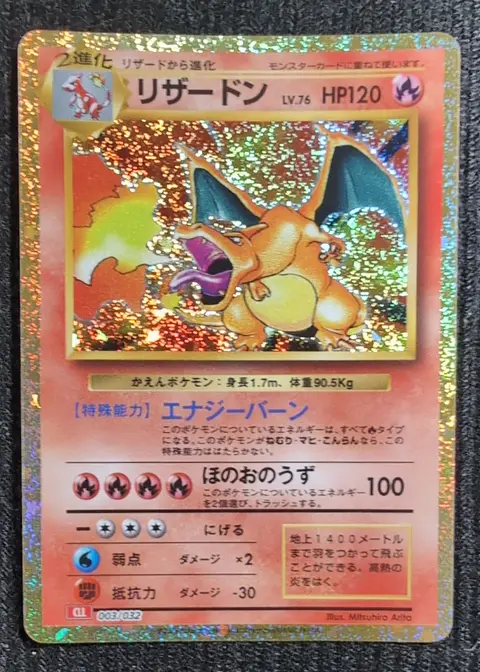
This specific Japanese Pokémon Card Game Classic Charizard was first released in 2023 as part of the Pokémon Card Game Classic product in Japan, as a reprint of the original Base Set Charizard artwork.[2][10][11]
- This card uses Mitsuhiro Arita’s classic Charizard artwork, making it a nostalgia-driven reprint rather than a new illustration.[2][10]
- It is numbered 003/032 in the Japanese Pokémon Card Game Classic Charizard deck context, while international trackers also list the English/International Classic Charizard deck as 003/034, reflecting different product configurations across regions.[4][5][11]
- The card is part of a sealed premium product rather than a booster pack set, which makes availability dependent on product allocation instead of pack-pull odds.[10][11]
- Market trackers show the card is comparatively affordable versus vintage Charizard grails, with recent raw prices around the low hundreds and graded 10 values under four figures on some trackers.[11][13][15]
Rarity and print run
- Tier
- Rare
- Print run
- Medium
- First printed in
- Pokémon Card Game Classic
- Demand
- High
- Supply
- Medium
- Premium product distribution instead of wide booster-pack circulation
- Japanese-language version is a region-specific release
- Charizard’s enduring collector demand keeps high-grade copies competitive
- Holofoil condition sensitivity reduces the pool of gem-mint examples
Collector notes
Condition. Check for edge whitening, corner wear, surface scratches on the holofoil, print lines, centering, and any factory dents or edge nicks from the premium deck packaging. Because this is a holo card from a sealed product, the most common issues are micro-scratches, sleeve friction, and slight warping rather than heavy pack-crimp damage.
Storage. Store the card immediately in a penny sleeve and rigid top loader or semi-rigid holder, keep it away from moisture and heat, and avoid repeated handling of the holo surface. For long-term preservation, use an inner sleeve, graded-style semi-rigid holder for submission, and archive in a dark, climate-stable environment.
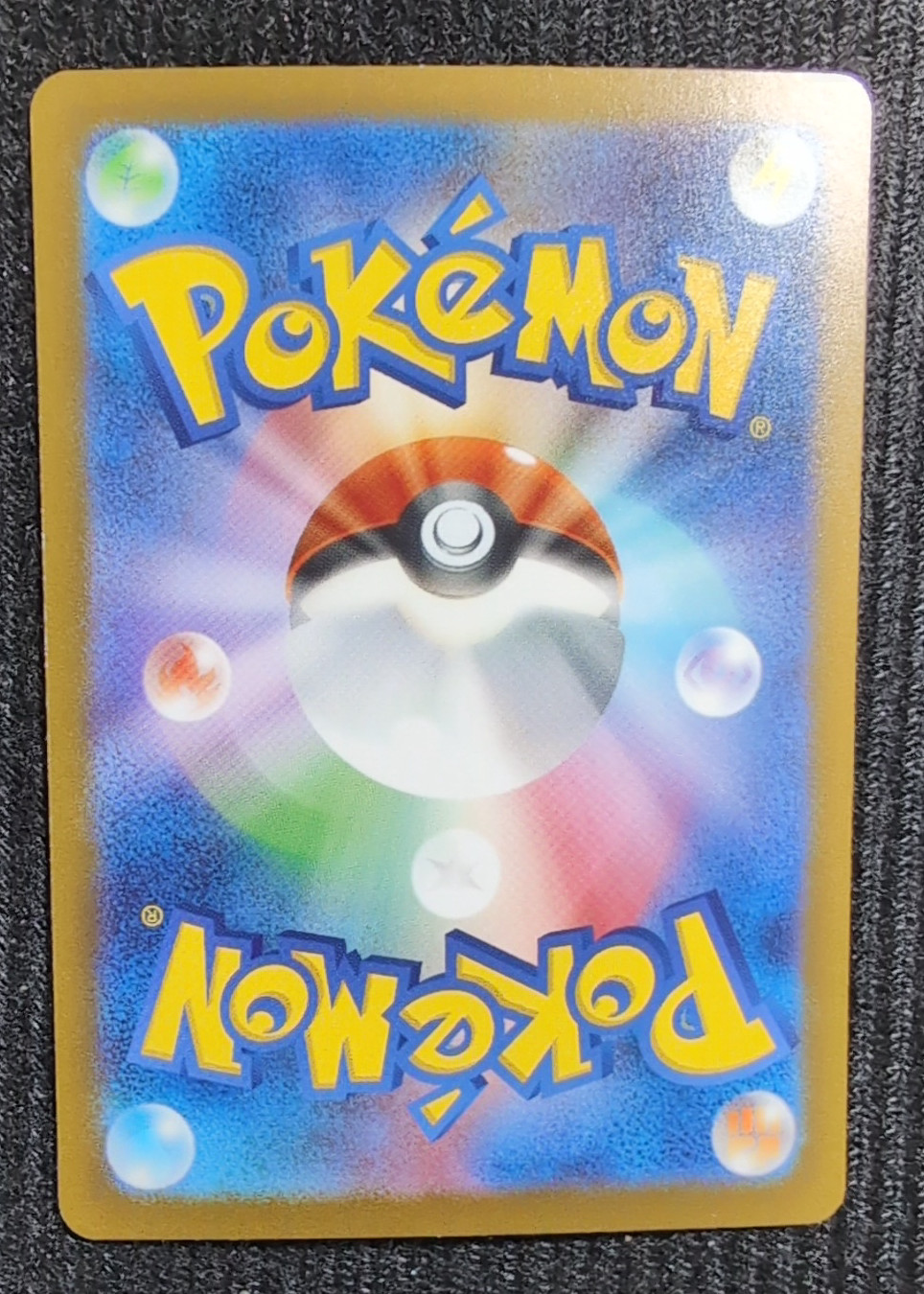
Authenticity. Verify the Japanese text, set numbering, holo pattern, and the premium Classic product print quality. Fake examples are more likely to show blurry text, off-color ink, poor holo alignment, or incorrect card stock sheen. Because this is a modern premium reprint, authentication should also confirm it matches the 2023 Japanese Classic release rather than a vintage Base Set Charizard.
Sources: pricecharting.com, misprint.com, sports.yahoo.com, cardtrack.com, tcgcollector.com