Market outlook
Rising Outlook 8/10
Vintage Umbreon cards continue to benefit from broad Eeveelution demand, and Japanese Neo-era holos remain a core vintage collectible segment. Limited supply in strong condition and sustained interest in graded examples support gradual appreciation over time.[4][13][16]
Next months. Likely stable to slightly rising, with premium-grade copies holding value best and lower-grade/raw copies moving more with general vintage TCG sentiment.
Long term. Likely gradual appreciation, especially for graded 9/10 and other gem-mint equivalents, as vintage Japanese Neo holos remain increasingly difficult to source in top condition.
History
Umbreon is one of the original Eevee evolutions introduced in the second-generation Pokémon games, representing a Dark-type evolution of Eevee that evolves through high friendship at night in the core games. In the Pokémon TCG, Umbreon became a highly collectible character because it combines strong fan appeal, a distinctive nocturnal design, and long-term popularity across multiple eras and special art treatments.[6][13]
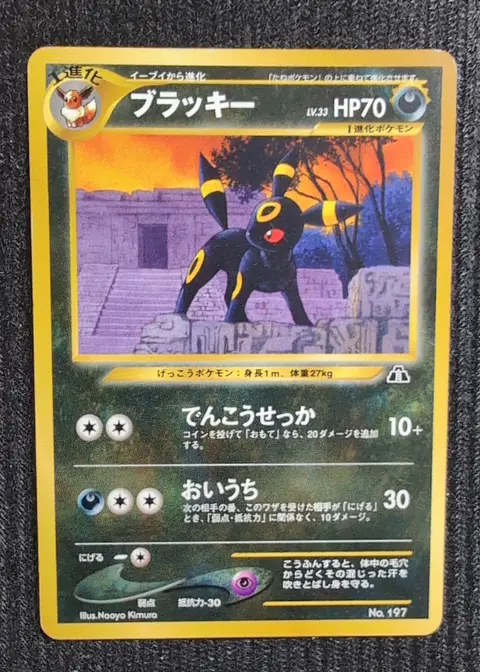
This Japanese Umbreon #197 was first released in the set Crossing the Ruins (Neo 2), which was released in Japan on July 7, 2000.[14] It is a holo rare from the Japanese Neo-era release, corresponding to the set commonly known in English as Neo Discovery.[3][14]
- This card is a Japanese Neo 2 holo rare and is numbered #197, which is a Japanese set-specific numbering format rather than the English Neo Discovery numbering.[3][14]
- Crossing the Ruins was a relatively small Japanese Neo-era release with 56 base cards, and Umbreon is one of its most desirable holos.[14]
- Recent market data shows significant variance by condition and grade, with raw/lightly played copies selling around $230 and high-grade examples trading far higher.[4][1]
Rarity and print run
- Tier
- Rare
- Print run
- Low
- First printed in
- Crossing the Ruins (Japanese Neo 2)
- Demand
- Very High
- Supply
- Scarce
- Vintage Japanese Neo-era holo rare from a relatively small set
- High-grade copies are difficult to find because holo scratching and edge wear are common
- Umbreon is one of the most popular Eeveelutions, increasing competition among collectors
Collector notes
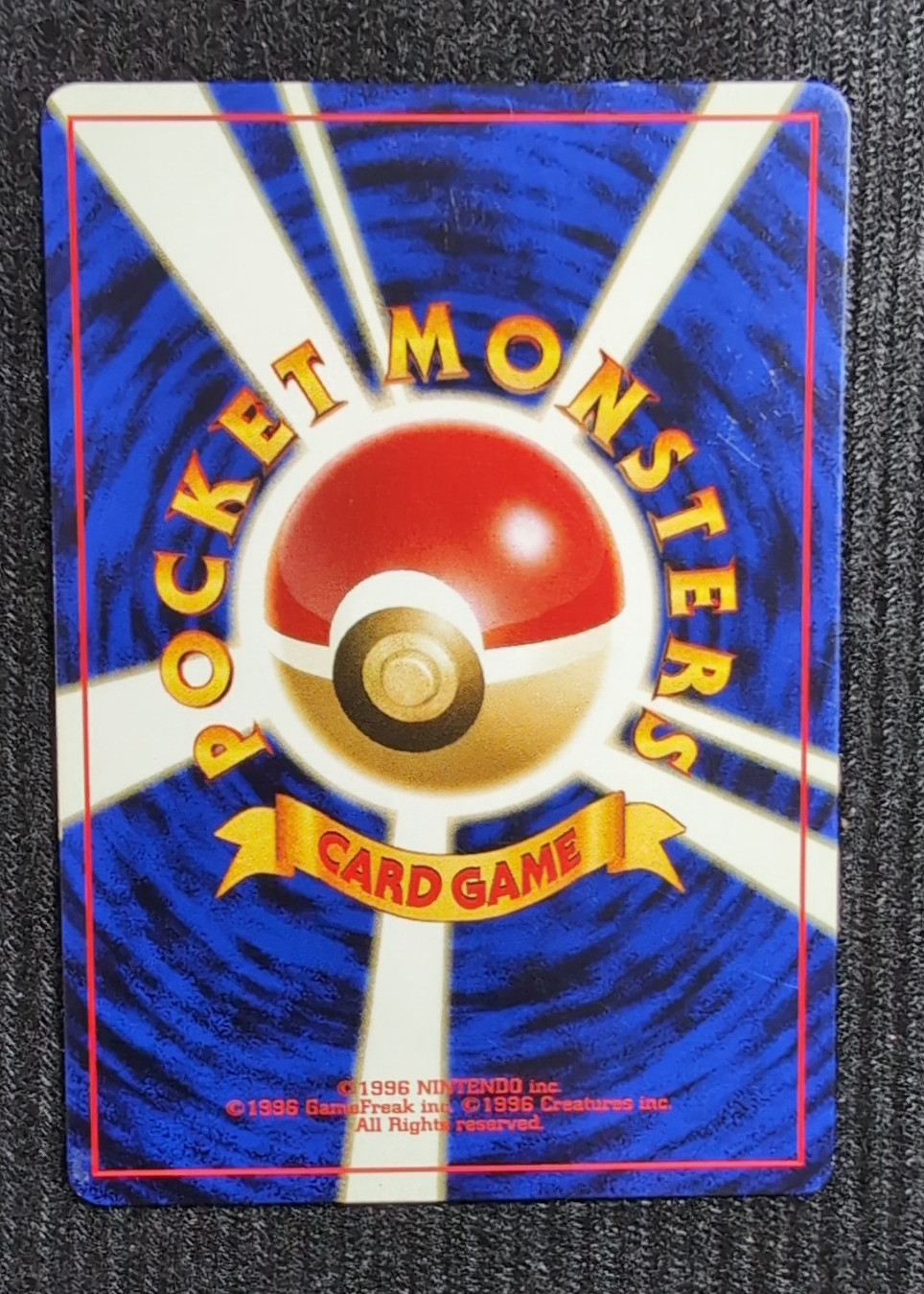
Condition. Check the holofoil for scratches, edge whitening, corner wear, and surface print lines, which are common issues on vintage Japanese holos. Because this is a dark-background holo card, small scuffs, dents, and silvering along edges are easier to notice under angled light. Centering, back-surface gloss, and any holo scratching across Umbreon's body and ring areas are especially important for grading.[5][6]
Storage. Use penny sleeves and rigid top loaders or semi-rigid holders for ungraded copies, and store the card in a cool, dry, low-UV environment. For high-grade or potentially high-grade copies, avoid repeated handling and consider sealed archival storage or third-party grading to preserve value.[5]
Authenticity. Authentic copies should match vintage Japanese Neo-era print characteristics, including correct Japanese text layout, set numbering, holo pattern, and card stock feel. Fakes often show blurry text, incorrect holo texture, poor edge cut quality, or off-color printing; compare the card against verified listings and known scans of the Japanese Crossing the Ruins version.[3][5]
Sources: pricecharting.com, ebay.com, cherrycollectables.com.au, sportscardinvestor.com, cardtrader.com