Market outlook
Rising Outlook 7/10
The card benefits from perennial Hall of Fame demand, strong historical significance, and an established collector base for 1950s Topps rookies. Supply of premium examples is fixed and low, while demand from vintage investors remains global.
Next months. Likely stable to modestly higher, with top-grade copies remaining highly sought after and lower grades tracking broad vintage market strength.
Long term. Expected to continue appreciating gradually over 1-3 years, especially in graded 7 and above, with elite-grade copies most likely to set new benchmark prices when they surface.
History
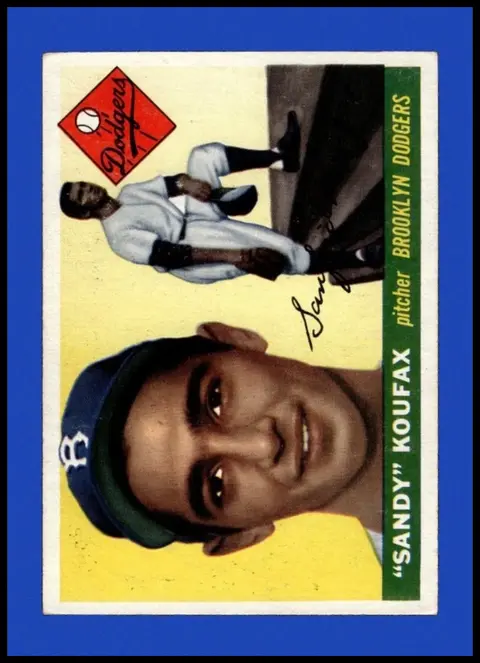
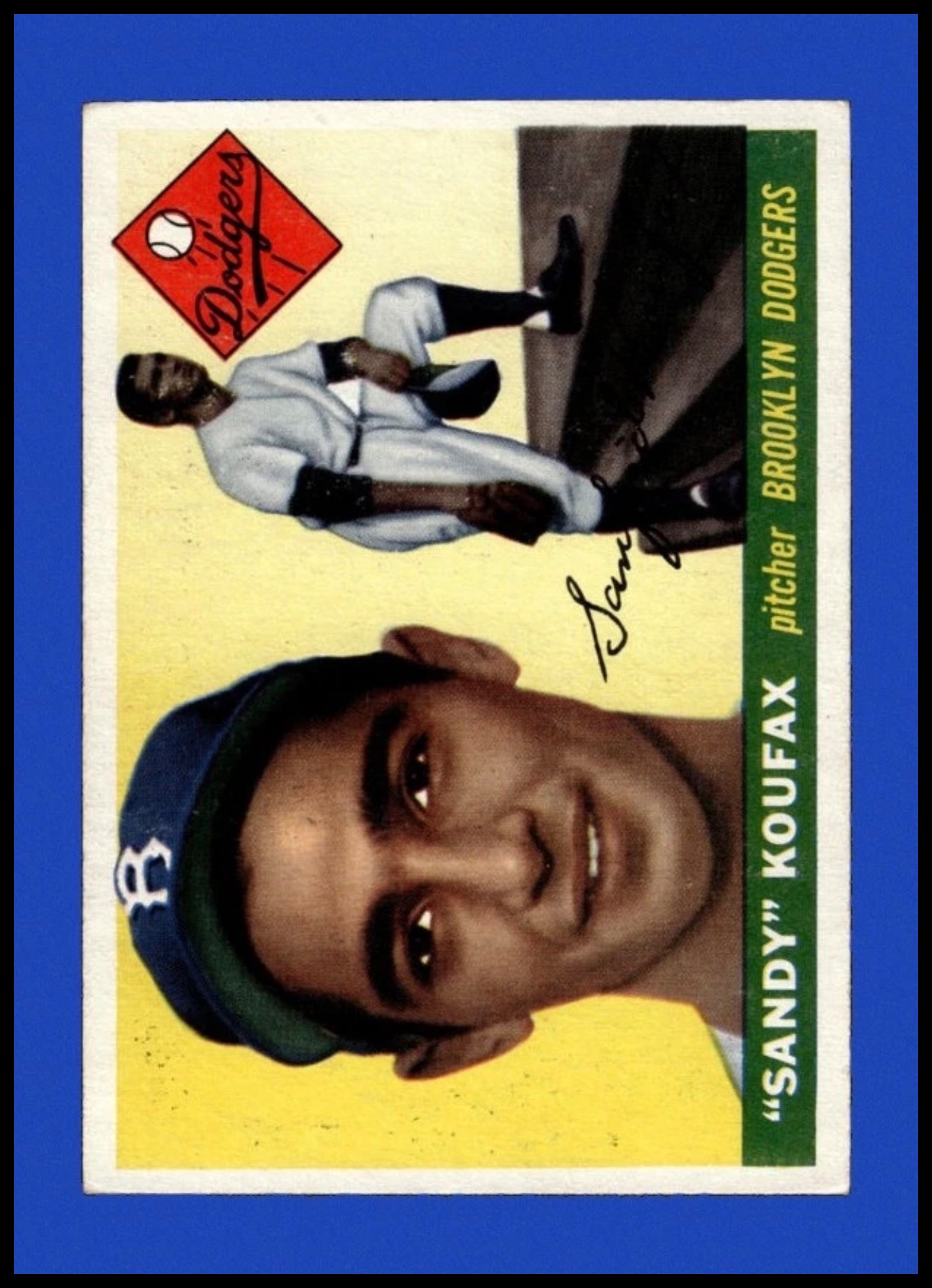
Sandy Koufax (born Sanford Braun, 1935–) is one of the most iconic left-handed pitchers in baseball history, celebrated for his overpowering fastball, devastating curveball, and dominant run with the Brooklyn/Los Angeles Dodgers. He became a Hall of Famer and a cultural legend, with a résumé that includes multiple Cy Young Awards, an MVP season, three Triple Crowns of pitching categories, and a perfect game. His 1955 Topps rookie card is widely regarded as the key rookie card of his career and one of the most important postwar baseball cards.
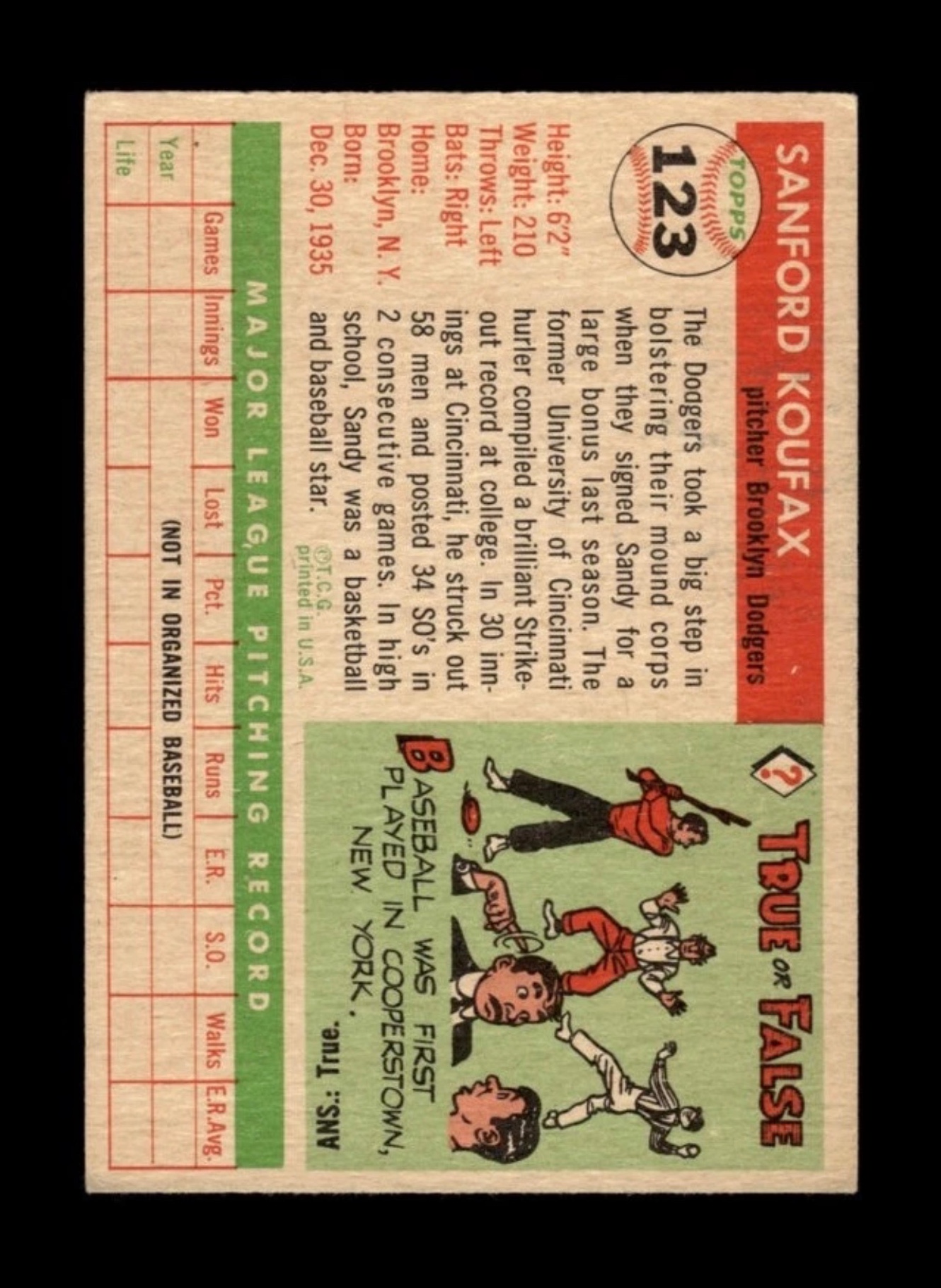
First released in 1955 as part of the Topps Baseball set, distributed in wax packs and cello/hobby formats through the United States. Card #123 features Koufax as a Brooklyn Dodgers pitcher and is recognized as his true rookie card.
- Considered the premier Sandy Koufax card and one of the most important 1950s baseball rookie cards.
- High-grade examples are extremely scarce; graded reports only a small number of Gem Mint copies.
- The card is widely collected by both vintage set builders and Hall of Fame rookie-card collectors.
Rarity and print run
- Tier
- Rare
- Print run
- High
- First printed in
- 1955 Topps Baseball
- Demand
- Very High
- Supply
- Scarce
- True Hall of Fame rookie card
- Large percentage of surviving copies are low-grade due to age and fragile 1950s paper stock
- Very limited Gem Mint and high-grade population
- Heavy competition from set collectors, Dodgers collectors, and rookie-card investors
Collector notes
Condition. Check centering carefully, as 1950s Topps centering can heavily impact value. Common flaws include corner wear, edge chipping, surface print defects, wax staining, gum staining, snow/print spots, and tilt. Because the card is black-bordered? no, but has susceptible colored borders and glossy stock, even light wear can reduce grade significantly.
Storage. Store in a penny sleeve and semi-rigid holder or top loader, then keep in a cool, dry, dark environment with stable humidity. For high-value copies, use a recessed holder or graded/graded/graded grading slab. Avoid PVC plastics, direct sunlight, and handling without clean dry hands or gloves.
Authenticity. Watch for reprints and altered cards, especially because the card is heavily counterfeited due to its value. Authenticate print quality, paper stock, aging, and back text alignment. Original cards should show authentic 1950s Topps card stock and printing characteristics; modern reprints often have sharper digital print patterns, incorrect gloss, or mismatched aging. Because trimming and color touch are common on valuable vintage cards, third-party grading is strongly recommended.
Sources: sportscardspro.com, psacard.com, throwbacksportscards.com, ha.com, deanscards.com