Market outlook
Rising Outlook 7/10
Demand for iconic postwar Hall of Fame cards remains strong, and quality high-grade examples are limited. As registry competition and set-building interest continue, the best copies should keep appreciating. Lower-grade examples may move more slowly, but elite grades should outperform.
Next months. Expect stable-to-slightly higher prices, with strong results for graded mid-to-high grade copies when clean examples surface.
Long term. Likely gradual appreciation over 1-3 years, with the strongest gains concentrated in graded/graded high-grade examples and strong eye-appeal copies.
History
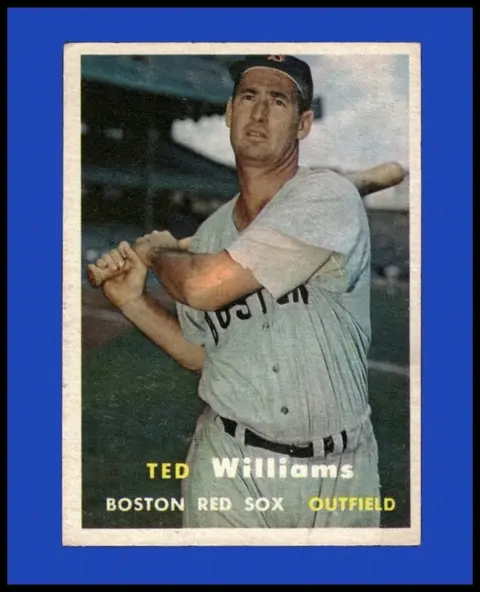
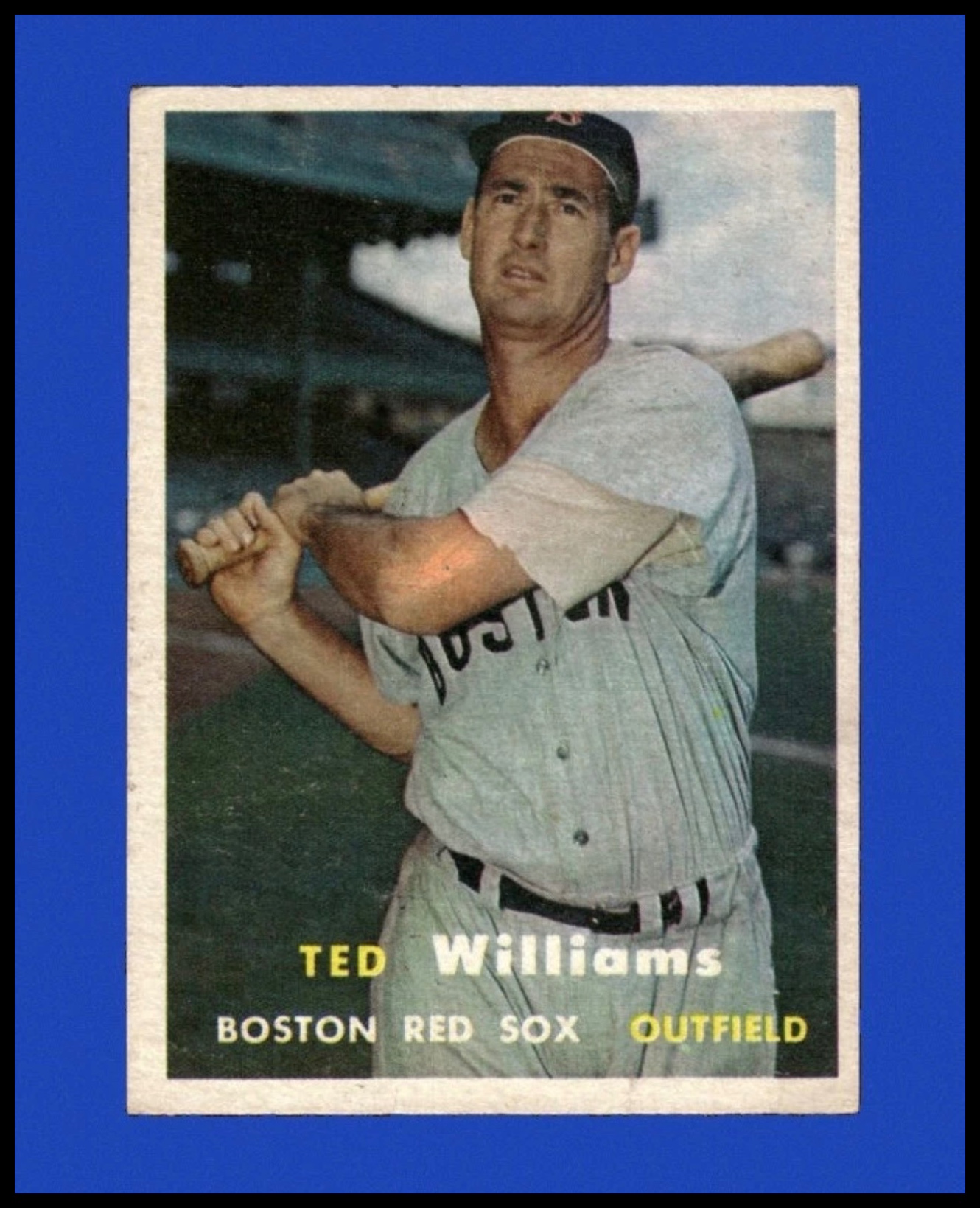
Ted Williams (1918-2002) was one of the greatest hitters in baseball history, a Hall of Fame left fielder for the Boston Red Sox and later a U.S. Marine Corps fighter pilot in World War II and the Korean War. Nicknamed 'The Splendid Splinter' and 'Teddy Ballgame,' Williams is central to baseball collecting because he represents both all-time on-field excellence and a highly collectible pre- and postwar era icon. His 1954 Topps card #1 is especially significant because it features Williams at the start of the set and is one of the key star cards from the postwar hobby.
First released in 1954 as part of the Topps Baseball set distributed in the United States through hobby and retail channels, typically in wax packs and cello packs of the 1954 Topps series.
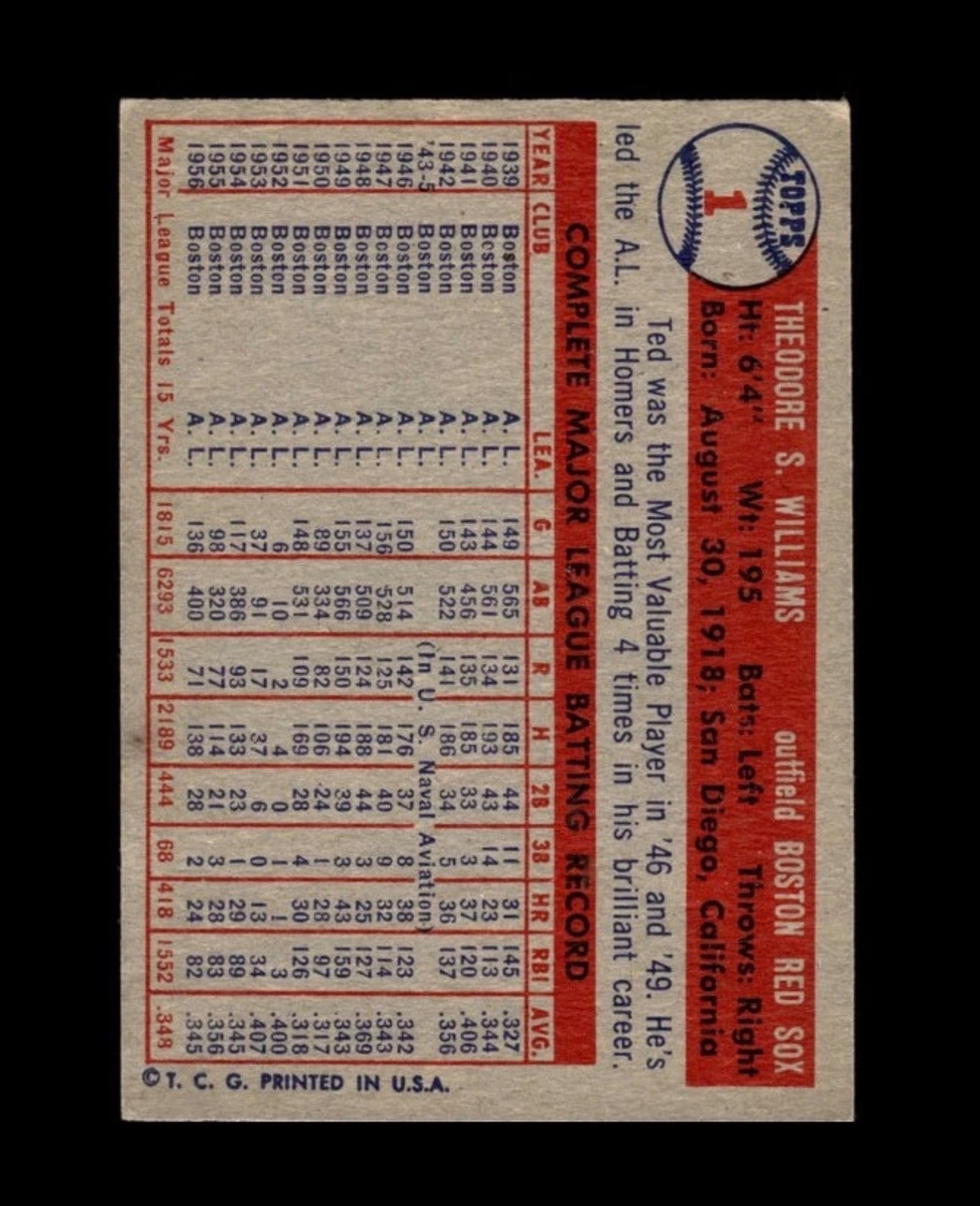
- Card #1 in the 1954 Topps set, making it one of the most recognizable cards in the issue.
- graded population data shows the card is not scarce overall, but high-grade examples are difficult to find, with only a handful at gem mint levels.
- Ted Williams also appears as card #250 in the same 1954 Topps set, a notable collecting quirk and a favorite talking point among collectors.
Rarity and print run
- Tier
- Uncommon
- Print run
- Very High
- First printed in
- 1954 Topps Baseball
- Demand
- Very High
- Supply
- High
- The card is not rare by overall population, but high-grade examples are scarce due to centering and edge wear issues.
- As a key star and card #1 in the 1954 Topps set, collector demand is consistently elevated.
- Gem mint examples are extremely scarce relative to the total surviving population.
Collector notes
Condition. Common issues include centering problems, corner wear, edge chipping, surface scratches, print defects, and rounding from pack handling. On this issue, eye appeal matters a lot because top corners and borders show wear quickly. Check for proper color registration and consistent stock texture. The red background and white borders can make even light wear obvious.
Storage. Store in a penny sleeve inside a semi-rigid holder or top loader, then place in a stable low-humidity environment away from light and temperature swings. For higher-grade examples, use archival-quality holders and avoid repeated handling. Keep away from PVC materials and moisture.
Authenticity. Look for authentic 1950s cardboard stock, period-correct printing dots, and natural aging. Reprints often have sharper digital-looking print, incorrect gloss, or modern paper feel. Because this is a highly desirable Hall of Fame star card, grading by graded, graded, or Beckett is strongly recommended for any expensive example. Compare font shape, border tone, and print sharpness against known authentic copies.
Sources: si.com, psacard.com, sportscardinvestor.com, sportscardspro.com, deanscards.com