Market outlook
Stable Outlook 7/10
The card has already established itself as a flagship modern alternate art, which supports durable demand, but its high population and broad supply temper explosive near-term growth. Recent sale data shows the card remains highly liquid and expensive, suggesting stable collector interest rather than sharp deterioration.[2][3]
Next months. Likely to remain strong and liquid, with price movement driven mainly by grade, population, and overall Pokémon market sentiment.
Long term. Over 1-3 years, the card is likely to hold premium collector status and may appreciate gradually, with the strongest gains concentrated in higher grades and well-centered copies.
History
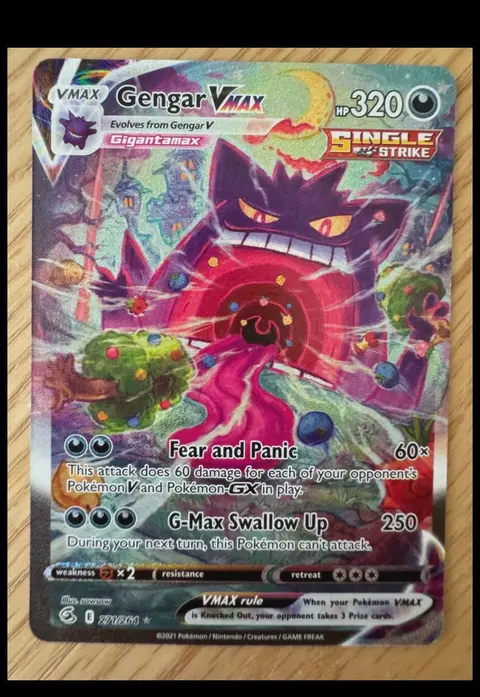
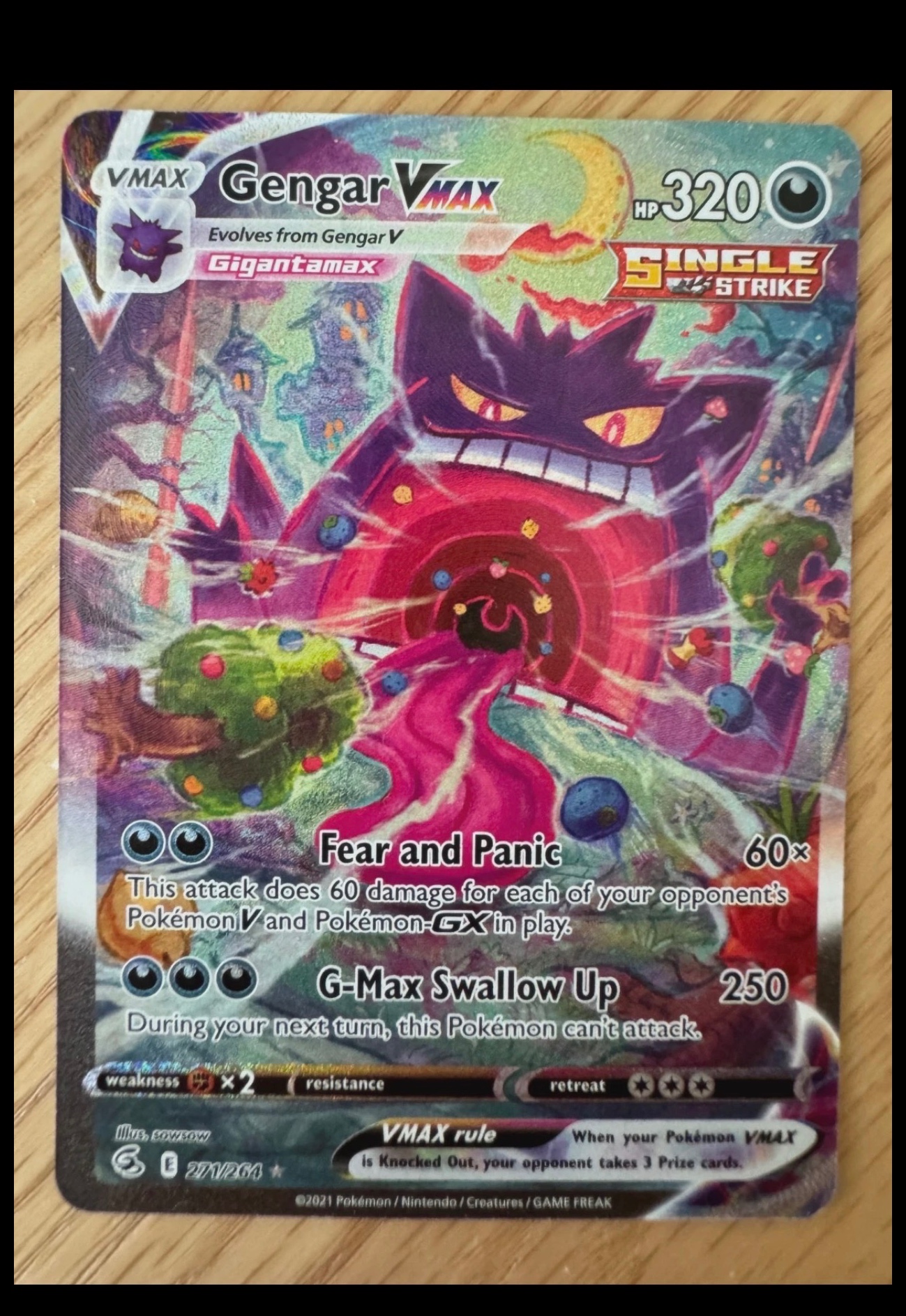
Gengar is a long-running Pokémon introduced in the original Generation I games and Pokédex era, known as the Ghost/Poison evolution of Haunter and as a mischievous, shadowy trickster. The Fusion Strike alternate-art VMAX card leverages Gengar’s established popularity and eerie aesthetic, making it one of the most recognizable and collectible modern-era Pokémon chase cards. The card is identified in TAG grading records as Gengar VMAX from 2021 Sword & Shield Fusion Strike, Alternate Art, Secret Rare.[1]
First released in the English-language 2021 Sword & Shield—Fusion Strike expansion as card 271/264, an alternate-art Secret Rare Gengar VMAX.[1][4]
- This is an alternate-art Secret Rare, which places it among the chase cards of Fusion Strike rather than a standard main-set pull.[1][4]
- Market data shows strong ongoing demand, with recent recorded sales still reaching four figures for high-grade copies.[2]
- The card has very high collector visibility because it combines a fan-favorite Pokémon with a dramatic full-art alternate illustration and VMAX mechanics.[1][4]
Rarity and print run
- Tier
- Secret Rare
- Print run
- High
- First printed in
- Sword & Shield—Fusion Strike
- Demand
- Very High
- Supply
- High
- Alternate-art Secret Rare pull rate is lower than standard ultra rares
- High collector demand from both Gengar fans and modern chase-card collectors
- Strong grading demand concentrates supply into top-condition examples
- Many copies were opened during peak set demand, but gem-mint copies remain much harder to obtain
Collector notes
Condition. Check the full-art surface carefully for edge whitening, corner dings, centering issues, print lines, and holo/surface scratches. Alternate-art cards often show wear on the dark border areas and can have visible flaws under direct light. Because this is a high-value chase card, even small imperfections can materially affect grade and resale value.
Storage. Use a penny sleeve immediately, then a rigid top loader or semi-rigid holder for raw copies. For premium copies, keep the card in an acid-free sleeve inside a graded-style case or secure archival binder page, stored upright in a cool, dry environment with low humidity. Avoid frequent handling and do not stack with other cards without protection.
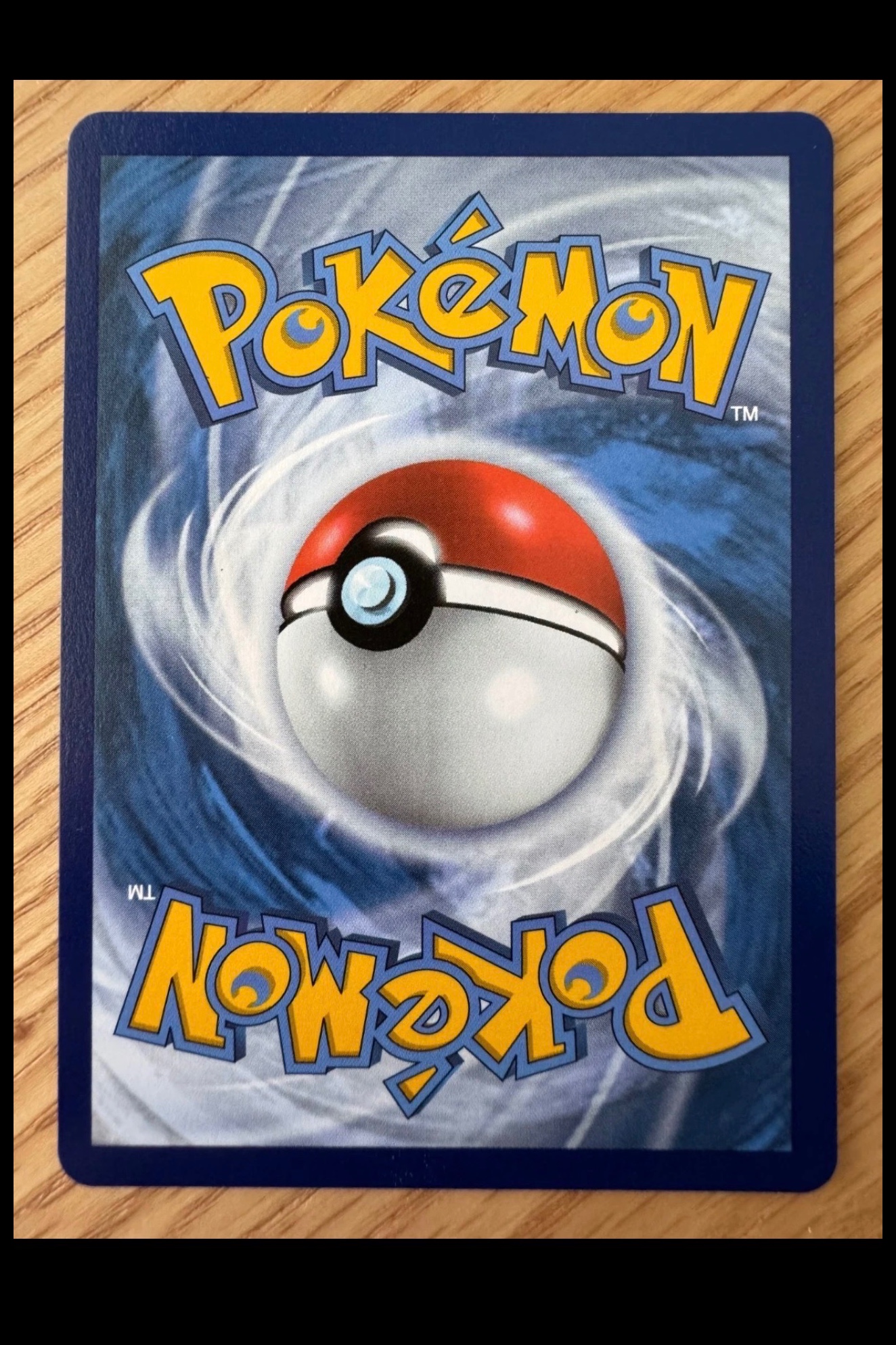
Authenticity. Verify the correct card number 271/264, the alternate-art Secret Rare designation, and the standard Pokémon TCG print alignment and texture. Counterfeits may show blurry text, incorrect font weight, flat or missing texture, poor color saturation, or incorrect holographic behavior. Authentic copies should match the known Fusion Strike layout and printing finish seen on legitimate product listings and grading references.[1][4]
Sources: my.taggrading.com, cardladder.com, pricecharting.com, tcgplayer.com, pokedata.io