Market outlook
Stable Outlook 7/10
The card has long-term collector appeal because Reggie Jackson remains a major Hall of Famer and the card is a recognizable vintage key, but the market is mature and the supply of circulated copies is ample. Price movement is mostly expected in higher-grade slabs and strong-eye-appeal copies rather than in common raw examples.
Next months. Likely to remain stable with occasional spikes for high-grade examples.
Long term. Gradual appreciation is likely for graded/graded high-grade copies, while lower-grade raw cards should stay relatively affordable and liquid.
History
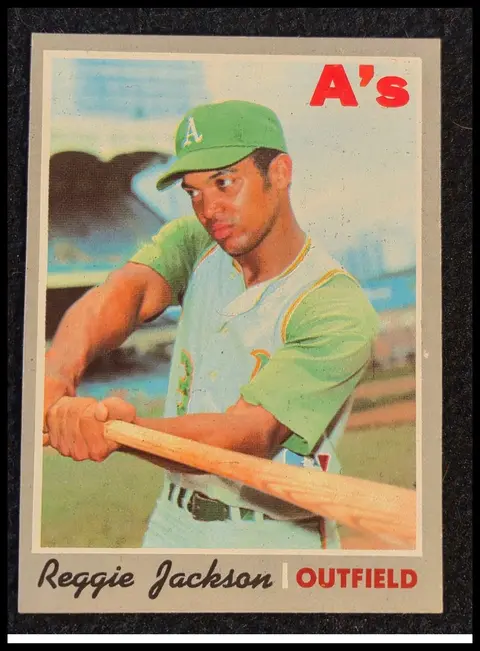
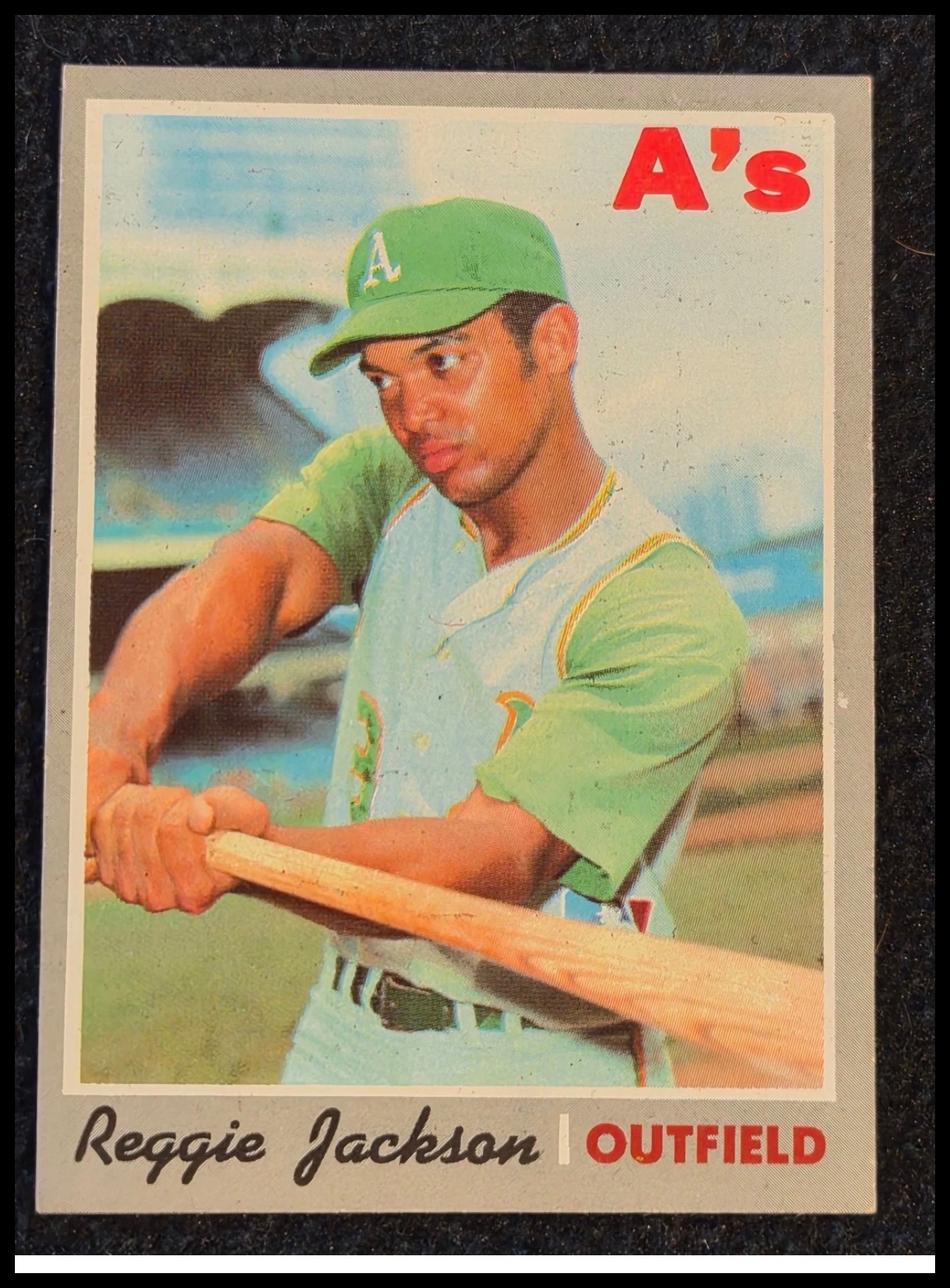
Reggie Jackson, nicknamed "Mr. October," is one of baseball’s most iconic power hitters. He debuted in the majors with the Kansas City Athletics in 1967 and became a Hall of Fame outfielder known for elite home-run power, postseason heroics, and star status with the Oakland Athletics, New York Yankees, and California Angels. His 1970 Topps card captures him early in his rise, before his biggest postseason fame, making it a key second-year card for one of the era’s defining players.
The card was first issued in the 1970 Topps Baseball set, released in 1970 in the United States as part of Topps’ flagship annual baseball card series.
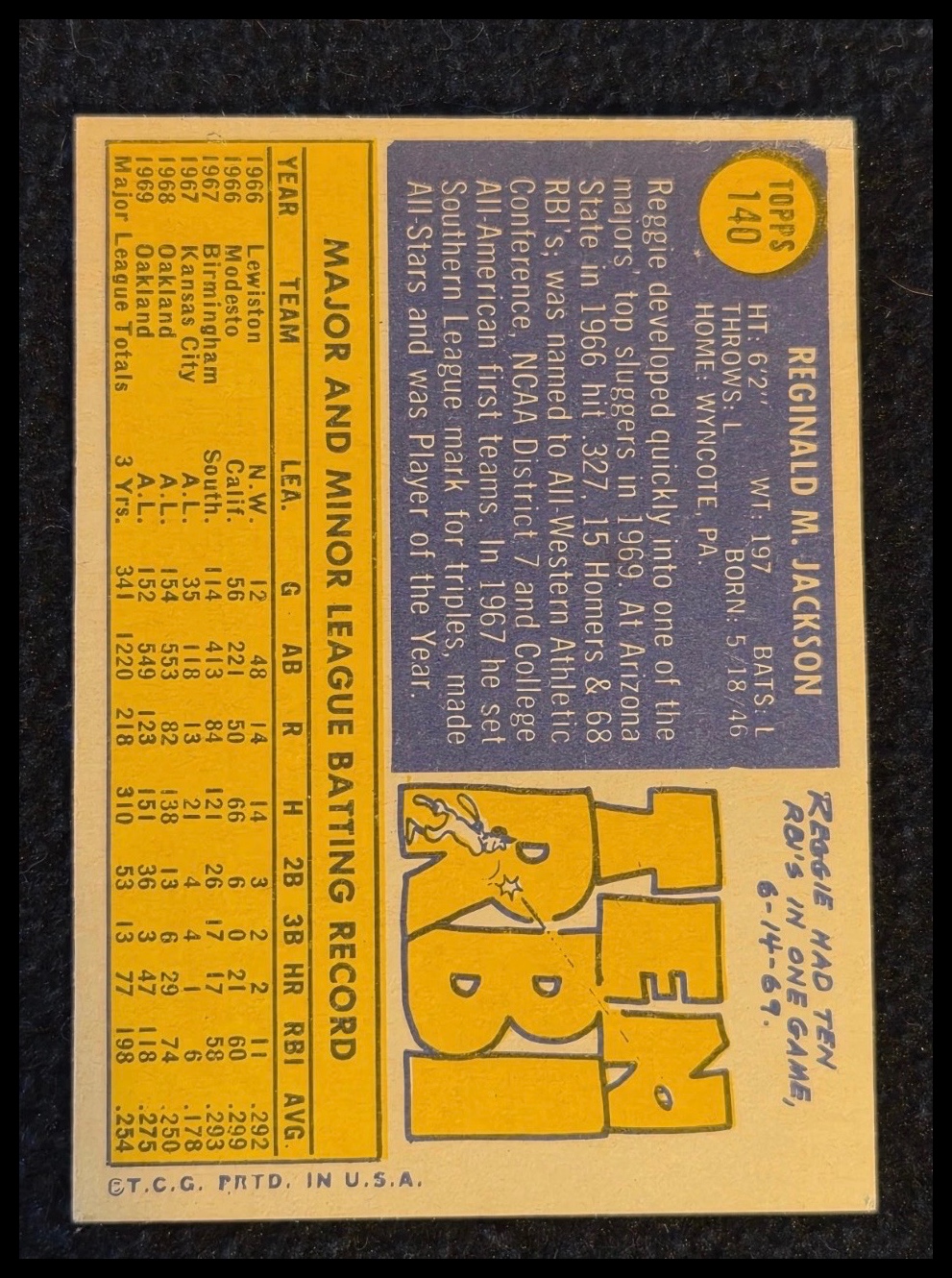
- Card number 140 in the 1970 Topps Baseball checklist.
- This is Reggie Jackson’s second-year Topps base card and is widely collected as a budget-friendly key card.
- Collectors note chronic centering issues in the 1970 Topps set, which makes high-grade examples harder to find.
- The card shows Jackson with the Oakland Athletics.
- 1970 Topps is also known for multiple Reggie Jackson cards beyond the base card, including leader and All-Star issues.
Collector notes
Condition. Check centering first, as 1970 Topps is notorious for off-center examples. Also inspect corners for softening, edge wear, surface print defects, and any creases or tilt from handling. Blue-border issues from 1970 Topps make chips and whitening especially visible.
Storage. Store in a penny sleeve and rigid top-loader or card saver, and keep the card in a cool, dry, low-light environment. For long-term preservation, use an acid-free sleeve and avoid direct handling by the edges only.
Authenticity. Authentic cards should match 1970 Topps printing characteristics, including period-correct stock, border color, image quality, and back design. Reprints often show unusually sharp modern printing, incorrect gloss, or paper stock that feels too thick or too flimsy. Compare dimensions, font style, and edge aging against verified examples, and use third-party grading for valuable copies.