Market outlook
Stable Outlook 6/10
Demand for Frank Robinson cards is supported by Hall of Fame status and historical significance, but the card’s common-set status and large surviving supply limit sharp price spikes.
Next months. Prices are likely to remain steady with small moves driven by graded-copy availability and overall vintage baseball demand.
Long term. Over 1-3 years, the card should probably appreciate gradually, especially in higher grades, but it is unlikely to outperform scarcer Hall of Fame rookie or low-population issues.
History
Frank Robinson was an elite Major League Baseball outfielder and first baseman, best known for a Hall of Fame career that began with the Cincinnati Reds and later included the Baltimore Orioles, where he became one of the most important power hitters and all-around players of his era. His significance goes beyond statistics: he was the first Black manager in Major League Baseball history and is widely regarded as one of the game’s greatest competitors and leaders.
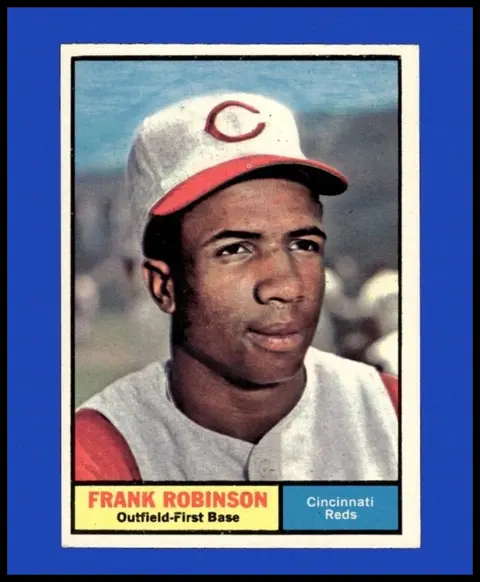
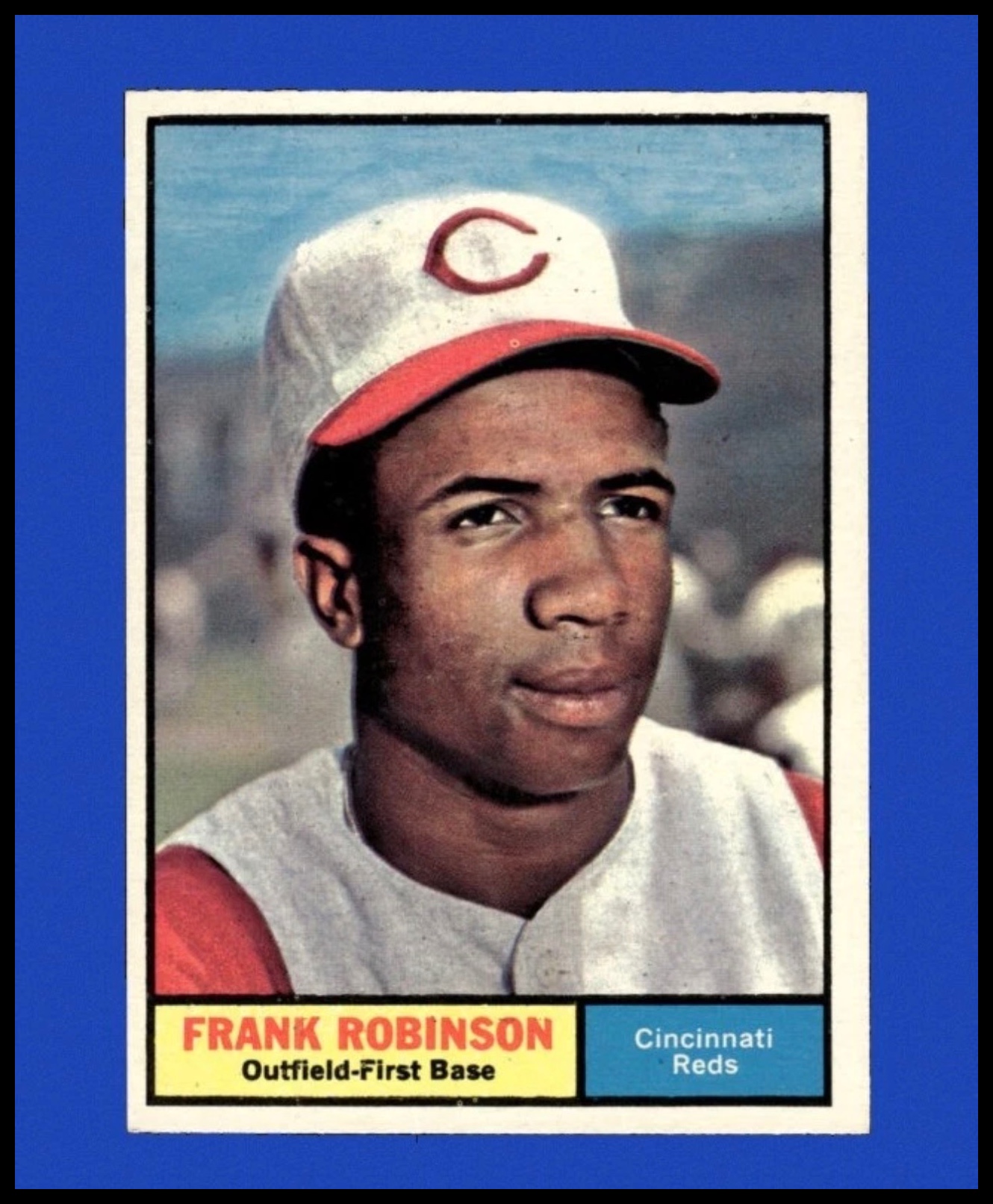
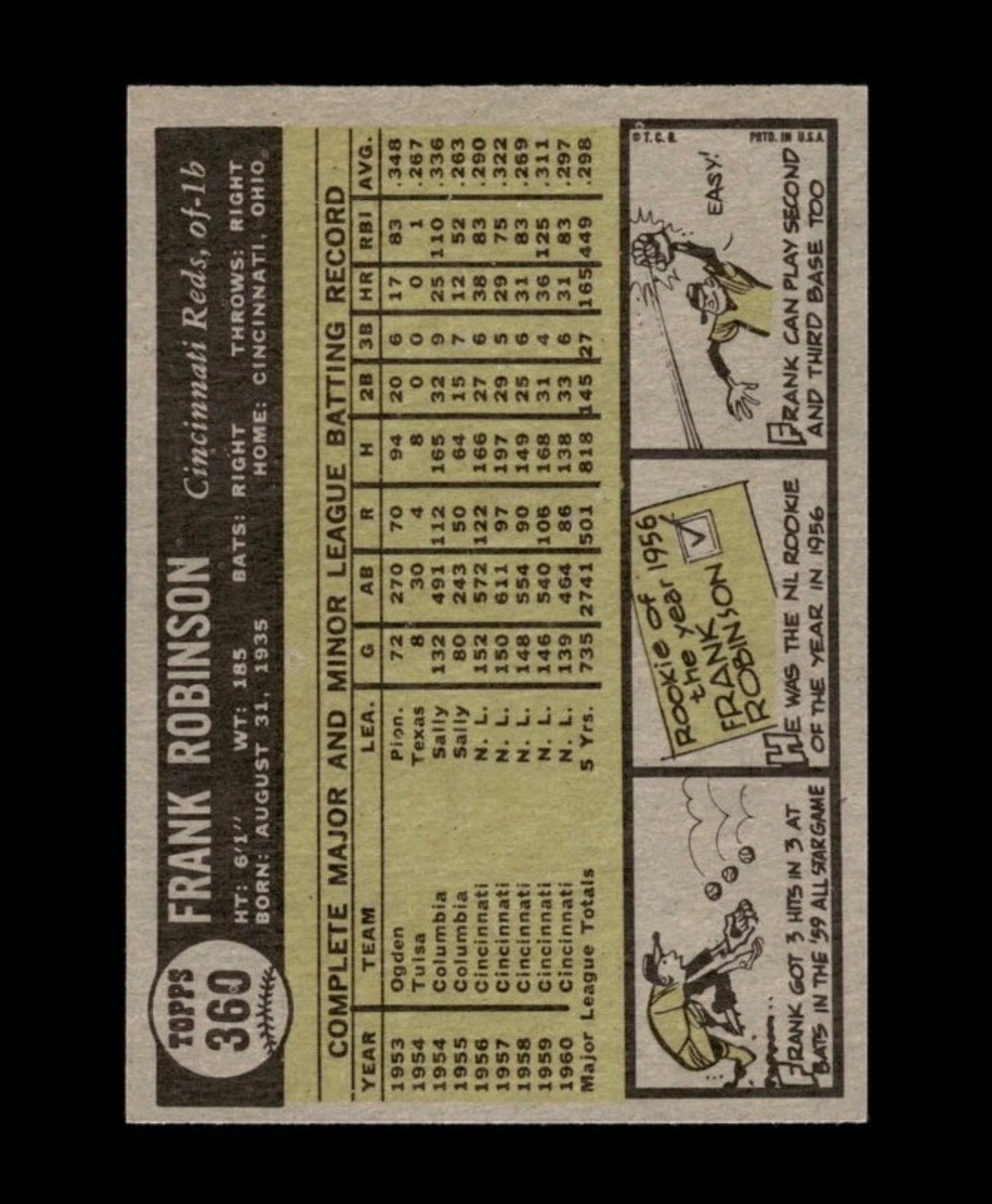
This card was first issued in the 1961 Topps Baseball set, released by Topps in the United States for the 1961 baseball card season. The card is numbered #360 and is a standard base card from the set.
- The card is part of the 1961 Topps Baseball checklist and is identified as Frank Robinson #360.
- Marketplace listings and price guides consistently identify the card as an original 1961 Topps issue and note that copies sold are not reprints.
- Frank Robinson’s long-term fame as a Hall of Famer and trailblazing MLB manager gives the card strong historical appeal even though it is cataloged as a common card in the set.
Rarity and print run
- Tier
- Common
- Print run
- Very High
- First printed in
- 1961 Topps Baseball
- Demand
- High
- Supply
- High
- It comes from a widely distributed 1961 Topps base set.
- The card is cataloged as a common rather than a short print or high-number scarcity card.
- High-grade examples are less common than lower-grade copies because the set is condition-sensitive.
Collector notes
Condition. Check centering carefully, since 1961 Topps cards are often off-center. Look for corner wear, edge chipping, surface scratches, print snow, wax staining, and color loss. Eye appeal is strongly affected by image registration and the bright yellow/orange background area.
Storage. Store in a penny sleeve and a rigid top loader or semi-rigid holder, then keep the card in a cool, dry, low-light environment. Avoid PVC-based plastics, high humidity, and pressure on the corners or surface.
Authenticity. Authentic cards should show period-correct paper stock, print texture, and aging consistent with 1961 Topps production. Reprints often have sharper modern color, incorrect gloss, or mismatched stock feel. Compare the card’s dimensions, typography, and print dot pattern with verified examples before purchase.
Sources: hollywoodcollectibles.com, sportscardinvestor.com, sportscardspro.com, psacard.com, throwbacksportscards.com