Market outlook
Rising Outlook 8/10
Long-term demand for iconic Hall of Fame vintage cards remains strong, while population scarcity in top condition keeps pressure on high-end prices. The graded data shows a steep grade-to-grade pricing curve, which usually supports continued appreciation for premium examples.[1]
Next months. Stable to modestly rising, with strongest movement expected in higher-grade certified examples.
Long term. Likely continued appreciation over 1-3 years, especially for graded 7+ copies and eye-appealing examples.
History
Willie Howard Mays Jr. was one of the greatest players in baseball history, a Hall of Fame center fielder known for elite all-around talent, power, speed, defense, and iconic over-the-shoulder catches. He was a 24-time All-Star and is widely regarded as arguably the greatest center fielder ever. The 1954 Topps issue is especially important because it is one of the earliest mainstream color cards of Mays and is among the defining cards of the postwar hobby.[1]
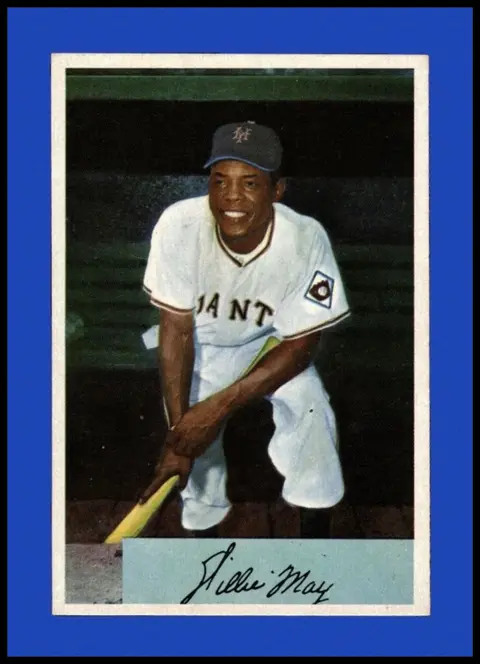
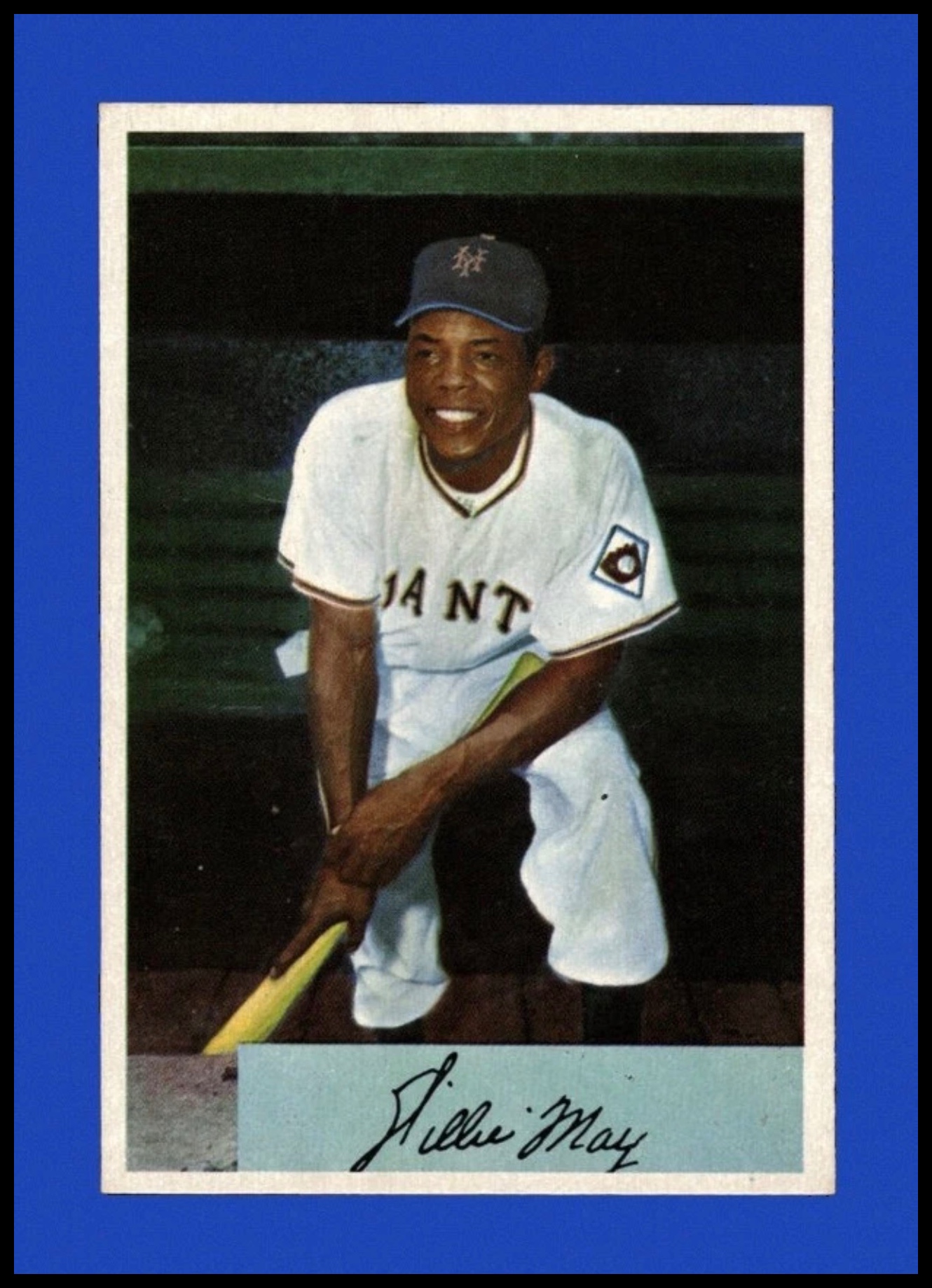
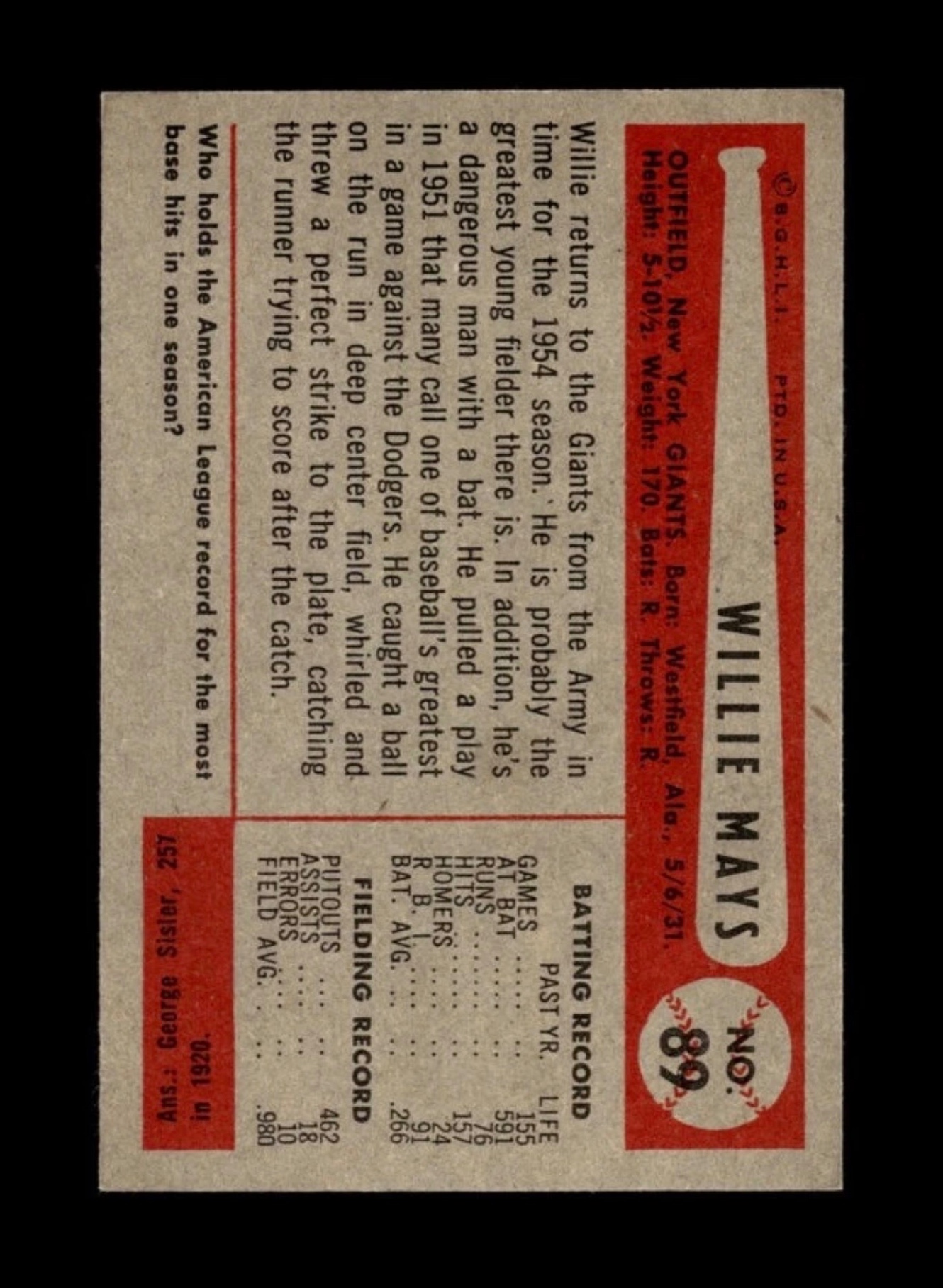
This card was first released in the 1954 Topps Baseball set, issued in the United States in 1954. The provided sources identify the card as Willie Mays #90 in 1954 Topps, and also note that Mays appears as #89 in the 1954 Bowman set, which is a different issue.[1][2][3]
- The 1954 Topps Willie Mays card is widely considered one of the key cards in one of the strongest vintage Topps sets.[3]
- The card is notable for the early Topps design featuring a portrait and a smaller action image, along with biographical text and stats on the back.[3]
- graded population data shows this card is collectible across all grades, with very few high-grade examples and a MINT 9 price far above lower grades, reflecting strong demand and condition sensitivity.[1]
Rarity and print run
- Tier
- Uncommon
- Print run
- Very High
- First printed in
- 1954 Topps Baseball
- Demand
- Very High
- Supply
- Scarce
- The card is from a high-production mainstream set, so it is not rare in raw terms.
- High-grade copies are scarce because condition issues are common on 1950s cardboard.
- Collector demand is elevated because Willie Mays is an all-time great and the 1954 Topps set is highly desirable.
Collector notes
Condition. Check for centering, corner wear, surface scratches, print defects, creases, and edge chipping. Vintage Topps cards from this era often show wear from handling and poor storage, and this issue is especially sensitive to condition because high-grade examples are rare and command large premiums.[1][3]
Storage. Store in a clean penny sleeve and rigid or semi-rigid holder, keep away from humidity, sunlight, and temperature swings, and avoid pressure or stacking that could cause corner and edge damage. For a card of this age and value, graded encapsulation is often preferred for long-term protection.
Authenticity. Verify the card stock, print quality, aging characteristics, and back text consistency against known authentic examples. Reprints and altered cards may show overly sharp modern printing, incorrect aging, or inconsistent gloss and paper texture. Because the card is valuable, professional third-party authentication and grading is strongly recommended.
Sources: psacard.com, sportscollectorsdigest.com, throwbacksportscards.com, sportscardspro.com, sportscardinvestor.com