Market outlook
Stable Outlook 2/10
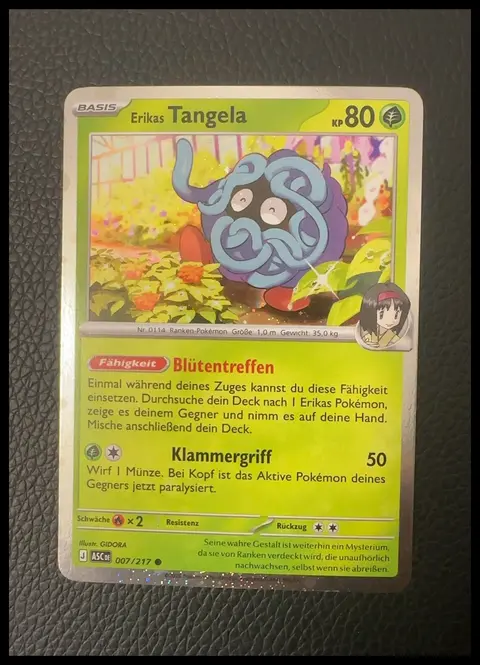
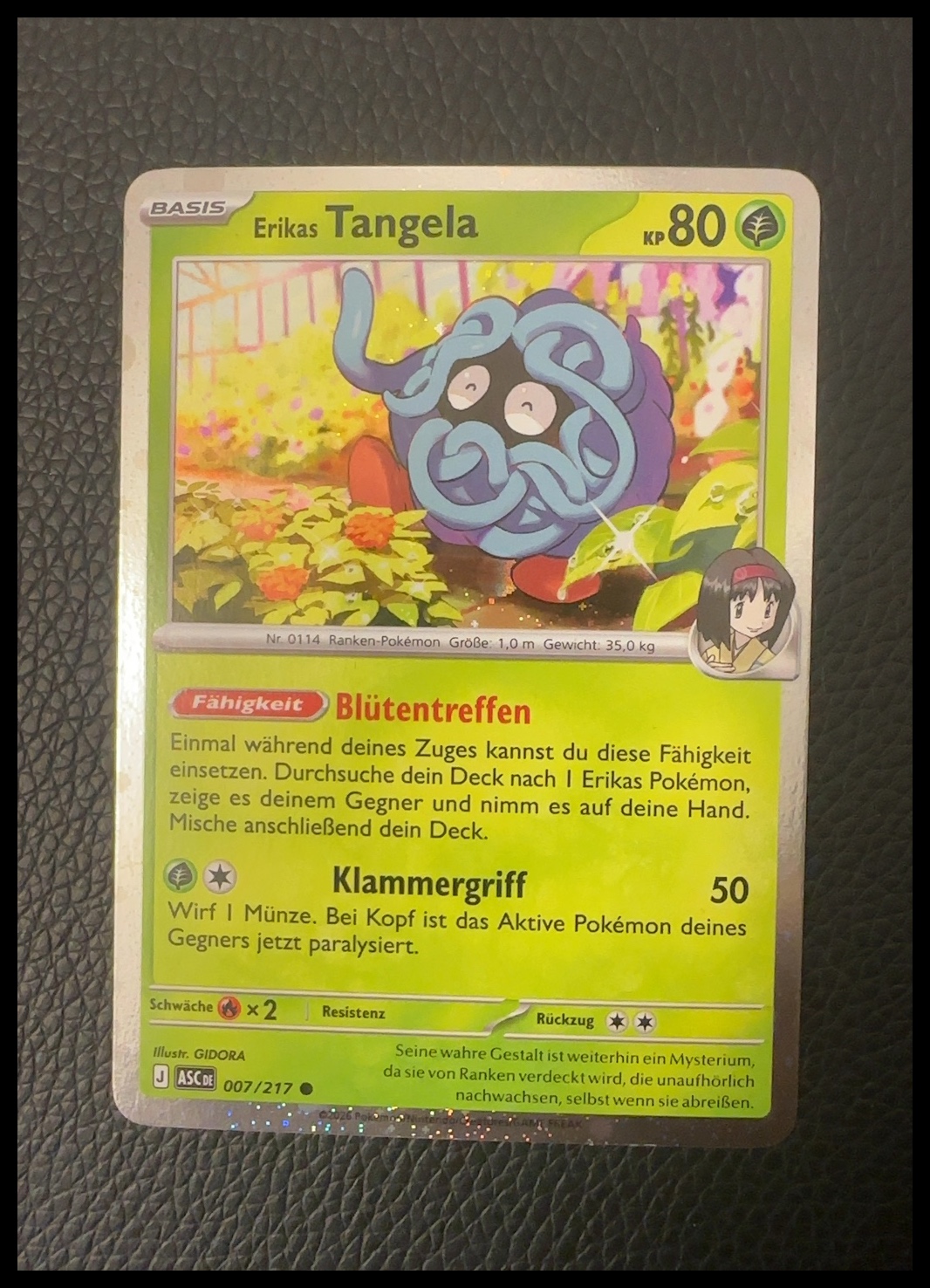
The base #7/217 printing is a bulk common, so its price is likely to remain near bulk levels unless a broader Erika-themed collector surge occurs. Demand is mostly driven by set completion rather than standalone investment demand.[1][5][7]
Next months. Likely to remain around bulk pricing with only small fluctuations based on TCGplayer demand and local market listings.[1][5]
Long term. Over 1 to 3 years, the card should stay stable at low value unless sealed product dries up significantly or Erika-themed collecting becomes much stronger; even then, gains would likely be modest for the common printing.[1][3][5]
History
Erika is a classic Pokémon Trainer originating from the Kanto region and first appearing in the original Pokémon games as the Celadon City Gym Leader, specializing in Grass-type Pokémon. In the Trading Card Game, 'Erika's' Pokémon are a themed subset tied to her character and are typically portrayed as her partnered Pokémon rather than standalone species cards. Erika's Tangela continues that Trainer-owned Pokémon theme and is part of the modern Mega Evolution—Ascended Heroes era set lineup.[15][16]
This card was first released on January 30, 2026, in the Pokémon TCG set Ascended Heroes, as card 7/217 in the main set numbering. It is also documented as a German-language printing in the same set structure.[1][15][16]
- It is a Common, Grass-type, Basic Pokémon card with 80 HP and the Ability 'Gathering of Blossoms,' which searches for an Erika's Pokémon from the deck.[1][15]
- Ascended Heroes includes both a main-set version (#7/217) and a higher-numbered Illustration Rare version (#218/217) of Erika's Tangela, which helps explain why market data can vary dramatically by card number and finish.[4][11][12]
- The main-set version is a very low-value bulk card in raw condition, with market references around ten to fifteen cents, while the Illustration Rare version trades much higher and is the one that typically attracts collector attention.[1][5][7][10][11]
Collector notes
Condition. Check centering, edge whitening, corner wear, print lines, surface scratches, and any factory nicks along the borders. For a Common card, the biggest condition issues are usually handling wear, pack dents, and poor centering rather than major print defects.[1][3]
Storage. Store it in a penny sleeve and rigid top loader or card saver, keep it dry and away from sunlight, and avoid loose binder pockets unless the binder is side-loading and acid-free. Even inexpensive commons can gain value if preserved in pristine condition or if later needed for set completion.[3]
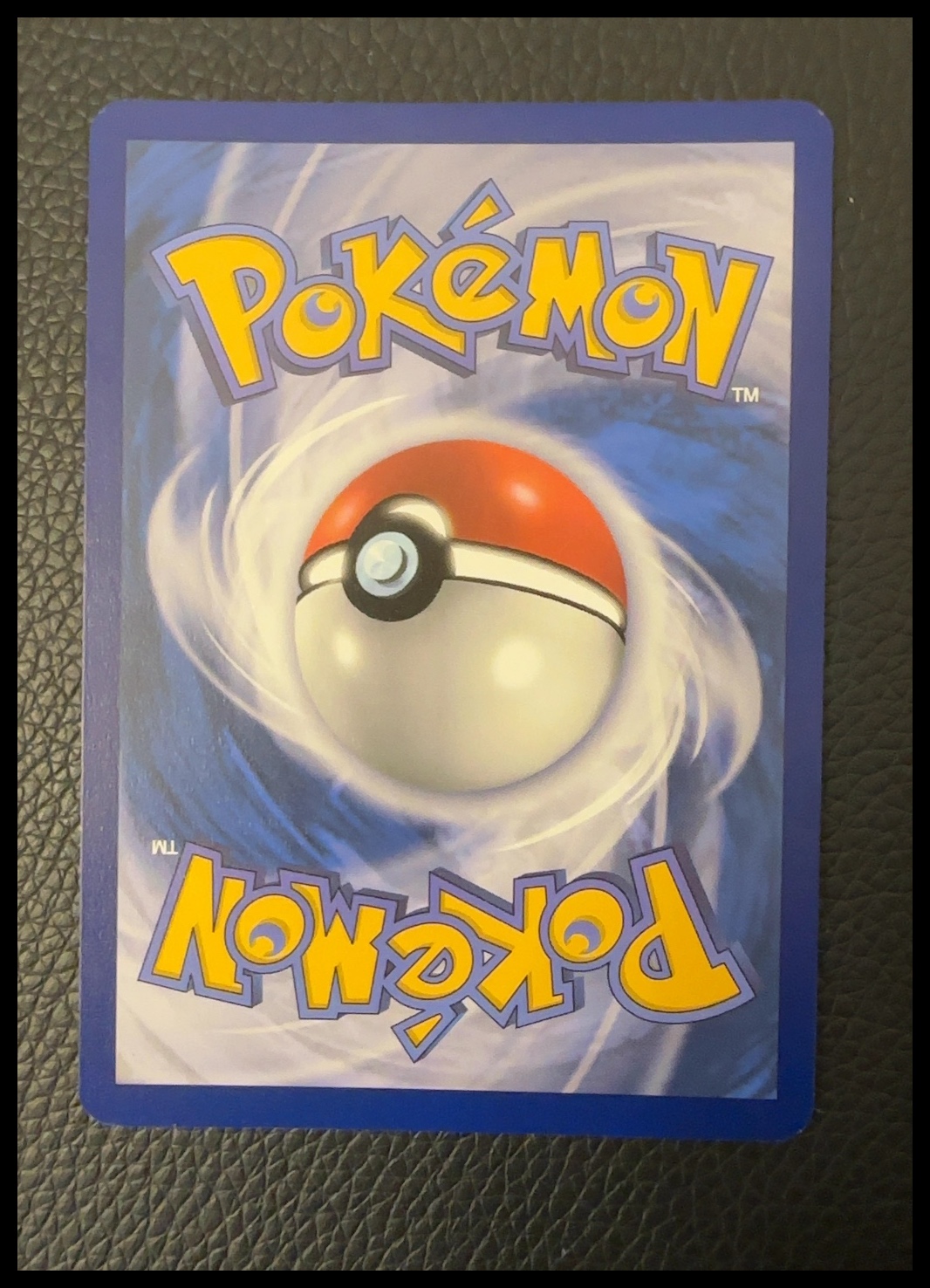
Authenticity. Verify the card stock, back-light opacity, rosette dot pattern, font weight, and kerning, since counterfeits can exist even for low-value cards. For expensive sealed or graded examples, professional grading or authentication is the safest route; for this specific card, the main risk is usually fake or misidentified higher-value variants rather than the common #7/217 itself.[3][15]