Market outlook
Stable Outlook 7/10
The card has a mature collector market: broad supply keeps lower-grade prices accessible, while Hall of Fame-level interest in Allen supports steady demand for better copies. Without new scarcity or major publicity catalysts, pricing typically moves gradually rather than sharply.
Next months. Expect mostly stable pricing with small fluctuations, especially in mid-grade examples.
Long term. Top-grade examples should remain resilient and may appreciate gradually over time, while lower-grade cards are likely to track general vintage-card demand more closely.
History
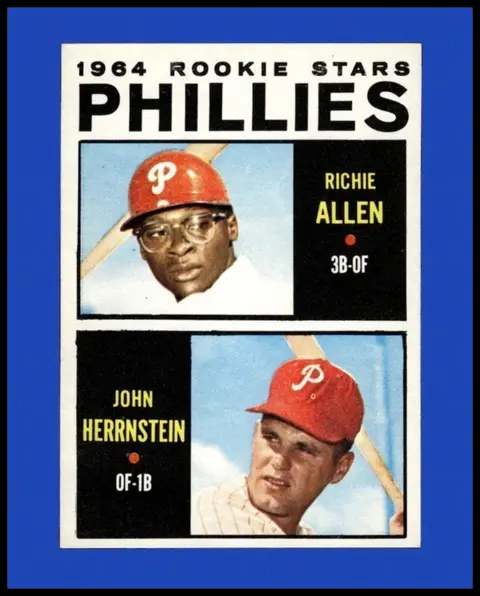
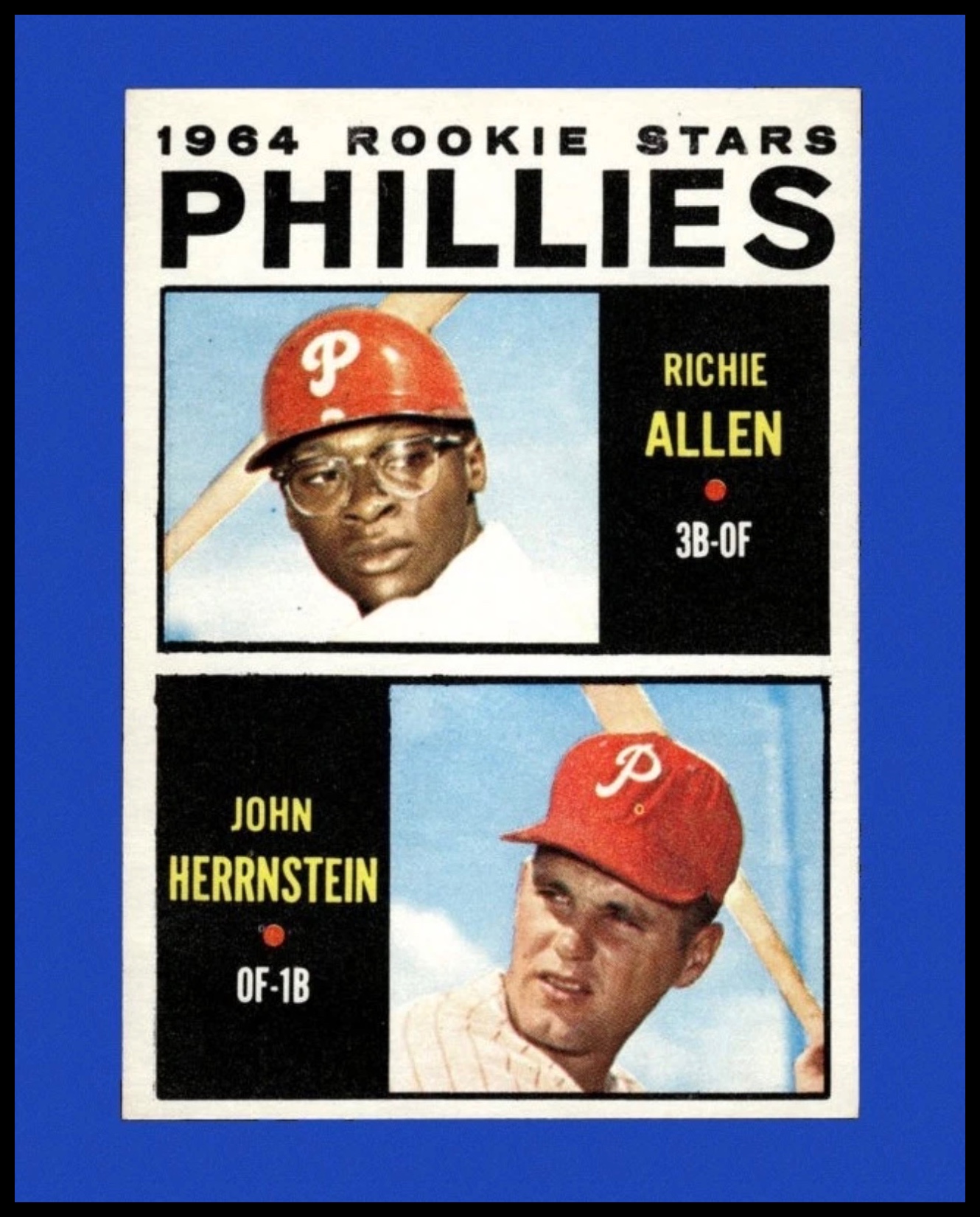
Richie Allen, later known as Dick Allen, was a star third baseman/first baseman for the Philadelphia Phillies and one of the most important power hitters of his era. John Herrnstein was a Phillies outfielder/first baseman whose inclusion on the card reflects Topps’ common 'rookie stars' format, pairing a top prospect or rising player with a lesser-known teammate. The card is significant because it captures Allen at the start of his major league career and is widely collected as his key rookie card.
First issued in the 1964 Topps Baseball set, released in wax packs and other hobby distribution in 1964 in the United States.
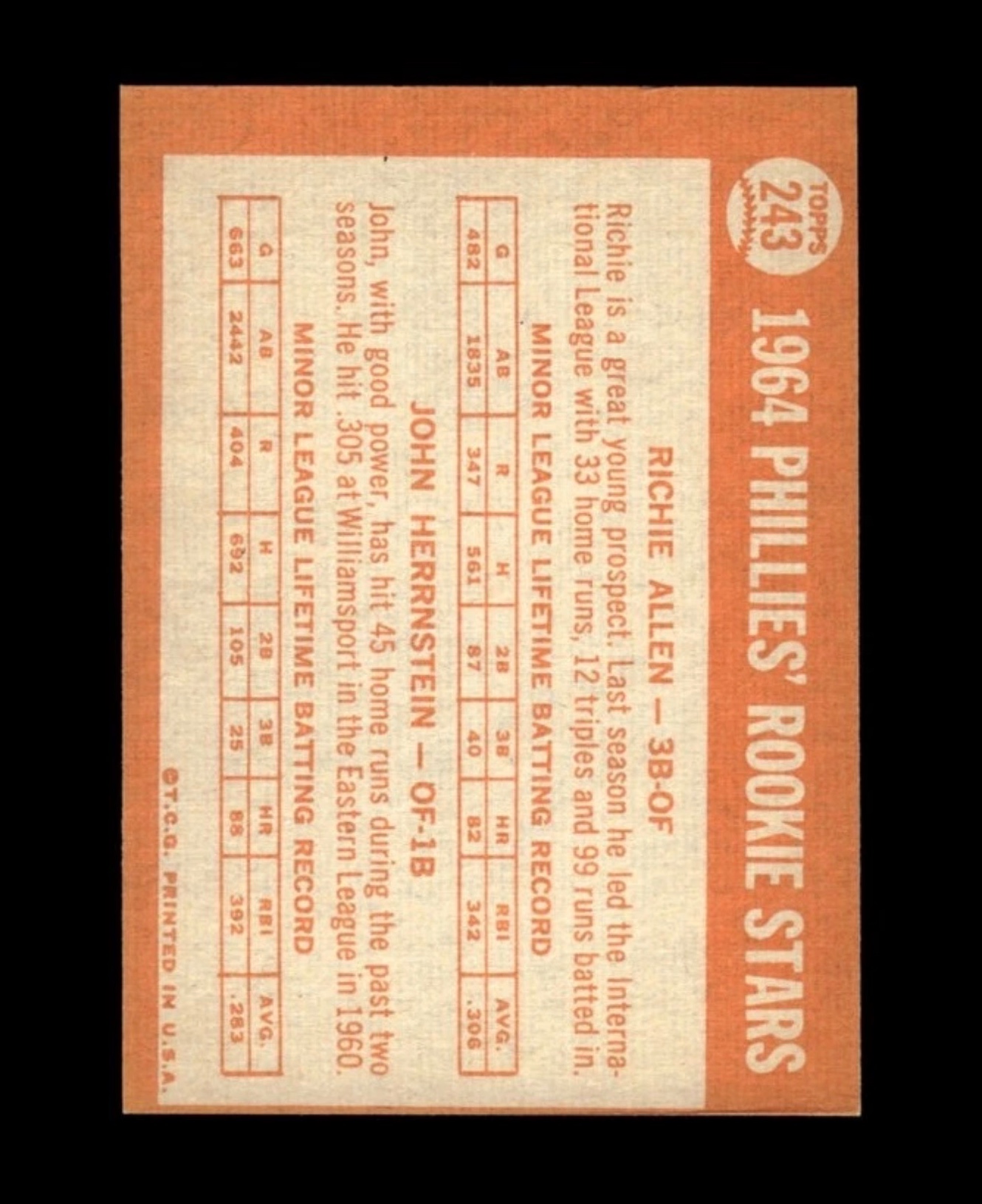
- The card is cataloged by graded as 1964 Topps #243, Phillies Rookies (Richie Allen/John Herrnstein).
- graded price history shows a Gem Mint 10 example at $3,403.00 and Mint 9 examples at $1,009.88, reflecting strong demand for high-grade copies.
- The card is commonly collected as Dick Allen’s rookie card and is more desirable than many other common cards from the set because of Allen’s Hall of Fame-level reputation.
Rarity and print run
- Tier
- Common
- Print run
- Very High
- First printed in
- 1964 Topps Baseball
- Demand
- High
- Supply
- High
- It comes from a very large-run 1964 Topps set, so the card itself is not rare in raw form.
- High-grade copies are scarcer because of centering, corner wear, and print/surface issues common to 1960s Topps cards.
- Demand is elevated because collectors seek it as a Dick Allen rookie card.
Collector notes
Condition. Check centering carefully, especially the left-right borders; 1960s Topps cards are also prone to corner wear, edge chipping, surface print defects, and light wax staining. High-grade examples are strongly affected by registration, sharp corners, and clean surfaces.
Storage. Store in a penny sleeve and rigid holder or semi-rigid card saver for raw cards; keep away from humidity, heat, and direct light. For long-term preservation, use archival-quality sleeves and boxes, and avoid handling the card without clean hands or gloves.
Authenticity. Authentic 1964 Topps cards should show period-correct printing, paper stock, and aging consistent with a 1960s Topps issue. Watch for modern reprints with overly sharp print quality, unnatural gloss, or incorrect card stock thickness; compare font, color, and border texture to verified originals.
Sources: psacard.com, collectibles.com, sportscardinvestor.com, etsy.com, sportscardspro.com