Market outlook
Stable Outlook 6/10
The card benefits from Hall of Fame player status and steady defensive-player collector interest, but it is not one of the top key rookie cards from the 1999 football class. Recent tracking for Champ Bailey rookie cards shows modest movement rather than strong acceleration, and comparable chrome-era cards have mostly been trading in a narrow range.[12][13]
Next months. Likely to remain stable with small fluctuations based on grade, eye appeal, and whether a strong auction example appears.
Long term. Likely to drift upward slowly over time, with premium-grade refractors and clean copies outperforming raw or lower-grade examples.
History
Champ Bailey is a Hall of Fame cornerback from Folkston, Georgia, who starred at the University of Georgia before becoming one of the most highly regarded defensive backs of his era. He was selected in the first round of the 1999 NFL Draft and built a reputation as an elite shutdown corner with exceptional coverage skills, ball production, and longevity, later being inducted into the Pro Football Hall of Fame. His rookie-era cards are notable because he entered the hobby during the strong late-1990s chrome and chromium-card boom, and his defensive-star status gives his rookie cards enduring collector appeal.[2][6][12]
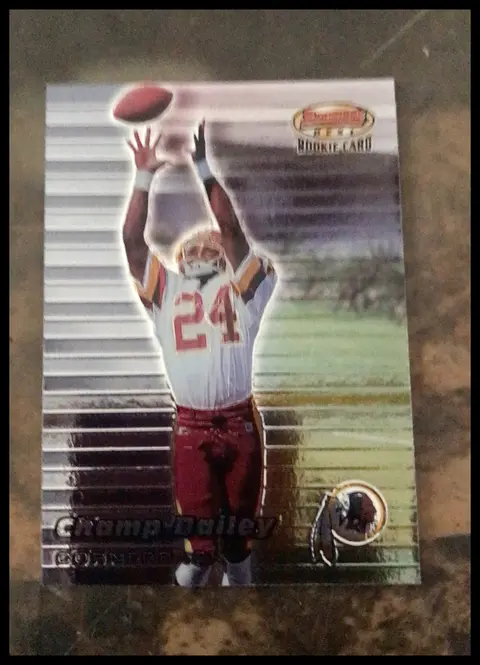
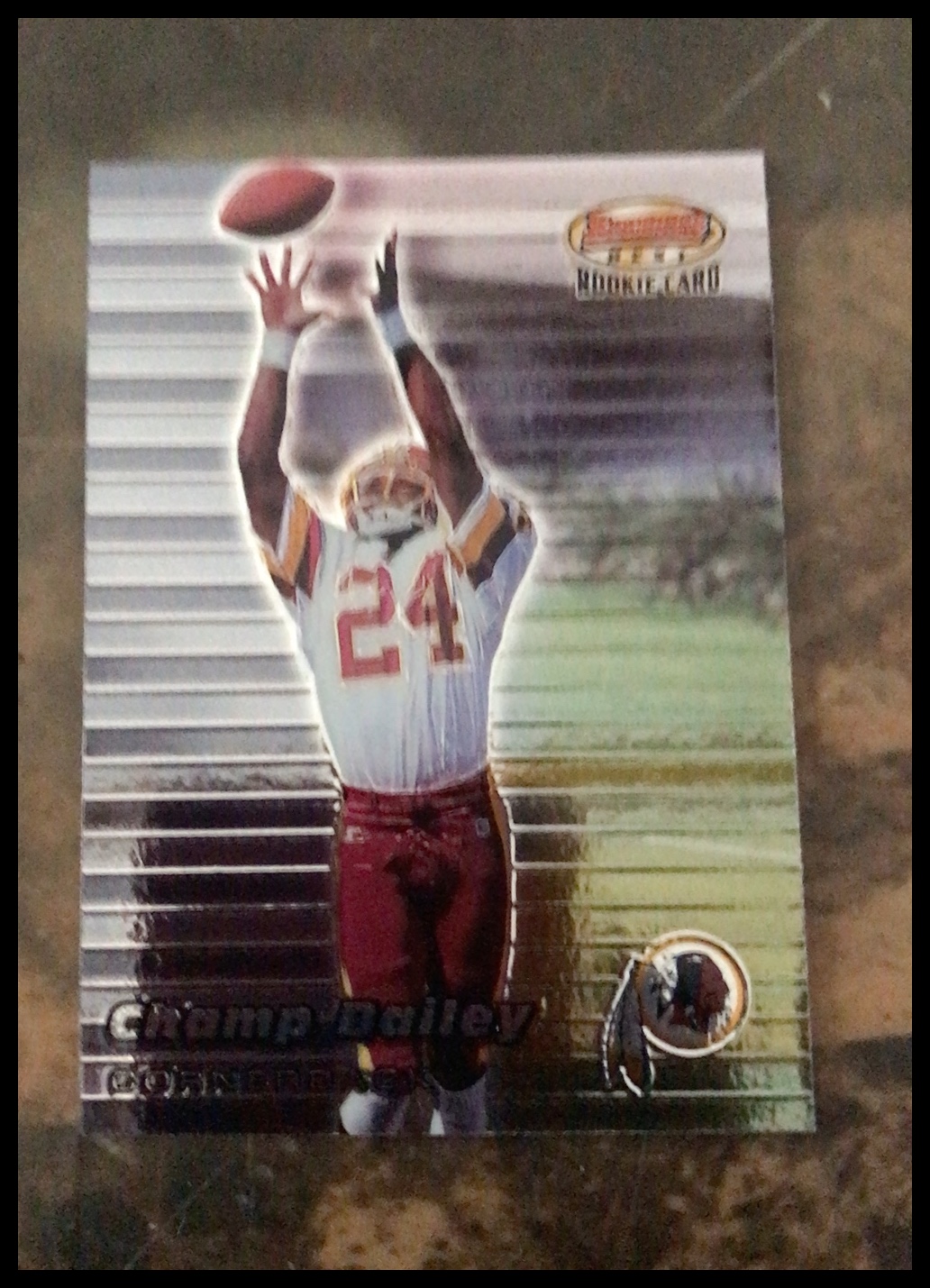
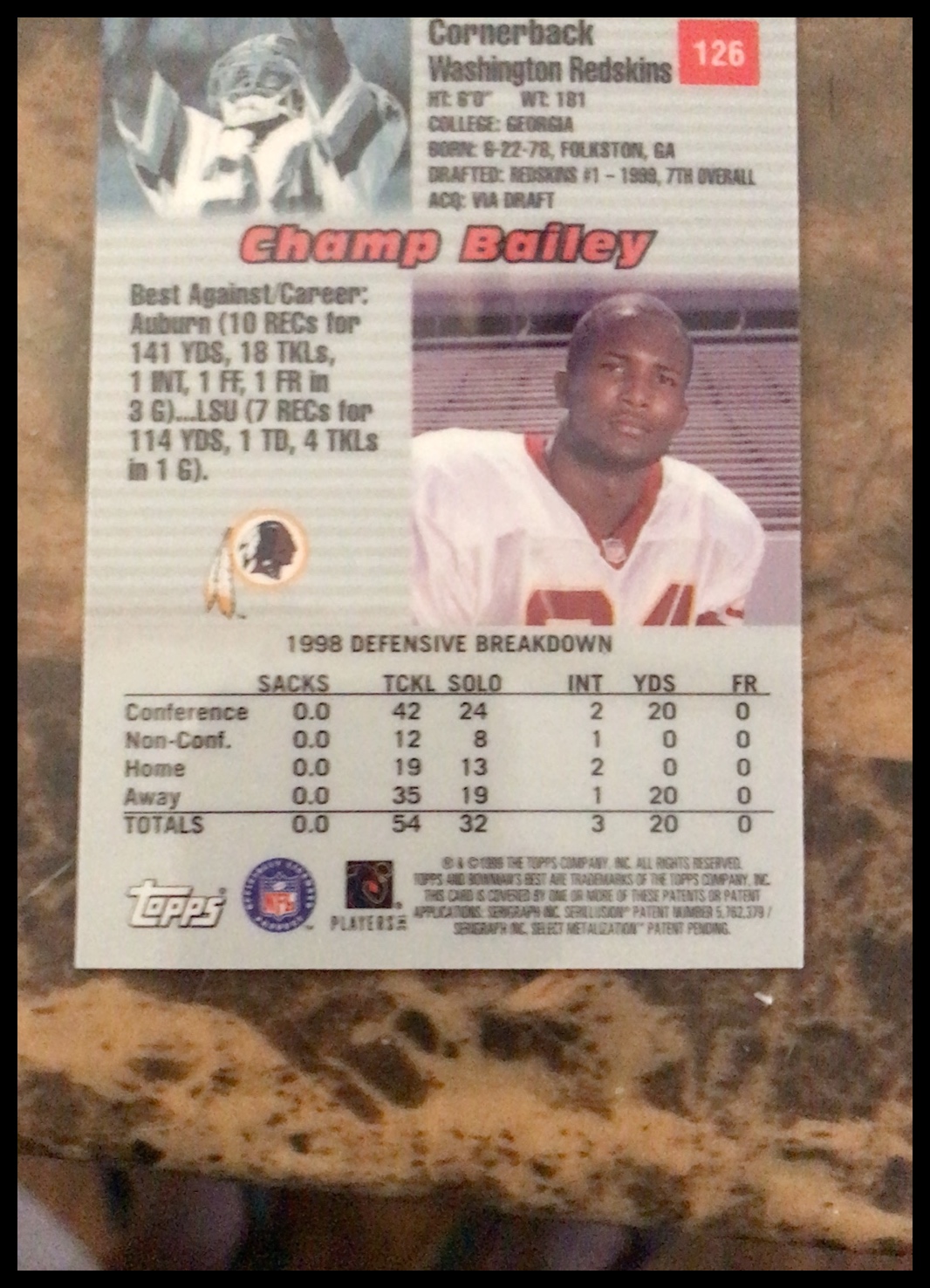
This card was first released in 1999 as part of Bowman's Best Football, a chromium-stock set released in August 1999 in hobby format.[5] Card #126 is Champ Bailey's Bowman's Best rookie card entry in that set.[3][6]
- 1999 Bowman's Best Football was a 200-card chromium set released in August 1999, with rookie cards placed in the 151-200 range and short-printed at one per pack; Champ Bailey's card #126 is a separate player card within the set, not part of the rookie subset.[5][3]
- Sports Card Investor tracks this card within the 1999 Bowman's Best football set and includes Champ Bailey among the key players in the release.[6]
- Price-tracking data shows the card exists in at least a Refractor version with a listed print run of 400, indicating a scarcer parallel alongside the base issue.[1]
Rarity and print run
- Tier
- Uncommon
- Print run
- Medium
- First printed in
- 1999 Bowman's Best Football
- Demand
- Medium
- Supply
- Medium
- 1999 Bowman's Best had rookie cards short-printed relative to many base-era sets, and chromium cards from this period survive in high grade less often due to surface and edge issues.[5]
- The Refractor parallel is materially scarcer than the base card, with one tracked print-run figure of 400 for the refractor version.[1]
- Champ Bailey has many rookie-card issues across multiple brands, which spreads demand across alternatives and reduces pressure on this exact card.[12]
Collector notes
Condition. Check centering carefully, since chromium cards from this era often show left-right and top-bottom shifts. Inspect the black borders and foil/chrome surfaces for scratching, edge chipping, print dots, surface lines, and corner wear. Refractors can show fine surface scratches and scuffs more easily than paper cards. Any whitening on edges or dulled gloss will materially affect grade.
Storage. Store the card in a penny sleeve and rigid top loader or card saver, and keep it away from heat, humidity, and direct light. For higher-grade copies, use clean sleeves only and avoid repeated handling of the surface. If the card is refractor stock, minimize friction because scratches are easier to see on the reflective finish.
Authenticity. Verify the Bowman's Best chromium finish, correct 1999 design, and exact card number 126. The card should have crisp printing, consistent foil/chrome reflectivity, and no signs of modern inkjet reproduction. Compare borders, logo placement, and font alignment against authenticated examples. Refractor parallels should display the characteristic rainbow reflectivity rather than a flat gloss.
Sources: sportscardspro.com, psacard.com, sportlots.com, sportscollectibles.com, baseballcardpedia.com