Market outlook
Rising Outlook 7/10
The trend is rising due to sustained demand for key 1960s cards, especially #1 cards, and the growing scarcity of high-grade copies. Mays’ legacy and the card’s iconic status continue to drive appreciation[1][3][6].
Next months. Next 3-6 months: Prices for MINT 9 and NM-MT 8 copies are expected to remain stable or increase slightly, driven by auction demand and collector interest[1].
Long term. 1-3 year prediction: Prices for high-grade copies will likely continue to rise, supported by the card’s historical significance and limited supply of top-tier examples[1][3].
History
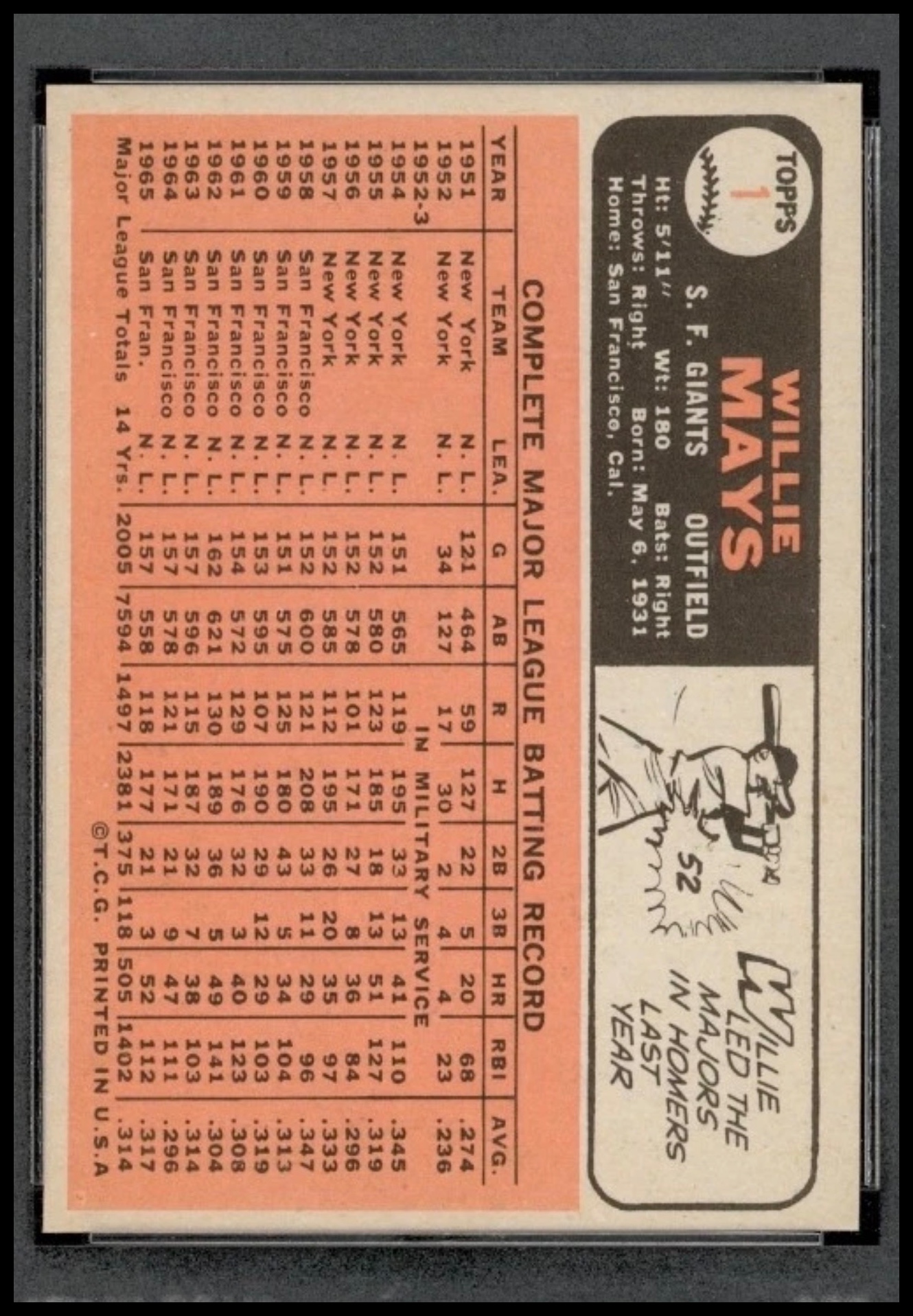
Willie Howard Mays was a legendary American professional baseball player who played 23 seasons in the National League, primarily for the San Francisco Giants and New York Mets. He retired with 3,283 hits, 2,062 runs scored, 1,903 RBI, 338 stolen bases, 660 home runs, and a career .302 batting average. Known for his all-around excellence, Mays was a 12-time All-Star, won 10 Gold Gloves, and was the 1955 Rookie of the Year. He is widely regarded as one of the greatest baseball players of all time[1].
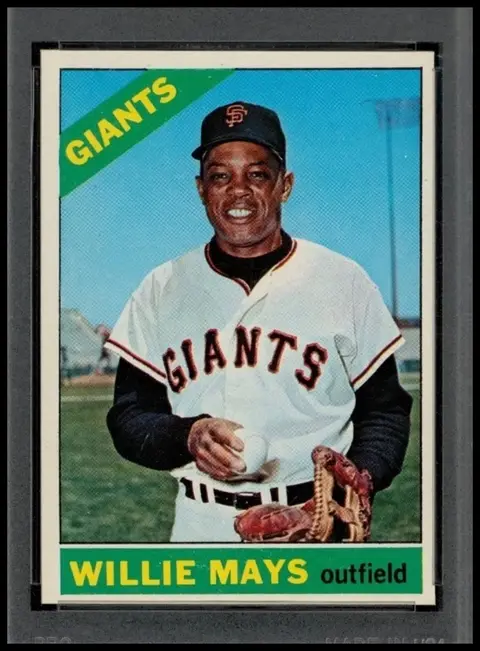
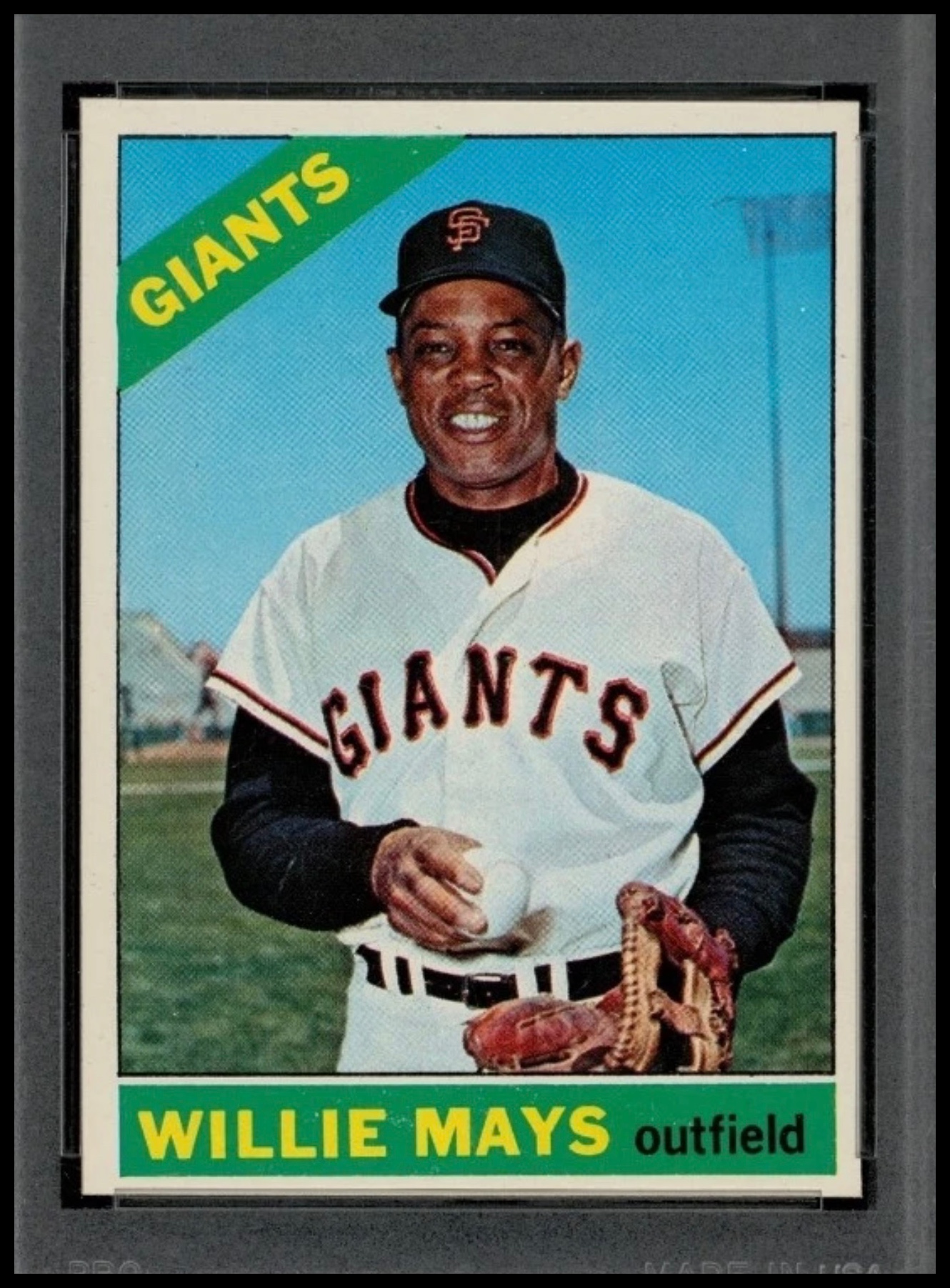
This card was first released in 1966 as part of the 1966 Topps Baseball set in the United States. It is card #1, featuring Willie Mays as the opening card of the set[1][5].
- Willie Mays is the #1 card in the 1966 Topps Baseball set, making it a key card for collectors[1][5].
- The 1966 Topps set features Mays prominently, along with other key players like Mickey Mantle[6].
- Mays’ career total of 660 home runs ranks among the top in MLB history[1].
Rarity and print run
- Tier
- Common
- Print run
- Very High
- First printed in
- 1966 Topps Baseball
- Demand
- High
- Supply
- Medium
- The card is a base card from a mass-produced set, making it common in lower grades.
- High-grade copies (MINT 9, NM-MT 8) are relatively scarce due to condition sensitivity and manufacturing variability[1].
- The card’s position as #1 in the set increases its collector demand, elevating its perceived rarity[1][5].
Collector notes
Condition. Key things to check include centering, corner wear, edge wear, and surface gloss. Common flaws include soft corners, especially on the front and back, and potential printing spots or creases. The card’s high grade population (e.g., 26 MINT 9s) makes condition critical for value[1][3].
Storage. Best practices include storing the card in a rigid, non-PVC plastic sleeve or holder, keeping it in a cool, dry environment away from direct light, and using a protective outer box or case to prevent bending or scratching.
Authenticity. To spot fakes or reprints, check for correct printing quality, font consistency, and color saturation. Original cards have a distinct glossy finish and sharp edges. Authentication by graded or graded is recommended, and verified populations (e.g., 26 MINT 9s) help confirm authenticity[1].
Sources: psacard.com, sportscardspro.com, app.collectors.com, baseball-almanac.com, throwbacksportscards.com