Market outlook
Rising Outlook 8/10
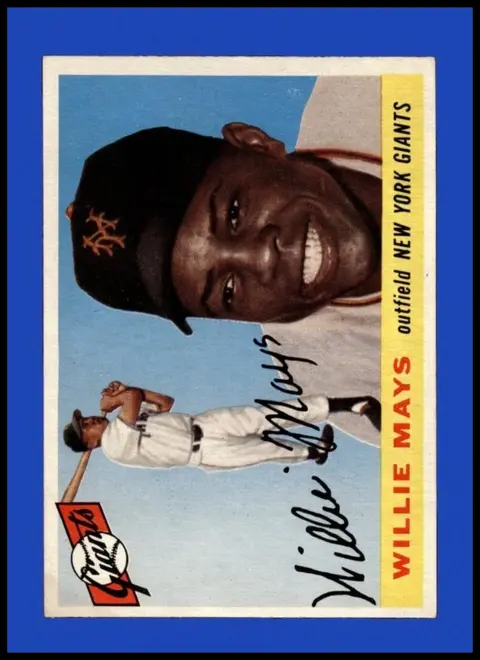
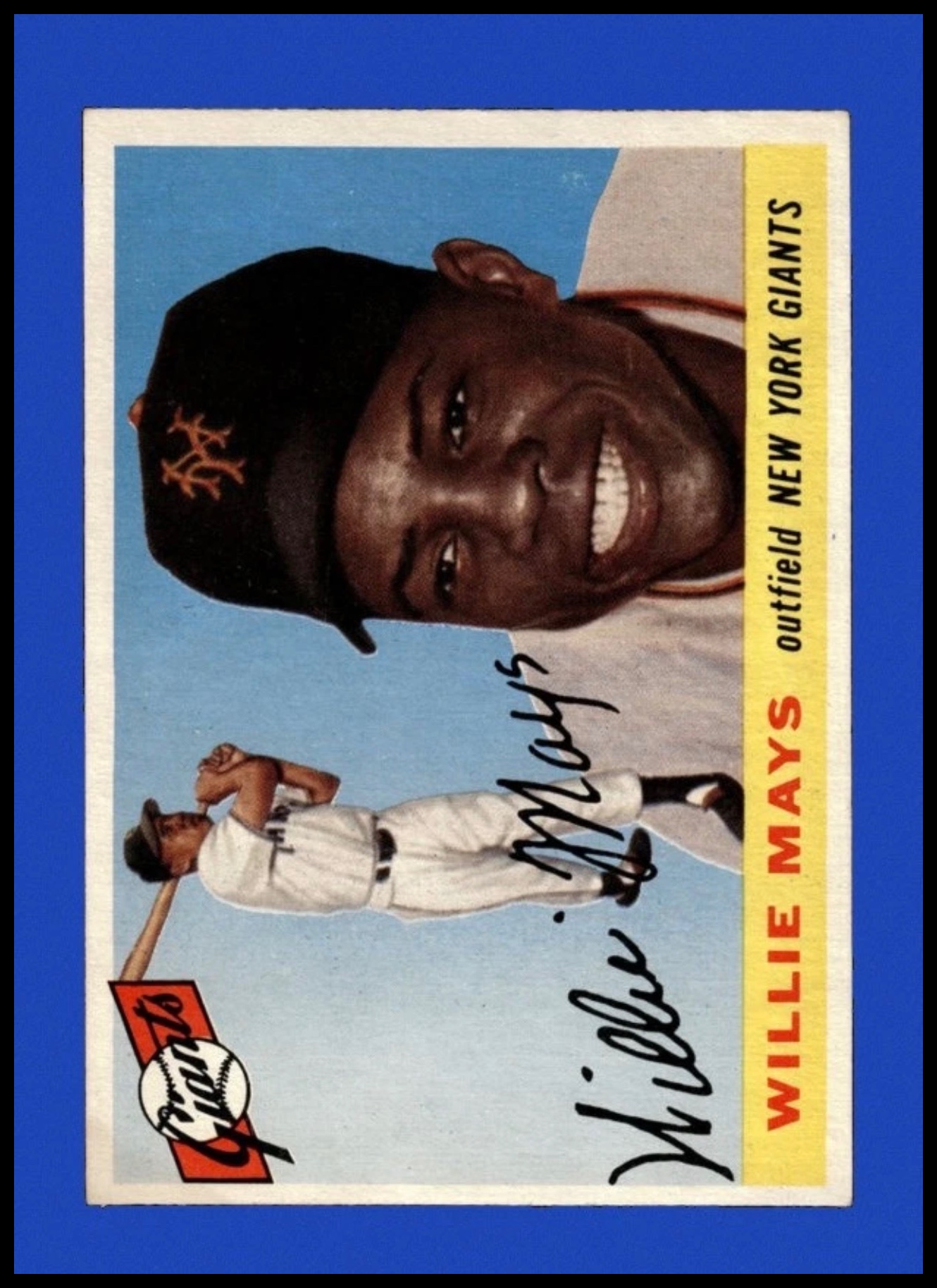
Blue-chip vintage Hall of Fame cards with strong name recognition tend to hold value well and appreciate over time, especially in higher grades. The 1955 Topps Willie Mays card remains a cornerstone issue with broad collector demand and limited supply in top condition.
Next months. Expected to remain firm to slightly higher, with well-centered and high-grade examples continuing to command premium prices.
Long term. Likely to appreciate gradually over 1-3 years, with the strongest gains concentrated in graded 8 and above, where supply is meaningfully constrained.
History
Willie Mays (1931-2024) was one of the greatest players in baseball history, known as the "Say Hey Kid." A five-tool center fielder for the New York/San Francisco Giants, he became a national icon through his combination of elite defense, speed, power, and longevity. He won two National League MVP awards, was a 24-time All-Star, hit 660 home runs, and is widely regarded as one of the best all-around players ever. His 1955 Topps card is one of the key postwar mainstream cards for Mays collectors and is especially significant because it captures him in his prime as an established star rather than as a rookie.
First released in the 1955 Topps Baseball set, distributed in the United States through Topps one-card penny packs, six-card nickel packs, and scarcer cello packs during the 1955 baseball season.
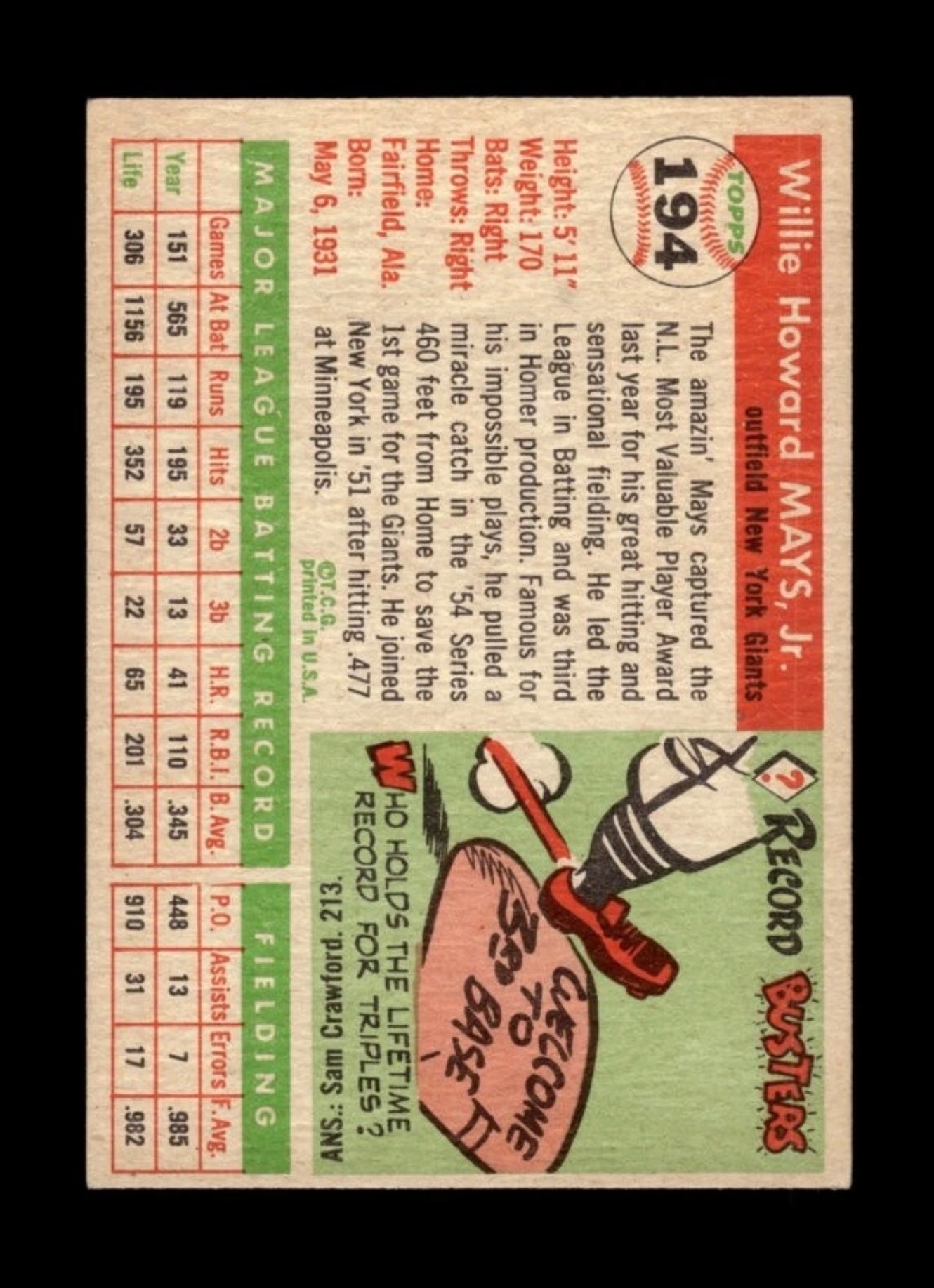
- Card #194 is one of the most important Willie Mays cards and is a major key in the 1955 Topps set.
- It is not considered Mays' rookie card; his mainstream rookie card is generally recognized as 1951 Bowman.
- The 1955 Topps design features a horizontal layout with a portrait and action image, making the set one of the most visually distinctive of the 1950s.
Rarity and print run
- Tier
- Rare
- Print run
- High
- First printed in
- 1955 Topps Baseball
- Demand
- Very High
- Supply
- Low
- High collector demand for Willie Mays as one of baseball's all-time greats
- 1950s Topps cards were heavily handled and many were damaged or poorly centered
- High-grade examples are especially scarce due to paper quality and production/handling issues
- The card is widely collected both as a single-player issue and as a key card in the 1955 Topps set
Collector notes
Condition. This card is highly condition-sensitive. Check for centering issues, rounded corners, edge wear, surface scuffing, print snow, wax staining, and color fading. Common handling flaws on 1950s Topps cards include rubber-band marks, creases, and light staining. High-grade copies are especially difficult because the card is prone to chipping and centering problems.
Storage. Store in an acid-free penny sleeve and a rigid top loader or semi-rigid card holder. Keep in a cool, dry, dark environment away from humidity and direct sunlight. For higher-value copies, consider professional grading and long-term storage in a slab or archival-quality holder.
Authenticity. Authentic examples should show period-correct 1955 Topps printing traits, paper stock, and aging. Reprints often have sharper modern printing, incorrect gloss, or too-clean surfaces. Compare the card’s dimensions, color saturation, and backside printing with known authentic examples. For high-value raw copies, third-party authentication and grading are strongly recommended.
Sources: hobbyscan.com, sportscardspro.com, collectrea.com, throwbacksportscards.com, sportscardinvestor.com