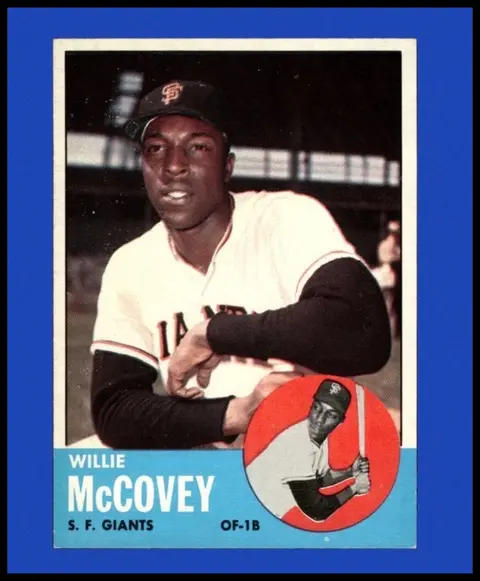
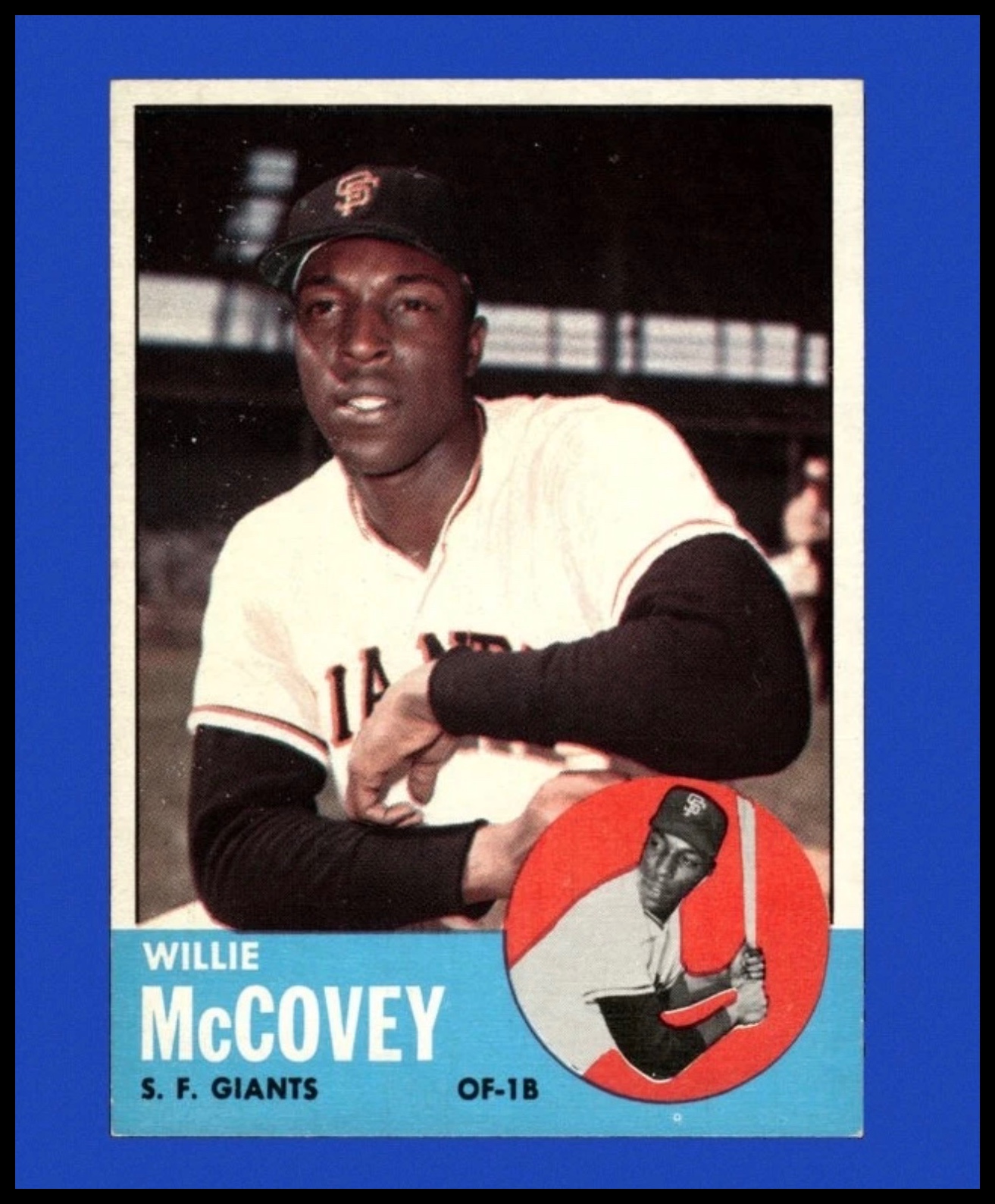
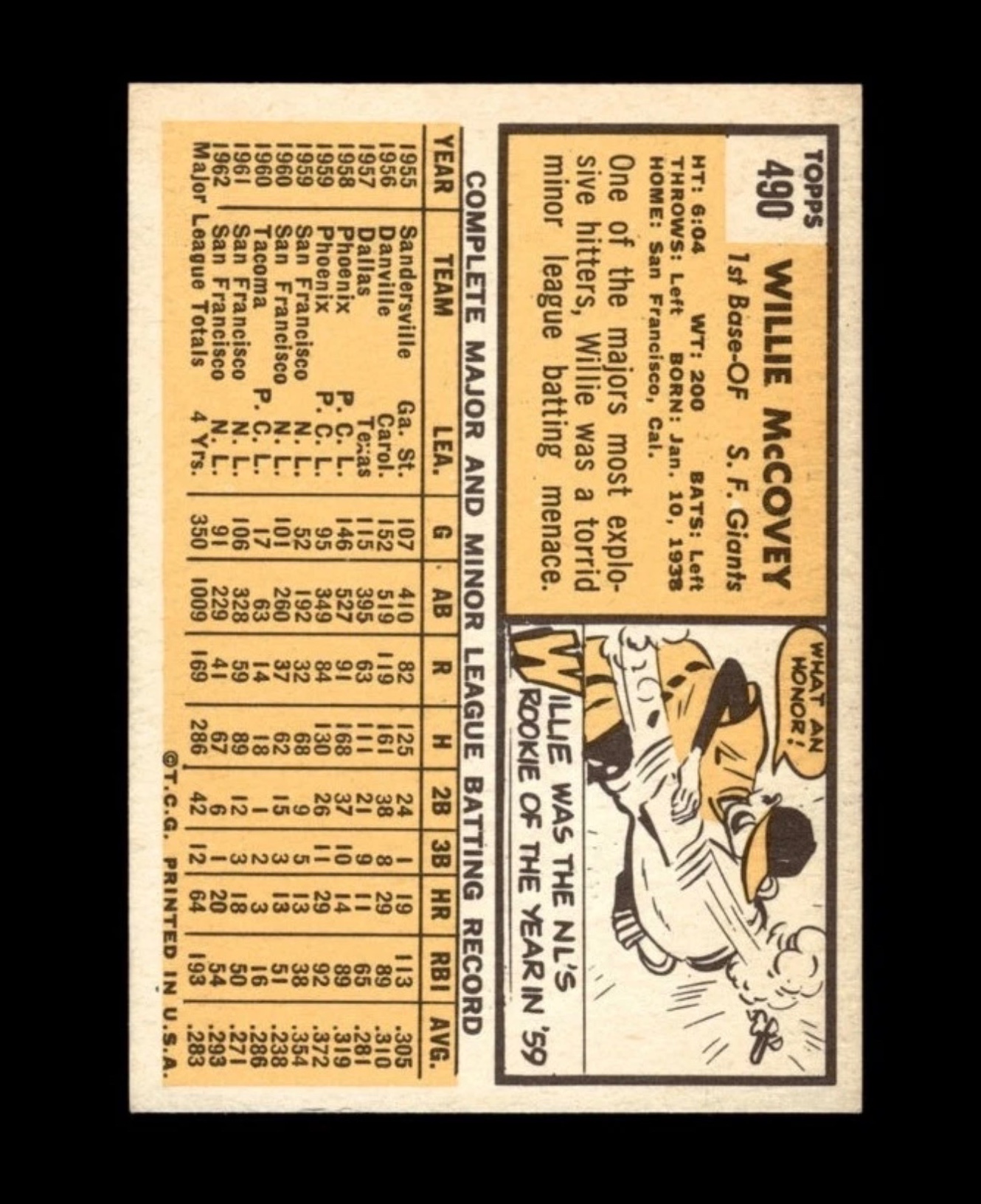
Market outlook
Rising Outlook 7/10
The 1963 Topps set maintains strong collector demand due to its iconic status and classic design. McCovey's legendary power-hitting reputation and six-time All-Star status continue to drive interest. The baseball card market has been stable with rising demand for vintage cards, particularly high-grade copies of common players from popular sets[1][4].
Next months. Next 3-6 months: Prices expected to remain stable with slight upward movement, particularly for graded 8-9 copies. High-grade copies may see modest price increases as collector demand continues.
Long term. 1-3 years: Prices expected to rise steadily, especially for graded 9-10 copies, as the vintage baseball card market continues to grow and McCovey's legacy as a legendary power hitter remains strong. Top-grade copies may see significant appreciation.
History
Willie McCovey was a legendary American professional baseball player who played 15 seasons in Major League Baseball (1959-1973) primarily for the San Francisco Giants. Known as 'Mighty Willie,' he was a six-time All-Star and one of the most feared power hitters of his era, with 302 career home runs. He was a standout at Sacramento Junior College before being drafted by the Giants, and his 206-foot home run at Sac-Joa is an iconic baseball story. McCovey was also a two-time National League RBI leader and is considered one of the greatest players never to win a World Series[1][8].
This card was first released in 1963 as part of the Topps Baseball card set in the United States. It was distributed nationally through card shops and vending machines across the country[1][8].
- McCovey hit 302 career home runs and was a six-time All-Star
- He was a two-time National League RBI leader (1963, 1967)
- His 206-foot home run at Sac-Joa College is one of the most famous baseball stories ever
- He played 15 seasons in MLB (1959-1973) primarily with the San Francisco Giants
- He was known as 'Mighty Willie' for his powerful hitting style[1][5]
Rarity and print run
- Tier
- Common
- Print run
- Very High
- First printed in
- 1963 Topps Baseball
- Demand
- High
- Supply
- High
- 1963 Topps set was produced in very high quantities making it a common card
- Card stock is thin and corners are soft, making high-grade copies difficult to find
- Off-center printing is common, reducing the number of perfectly centered copies
- Surface scratches and edge wear are frequent, limiting the number of pristine copies
Collector notes
Condition. Key things to check include centering (1963 Topps cards are known for off-center printing), corner wear (corners are soft and prone to damage), edge wear (edges show white quickly), surface scratches (surface is prone to scratches), and print defects (common printing flaws). The card stock is thin and can bend easily. Check for original gloss and avoid cards with creases or discoloration[1][6].
Storage. Store in a rigid card holder or snap case, never in a magnetic holder. Use a toploader for ungraded copies. Keep in a cool, dry environment away from direct sunlight. For long-term storage, use acid-free sleeves and a stamp box. Avoid handling the card surface directly. Consider humidity-controlled storage for valuable copies[1].
Authenticity. To spot fakes, check printing quality (reprints have sharper, cleaner images), card stock thickness (reprints are often thinner or thicker), color saturation (reprints may have different colors), and edge quality (reprints often have machine-cut edges). Look for graded or graded certification labels on graded copies. Original 1963 Topps cards have a specific gloss and texture. Reprints often lack the original paper grain and have overly sharp images[1][2].
Sources: sportscardspro.com, steinersports.com, sportsmemorabilia.com, sportscardinvestor.com, psacard.com