Market outlook
Stable Outlook 7/10
Demand for Nolan Ryan remains consistently strong, and the card is a cornerstone vintage Hall of Fame issue. Prices for top-grade examples tend to hold well, while lower-grade raw cards fluctuate with condition and venue.
Next months. Expect steady pricing with occasional spikes for strong eye-appeal or higher-grade examples.
Long term. Likely gradual appreciation over 1-3 years, especially for graded 8 and graded 9 copies, as supply remains limited in top condition.
History
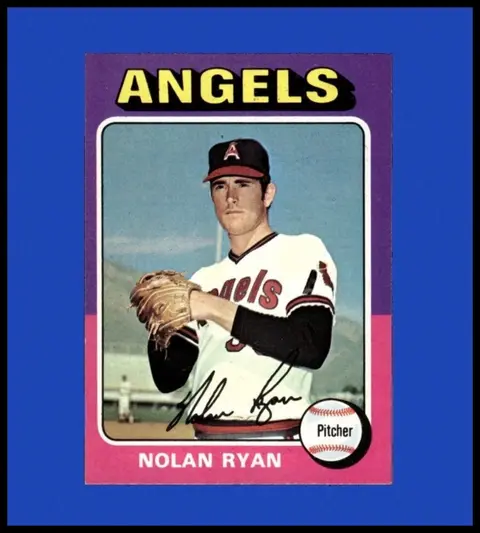
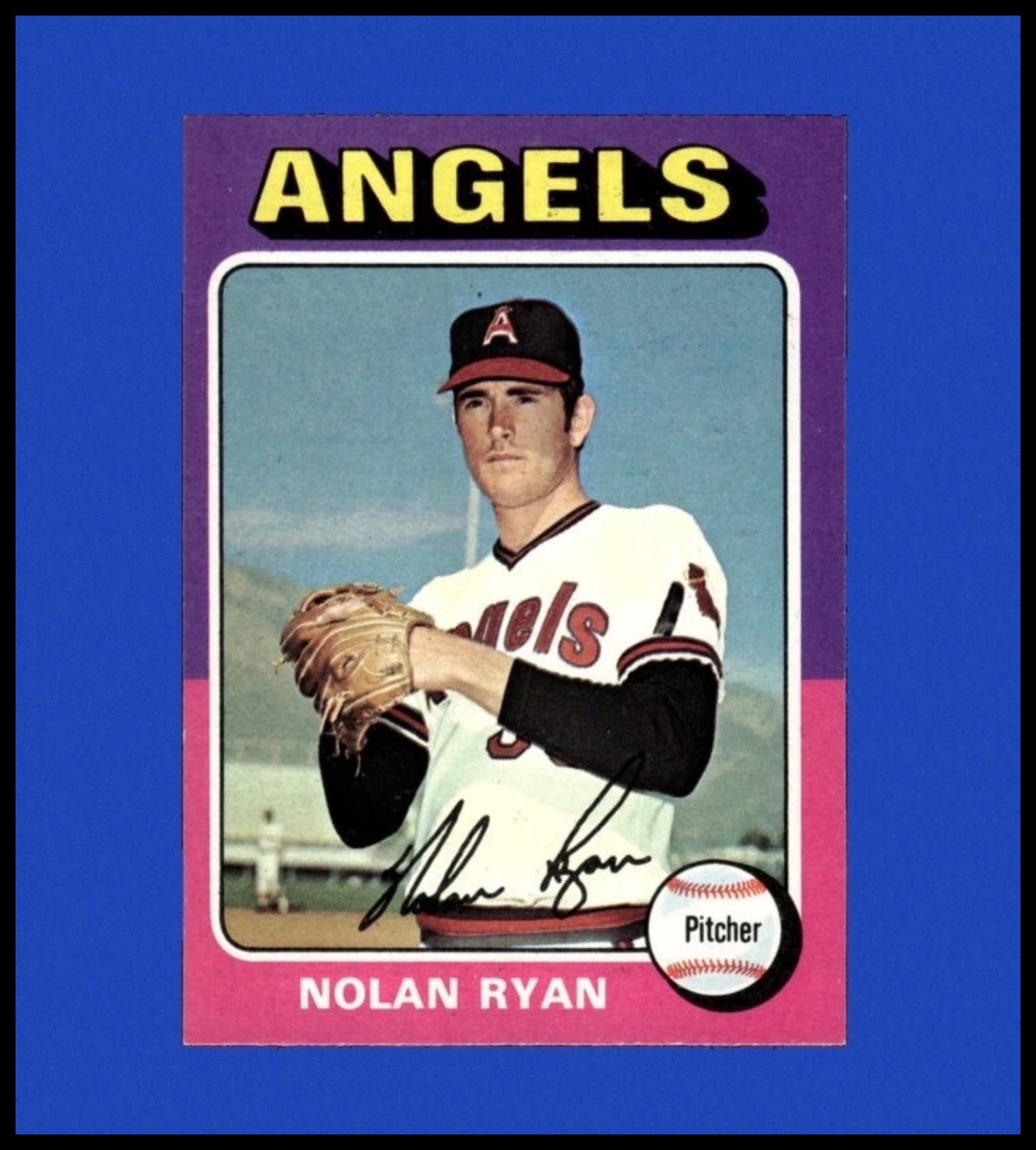
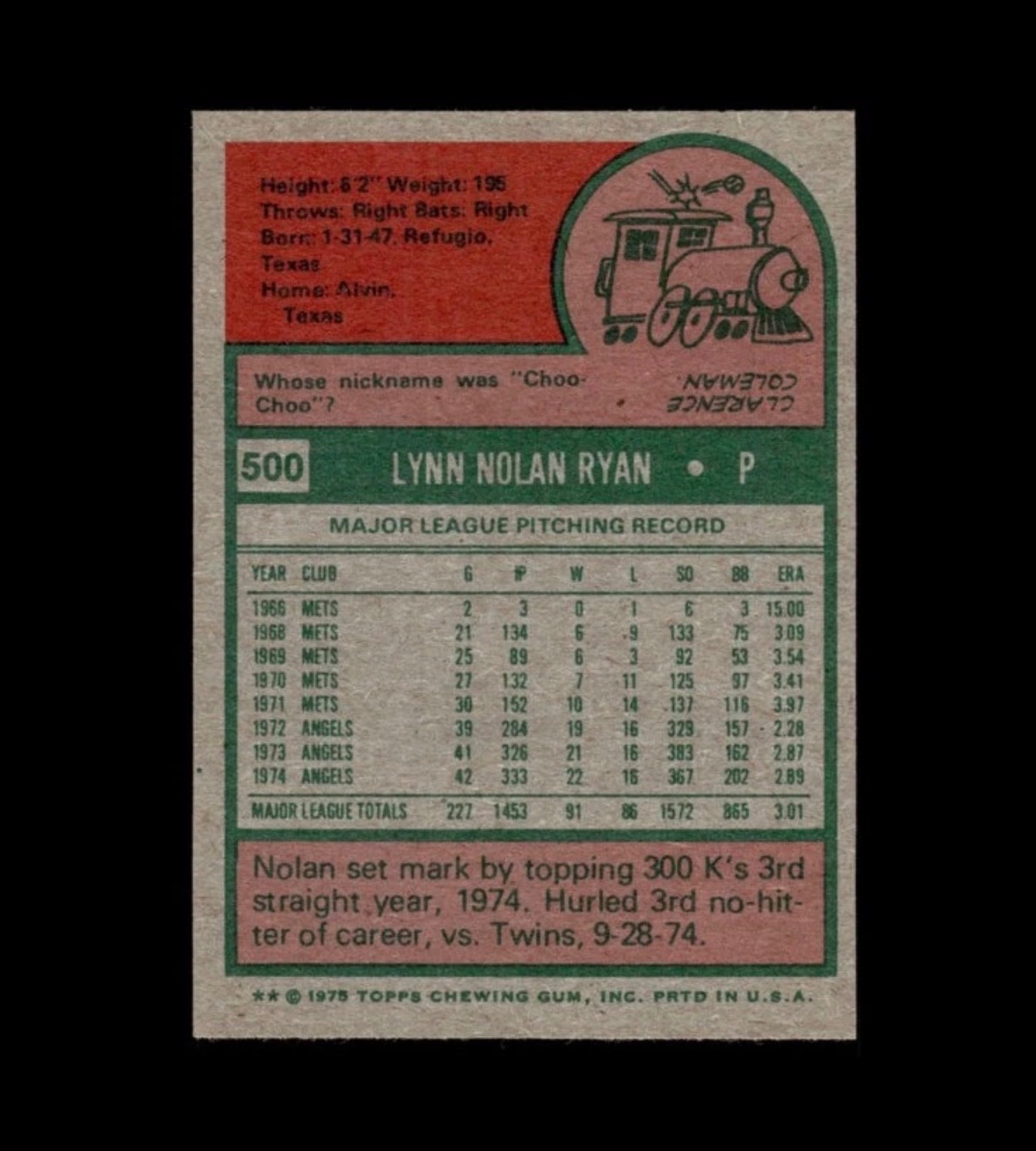
Nolan Ryan is one of the most iconic pitchers in baseball history, known for his extraordinary velocity, longevity, and strikeout totals. Born in 1947 in Refugio, Texas, he became a major league force with the New York Mets before pitching for the California Angels, Houston Astros, and Texas Rangers. The 1975 Topps card captures Ryan during his Angels era, when he was already recognized as a dominant power pitcher and was building the reputation that would eventually make him a Hall of Famer and one of the most collected pitchers of all time.
First released in 1975 as part of the Topps Baseball set in the United States, distributed through retail packs and wax boxes during the 1975 baseball card season.
- This is Nolan Ryan's flagship 1975 Topps card, one of the most important mainstream vintage cards in his career run.
- The card is widely collected because Ryan is a Hall of Fame pitcher with long-term star power and strong demand across all eras.
- High-grade examples are scarce due to the set's condition sensitivity, especially centering issues common to 1970s Topps cards.
Rarity and print run
- Tier
- Common
- Print run
- Very High
- First printed in
- 1975 Topps Baseball
- Demand
- Very High
- Supply
- High
- The card was printed in a very large flagship Topps production run.
- Scarcity is primarily grade-based, not pack-pulled scarcity.
- Centering, chipping, and corner wear reduce the population of strong examples.
Collector notes
Condition. Check centering carefully, as 1975 Topps is notorious for off-center cards. Also inspect corners for rounding, edge wear, print snow, surface gloss loss, and any wax or gum stains. The black-bordered design is extremely revealing of chipping and edge whitening.
Storage. Use penny sleeves and semi-rigid holders or top loaders, keep the card in a cool dry environment, and avoid stacking without protection. For high-grade copies, consider graded slab storage to prevent further wear. Keep away from humidity and direct sunlight, since black borders show damage quickly.
Authenticity. Look for correct stock, print quality, and consistent 1975 Topps typography and border design. Reprints often look too clean, have incorrect gloss, or display modern printing patterns under magnification. Compare the card back to verified examples for stock color, copyright text, and font alignment.
Sources: si.com, sportscardinvestor.com, steelcitycollectibles.com, sportscardspro.com, psacard.com