Market outlook
Stable Outlook 7/10
Neo-era Japanese holo rares typically benefit from slow collector-driven appreciation rather than sharp spikes. The card has recognizable character appeal and limited supply, but it is not among the most iconic chase cards in the broader Pokémon market.
Next months. Likely stable with small upward movements for clean raw and high-grade copies if broader Neo-era interest remains firm.
Long term. Likely gradual appreciation over 1-3 years, with premium growth strongest in graded 9/10 or equivalent high-grade examples.
History
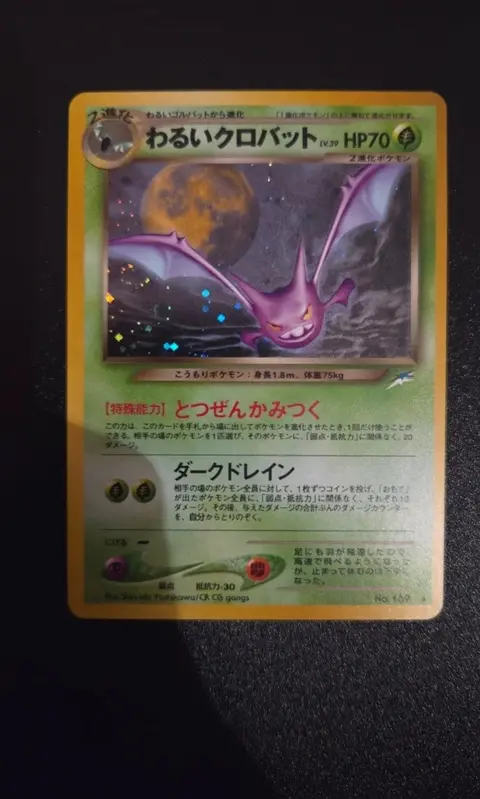
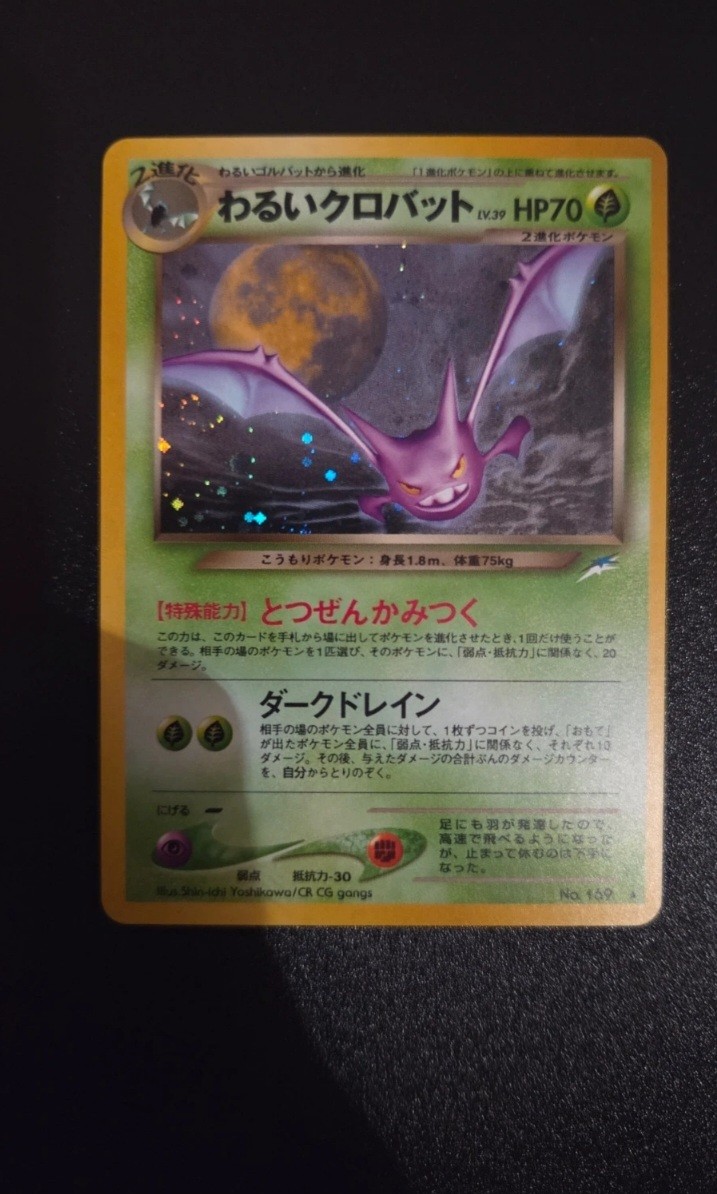
わるいクロバット is the Japanese Dark Crobat card, a Pokémon based on Crobat, the evolved form of Zubat and Golbat. In the Pokémon TCG's 'Dark' concept, the character represents a villainous or aggressive variant of the Pokémon, tied to the Team Rocket / dark Pokémon theme used in the Neo era. Crobat itself is a fast, poison/flying bat Pokémon, and this Dark version is significant because it reflects the Neo-era trend of spotlighting darker, more competitive versions of familiar Pokémon.[1][2][5]
This card was first released in Japan in the Neo expansion '闇、そして光へ...' (Neo 4 / Neo Destiny equivalent), and it is identified as card No. 169 in that set listing. English-language Dark Crobat later appeared in Neo Destiny, but the Japanese original is the first printing referenced here.[4][7]
- It is a Rare Holo card from the Neo Destiny-era Japanese print, making it one of the higher-end holo rares from that era.[4][7]
- The card's dark theme fits the Neo set's 'Dark' Pokémon identity, which was a defining collectible and gameplay theme of the late Wizards of the Coast era.[1][2]
- Collector listings and aftermarket inventory show it remains actively traded in Japan, with condition and grading heavily affecting value.[3][4][6][7][8]
Rarity and print run
- Tier
- Rare
- Print run
- Low
- First printed in
- Neo 4 / 闇、そして光へ... (Neo Destiny)
- Demand
- Medium
- Supply
- Low
- Holo rare from an early-2000s Japanese Neo-era set
- Older cards are increasingly scarce in high grade due to play wear and holo scratching
- Demand is concentrated among Neo-era, Dark Pokémon, and Japanese-language collectors
Collector notes
Condition. Check the holofoil for scratching, especially under strong angled light; Neo-era Japanese holos commonly show edge wear, corner whitening, and surface scratches from binder storage. Also inspect the black borders for chipping, the back for print lines or scuffs, and the corners for roundness because even small wear is visible on dark-bordered cards.
Storage. Store in a penny sleeve inside a rigid top loader or semi-rigid holder, and keep it away from moisture, heat, and direct sunlight. For valuable raw copies, use an outer team bag and archival-quality storage to reduce dust and edge wear.
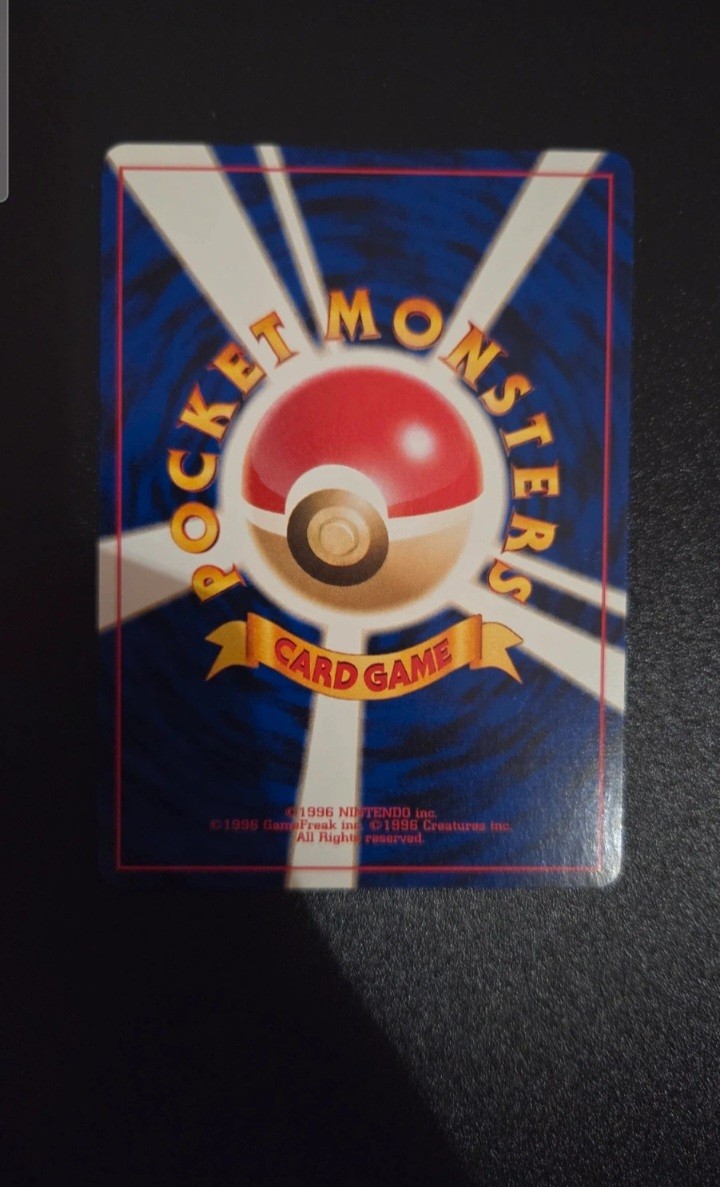
Authenticity. Verify the holo pattern, card stock, font sharpness, and back coloration against known authentic Japanese Neo-era cards. Fakes often have incorrect holo texture, washed-out ink, poor border alignment, or flimsy card stock. For high-value copies, graded authentication is the safest route.
Sources: note.com, instagram.com, jp.mercari.com, magicardshop.jp, pokemon-card.com