Market outlook
Stable Outlook 7/10
The card benefits from perennial Bo Jackson demand and strong rookie-card recognition, but the huge original print run limits scarcity-driven growth. Most price movement is tied to grade, eye appeal, and broader football-card nostalgia cycles.
Next months. Likely to remain stable with small fluctuations in raw and mid-grade prices, while gem-mint examples stay volatile.
Long term. Expected to hold collectible status and gradually appreciate in premium grades, but raw copies should remain broadly affordable due to high supply.
History
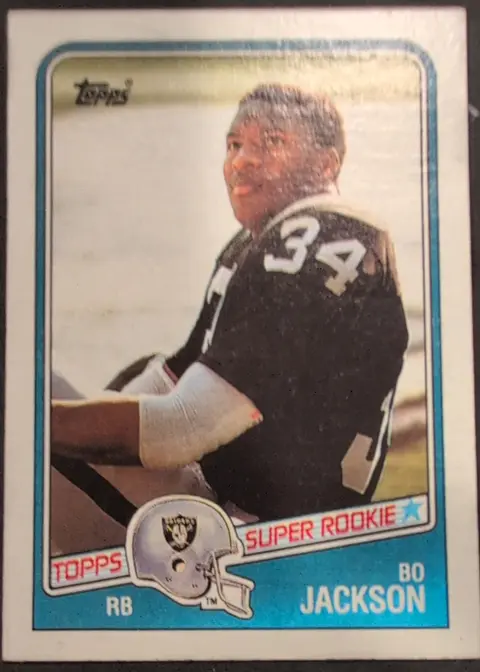
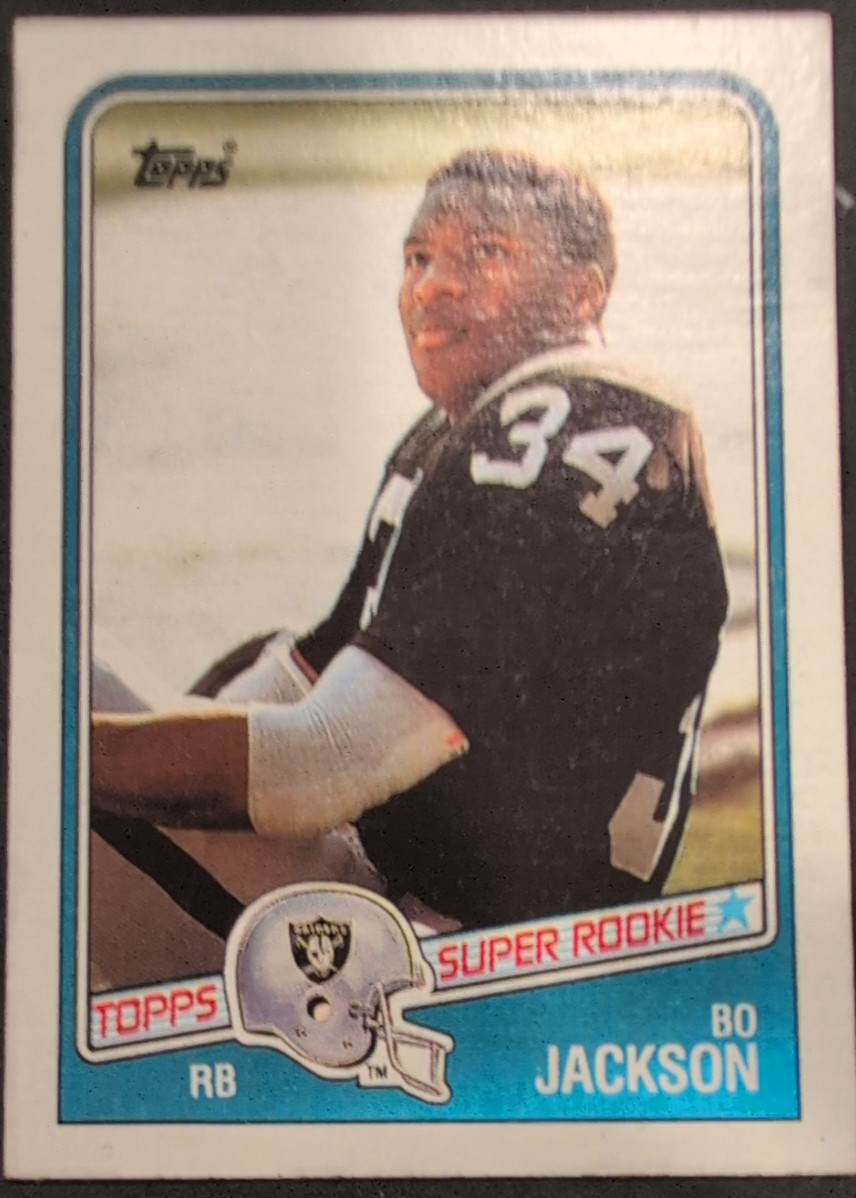
Bo Jackson is a two-sport American athlete best known for elite careers in both the NFL and MLB. He became a cultural icon in the late 1980s for his rare combination of size, speed, and power, and his 1988 Topps football card is widely regarded as his flagship rookie card in football collecting. The card is especially significant because it captures the peak of his fame with the Los Angeles Raiders and remains one of the most recognized late-1980s football cards.
First released in 1988 as part of the Topps Football set, distributed widely in hobby packs and retail wax of the 1988 Topps football product.
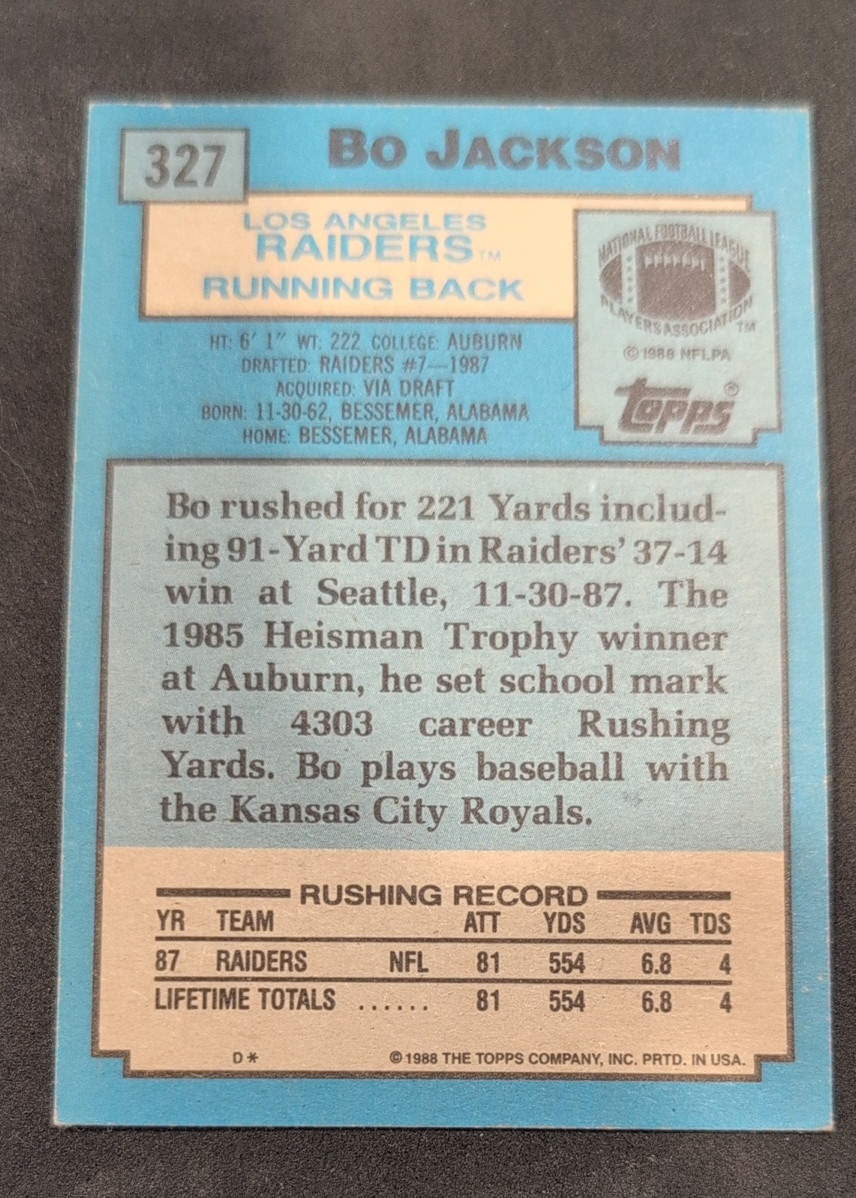
- Card #327 is generally treated as Bo Jackson’s key rookie card in the 1988 Topps Football set.
- Topps and graded catalog it as the Bo Jackson rookie and graded lists it in its 1988 Topps football price guide.
- The card is nicknamed and marketed as a 'Super Rookie' in hobby listings, reflecting its status as the flagship card of the set.
Rarity and print run
- Tier
- Common
- Print run
- Very High
- First printed in
- 1988 Topps Football
- Demand
- High
- Supply
- Abundant
- It was mass-produced in a widely distributed flagship Topps set.
- Surviving raw copies are plentiful.
- High-grade examples are much scarcer because centering and print quality issues are common.
Collector notes
Condition. Centering is the biggest issue, followed by sharp corners, clean edges, and surface gloss. Common flaws include print dots, soft corners, edge whitening, and off-center fronts or backs. Because this is a mass-produced common-era card, high grades are much harder to find than raw copies suggest.
Storage. Store in a penny sleeve and top loader or semi-rigid holder, keep away from moisture and sunlight, and avoid stacking unprotected cards. For long-term preservation, use graded slabs or archival-safe sleeves and boxes.
Authenticity. The card is heavily reprinted and often sold as a raw nostalgia piece, so compare stock, gloss, and print quality to known originals. Authentic copies should show period-correct Topps printing, consistent back text, and aging appropriate to 1988 cardboard; modern-looking color, overly sharp print, or glossy aftermarket surfaces can indicate reprints or custom products.
Sources: sportscardspro.com, sportscardinvestor.com, ebay.com, amazon.com, cardboardconnection.com