Market outlook
Rising Outlook 7/10
Blue-chip vintage Hall of Fame cards for Clemente continue to benefit from longstanding collector demand, especially in graded 8 and better. graded population data shows top-grade scarcity, and recent guide/pricing data suggests stronger values in higher grades than lower ones.[1][3][5]
Next months. Prices are likely to remain firm, with the strongest movement in graded 8-9 examples and stable performance in lower grades.
Long term. Over 1-3 years, the card should continue to appreciate gradually, especially for well-centered, high-grade copies with strong eye appeal.
History
Roberto Clemente Walker (1934-1972) was a Hall of Fame right fielder for the Pittsburgh Pirates and one of the most important figures in baseball history. He was the first Latin American player to reach 3,000 hits, won 12 Gold Gloves, earned 15 All-Star selections, and became a cultural icon for excellence on the field and humanitarian leadership off it. His legacy makes virtually any early Topps Clemente card highly significant to collectors.[1][6][7]
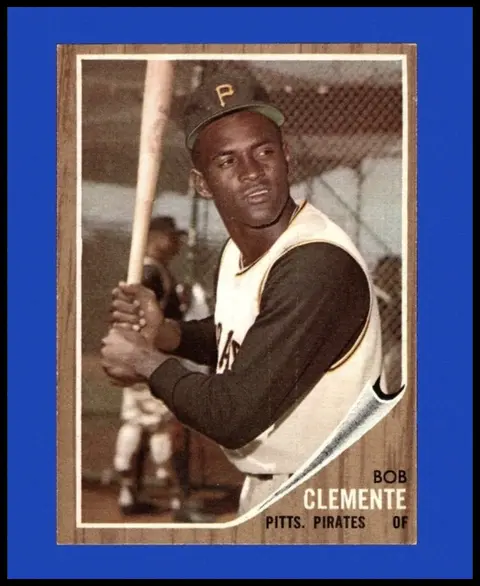
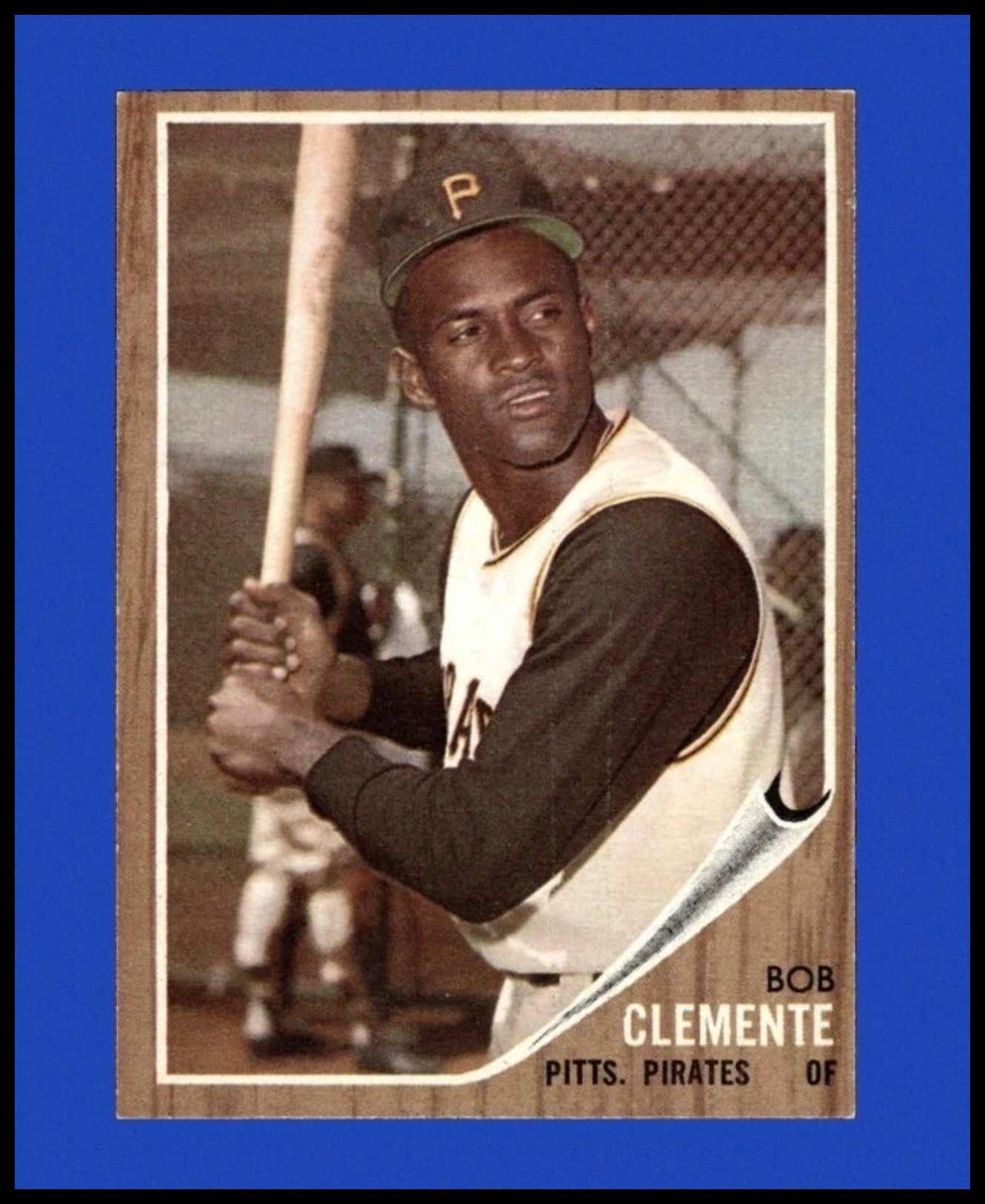
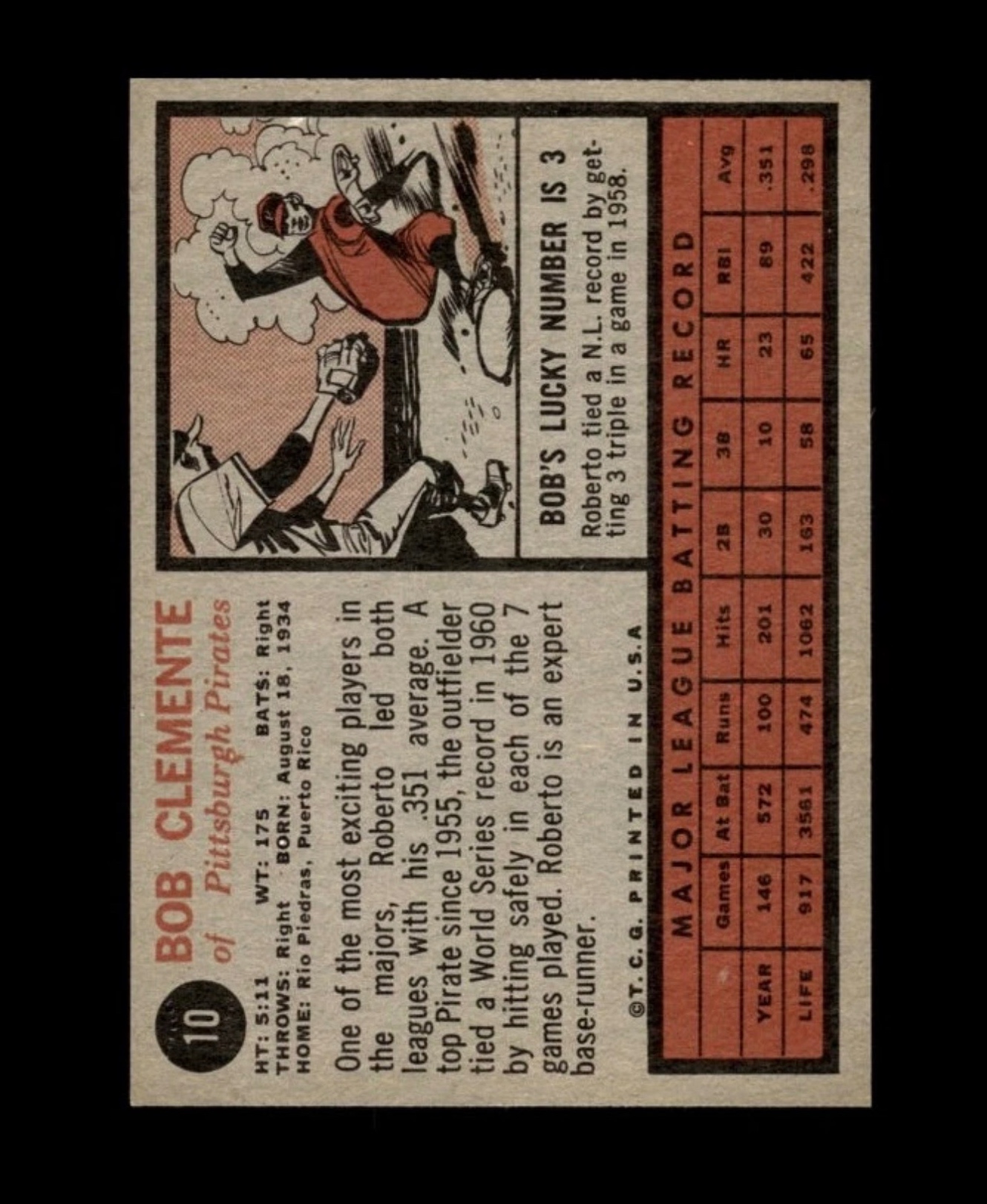
This card was first released in the 1960 Topps Baseball set, Topps' flagship baseball issue for that year, and the player image is identified by graded as 1960 Topps #326 Roberto Clemente.[1][5][6]
- graded identifies the card as 1960 Topps #326 Roberto Clemente, while some hobby references and user prompts incorrectly cite it as card number 10; the verified catalog number for the Clemente in this set is #326.[1][5][6]
- High-grade copies are difficult to find: graded shows a population of 49 at MINT 9 and no GEM-MT 10 in its posted price table, indicating strong scarcity at the top end.[1]
- The card is considered one of Clemente's key vintage cards and a cornerstone piece for Pirates and Hall of Fame player collections.[6][7][8]
Rarity and print run
- Tier
- Common
- Print run
- Very High
- First printed in
- 1960 Topps Baseball
- Demand
- Very High
- Supply
- Medium
- The base issue was mass-produced by Topps, so the card itself is not rare in an absolute print sense.
- Top-grade examples are scarce because vintage Topps condition sensitivity reduces the surviving high-grade population.
- Collector demand is amplified by Roberto Clemente's Hall of Fame status and historical importance.
Collector notes
Condition. Common issues for this card include corner wear, edge chipping, print defects, centering problems, surface scuffs, and natural toning from age. Centering and sharp corners matter heavily for grade, and vintage Topps cards from this era are especially sensitive to slight edge wear and off-center printing.[1][5][8]
Storage. Store the card in a penny sleeve and rigid top loader or semi-rigid holder, then keep it in a cool, dry, dark environment with stable humidity. For long-term protection, avoid PVC plastics, direct sunlight, and frequent handling; use an archival box or graded slab for higher-value copies.
Authenticity. Verify the exact card number, design, and stock characteristics against known 1960 Topps examples, since reprints and altered cards can exist. Authentic vintage cards should show appropriate age wear, period-accurate print quality, and consistent paper stock; any unusually sharp surface gloss, modern print dots, or incorrect text/layout should be treated as suspicious. Third-party grading is strongly recommended for expensive examples.[1][5]
Sources: psacard.com, youtube.com, sportscardinvestor.com, sportscardspro.com, deanscards.com