Market outlook
Stable Outlook 8/10
The card is already a mature, heavily traded vintage key card with strong long-term collector demand. Prices can fluctuate based on grading population, auction timing, and condition premiums, but the underlying demand for Seaver rookies remains durable.[1][4][6]
Next months. Likely to remain stable to slightly volatile, with premium examples continuing to command strong prices when high-grade copies surface.
Long term. Likely gradual appreciation over 1-3 years, led by strong demand for authenticated high-grade examples and continued interest in iconic vintage rookie cards.
History
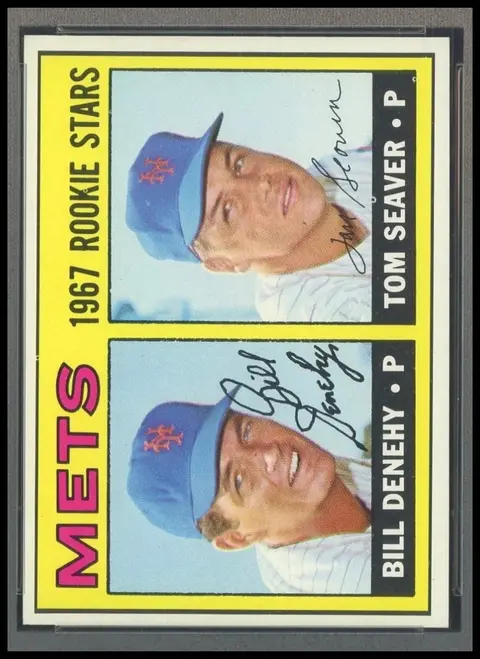
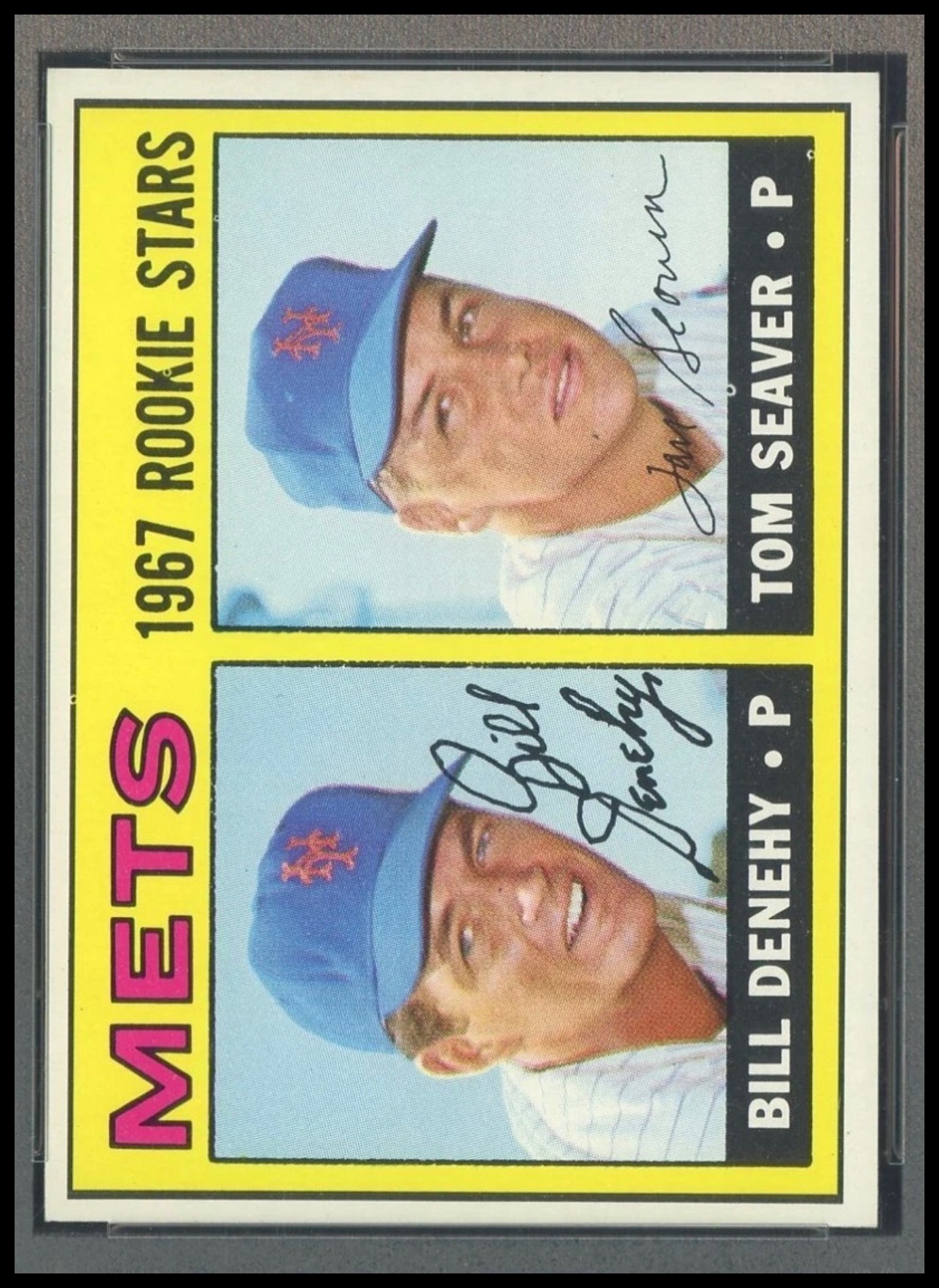
Tom Seaver was a Hall of Fame right-handed pitcher who became one of baseball's defining stars of the late 1960s and 1970s, winning the 1967 National League Rookie of the Year award and later building a career that made him the key rookie-card name in the 1967 Topps high-number series. Bill Denehy was a New York Mets pitcher whose inclusion on the card reflects the common Topps practice of pairing a marquee prospect with a lesser-known teammate on a shared rookie card. The card is significant because it is recognized as Seaver's only mainstream rookie card and one of the key cards in the entire 1967 Topps issue.[1][4]
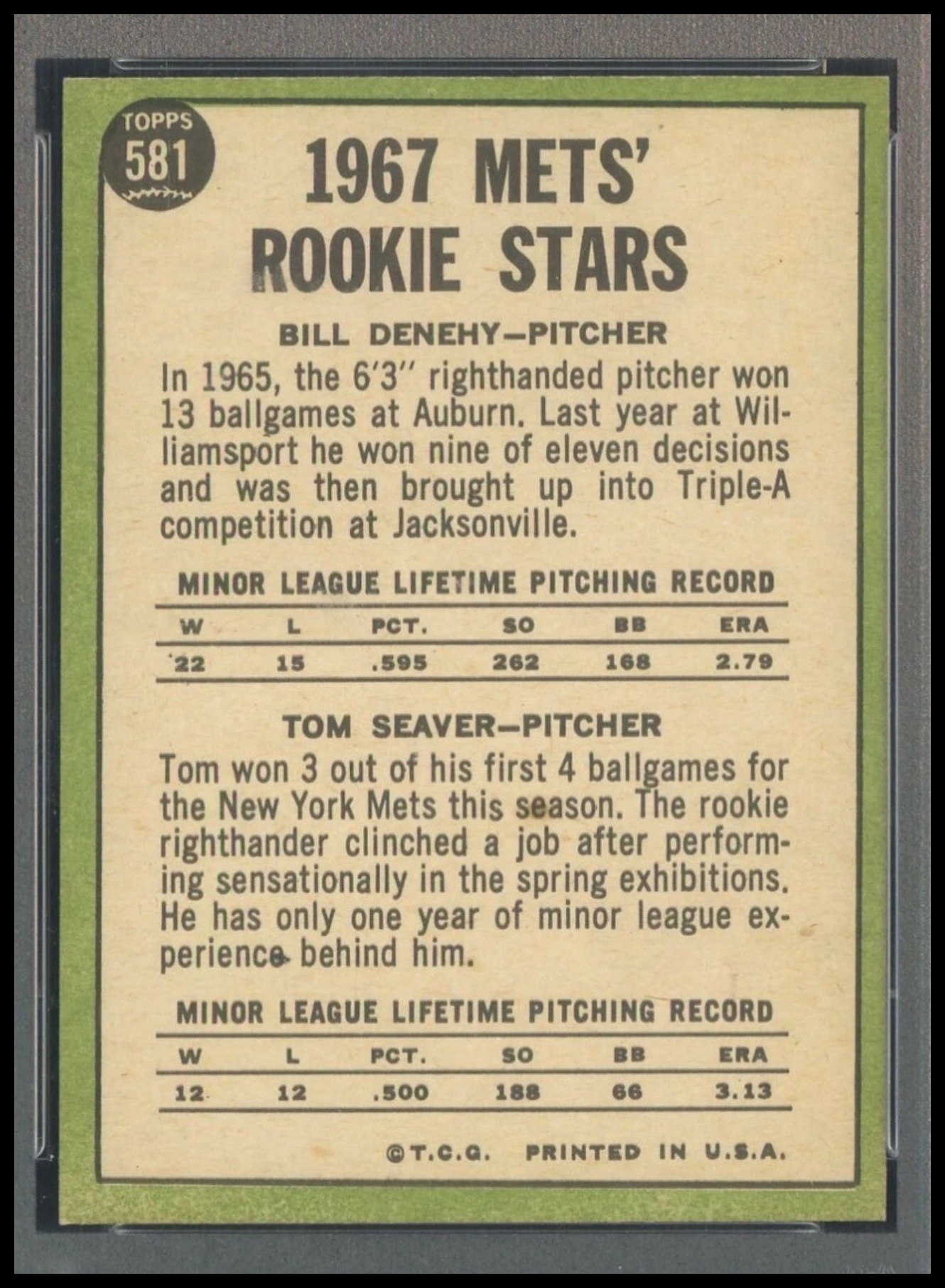
First released in the 1967 Topps Baseball set, card #581, in the high-number series (cards 534–609), issued by Topps in 1967 as part of its standard U.S. baseball card distribution.[1][4]
- This is Tom Seaver's only recognized mainstream rookie card.[4]
- Card #581 is the key rookie card of the 1967 Topps set and is the most valuable card in the issue by a wide margin.[1]
- The card is a shared rookie card, pairing Seaver with Mets teammate Bill Denehy, which was a common Topps format for the era.[1][4]
Rarity and print run
- Tier
- Common
- Print run
- Very High
- First printed in
- 1967 Topps Baseball
- Demand
- Very High
- Supply
- Medium
- It is not a short-printed or low-distribution card; the rarity comes from condition scarcity rather than print scarcity.
- High-number cards can be tougher to locate in top grade due to centering and border wear.
- Counterfeit risk increases perceived scarcity for authenticated high-grade copies.
Collector notes
Condition. Centering is the biggest issue, especially because the front borders are narrow and the back has a green border that shows edge wear and chipping easily. Corners, print registration, surface gloss, and back-edge whitening should be checked carefully. High-grade copies are notably difficult to find well centered.[1][4]
Storage. Store the card in an archival penny sleeve and semi-rigid holder or top loader, then keep it in a cool, dry, low-light environment. Avoid PVC materials, humidity, and repeated handling, since the borders and green reverse wear quickly on vintage Topps stock.
Authenticity. Counterfeits and reprints exist, so authentication is important. Genuine examples should have period-correct stock, print quality, and a solid black signature print without the shadowing seen on known fakes; inconsistent weight and stock are also warning signs. Slabbed examples from major grading services are preferred for high-value copies.[3]
Sources: psacard.com, steinersports.com, cgccards.com, oldsportscards.com, sportscardspro.com