Market outlook
Stable Outlook 7/10
Demand should remain supported by Carew's Hall of Fame status and the enduring popularity of vintage Topps, but the card's very high original print volume limits scarcity-driven appreciation.
Next months. Expect stable pricing with occasional spikes for high-grade, well-centered copies.
Long term. Likely gradual appreciation over 1-3 years, especially for graded/graded/graded-graded examples with strong centering and eye appeal.
History
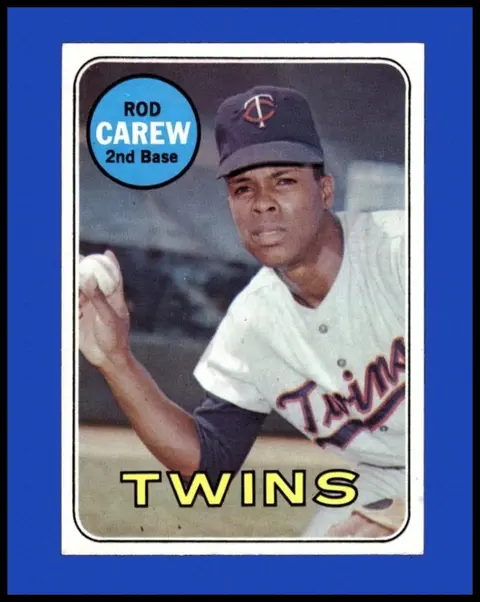
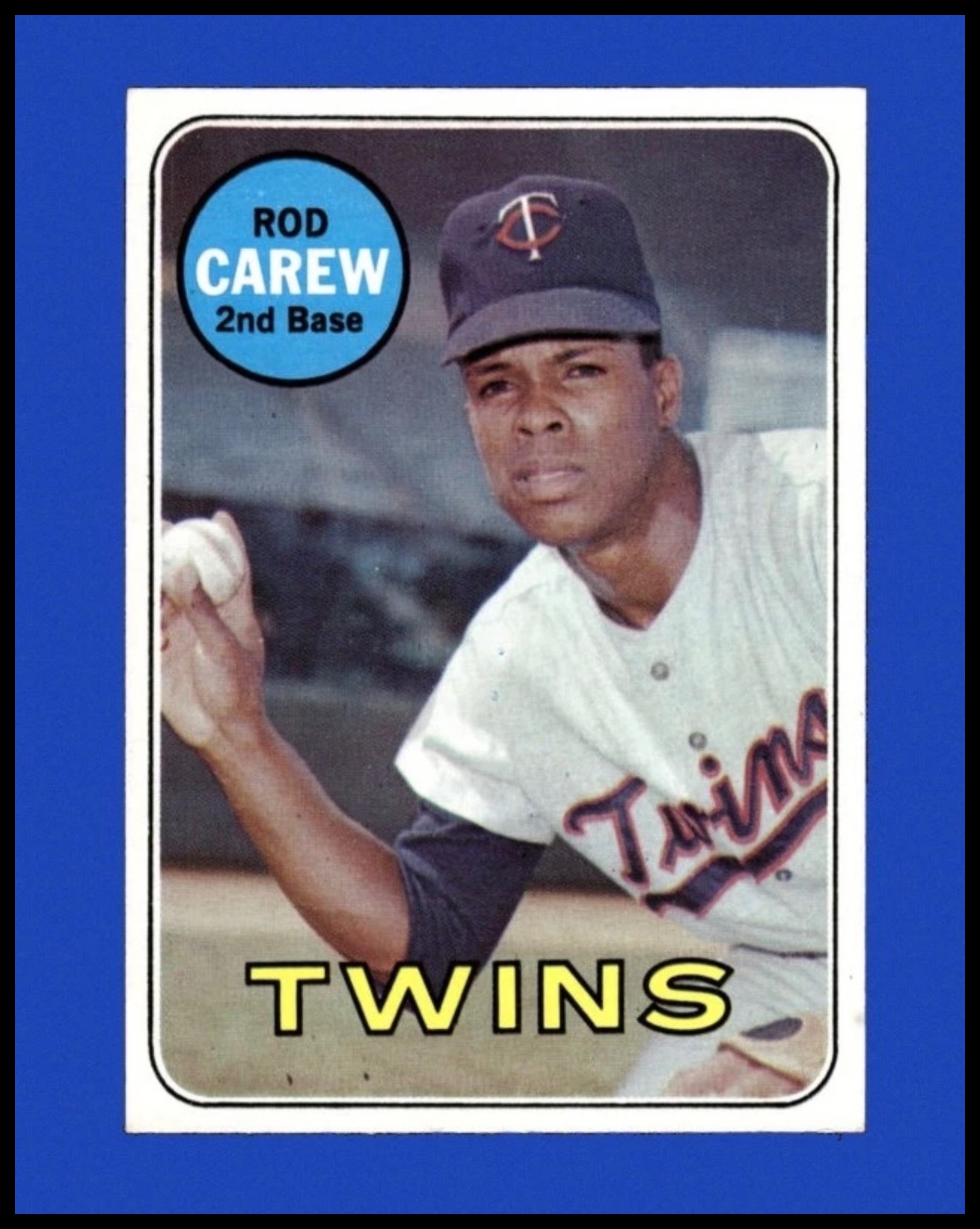
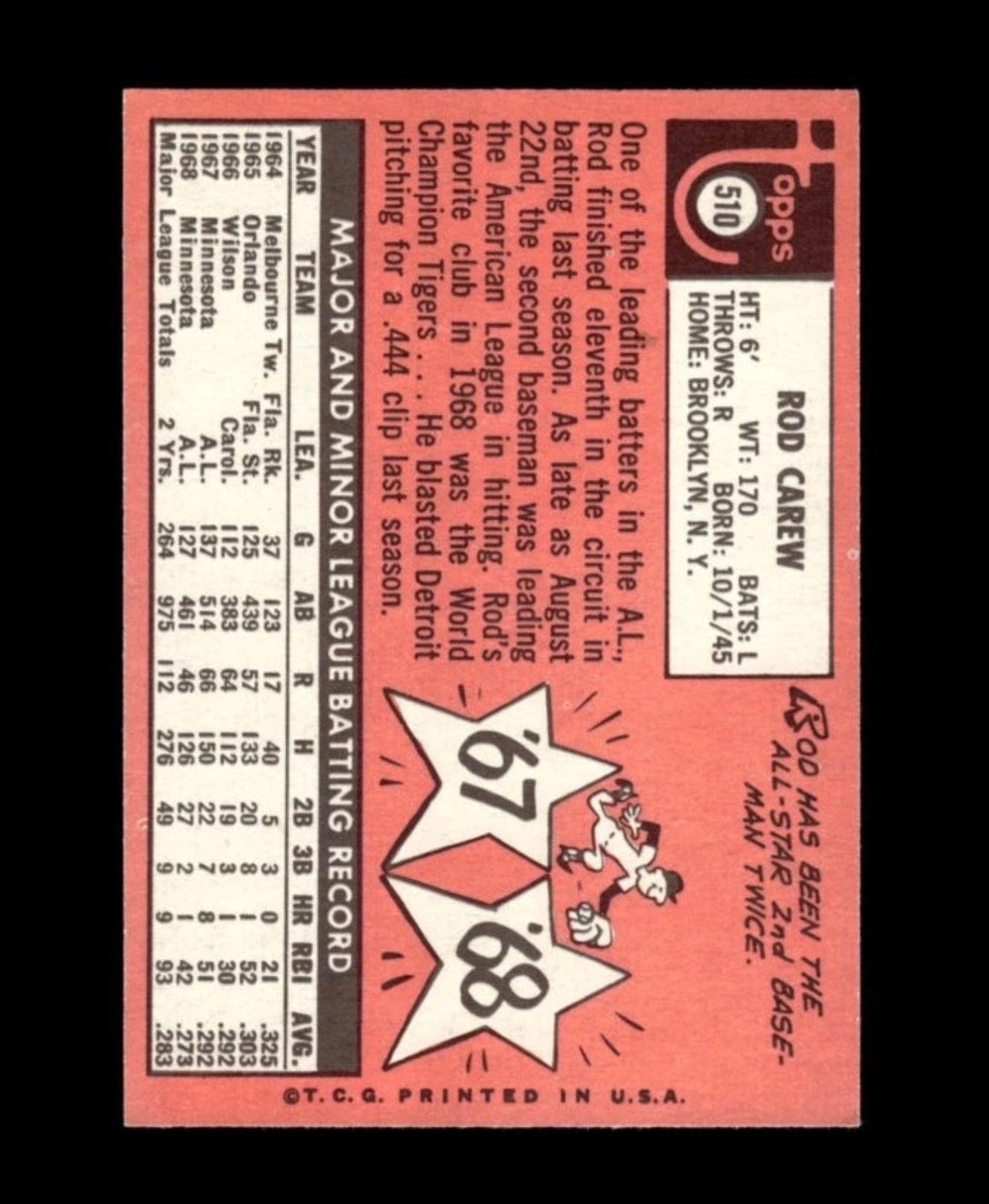
Rodney Cline Carew was a left-handed hitting infielder and first baseman who became one of the premier contact hitters in Major League Baseball. He was elected to the National Baseball Hall of Fame in 1991, and his career totals include a .328 batting average, 3,053 hits, 1,424 runs, 1,015 RBI, and 353 stolen bases.[1] As a card subject, Carew is significant because the 1969 Topps card captures him in the early phase of a Hall of Fame career, before he became a perennial batting champion and franchise icon.
The card was first released in the 1969 Topps Baseball set, Topps’ annual major league baseball card issue for the 1969 season.[6] It was distributed in the United States through Topps wax packs and vending/case product typical of the era; the card is cataloged as #510 and identified with the Minnesota Twins.[6]
- This is Rod Carew's 1969 Topps base card, numbered #510.[1][2][6]
- Carew was elected to the Baseball Hall of Fame in 1991.[1]
- The card is one of the more desirable 1969 Topps player cards because Carew became a Hall of Famer and an all-time great contact hitter.[1][5]
Rarity and print run
- Tier
- Common
- Print run
- Very High
- First printed in
- 1969 Topps Baseball
- Demand
- High
- Supply
- High
- It was issued in a mass-produced 1969 Topps flagship set.
- Survival in high grade is harder than raw availability suggests because centering and corner wear are common.
- Collector demand is driven more by player significance than by true print scarcity.
Collector notes
Condition. Check centering carefully, since 1969 Topps cards are often off-center. Also inspect corners, surface gloss, edge chipping, print snow, stains, and any wax or gum-related discoloration. The white borders make corner wear and edge chipping especially visible.
Storage. Store in a penny sleeve inside a semi-rigid holder or top loader, keep in a cool dry place, and avoid humidity and direct sunlight. For long-term preservation, use archival-safe materials and consider a graded slab for higher-grade examples.
Authenticity. Authentic cards should show period-correct 1969 Topps paper stock, print texture, and aging consistent with vintage cardboard. Reprints often look too sharp, too glossy, or too white at the edges. Compare font, border width, and image clarity against known examples; for higher-value copies, third-party grading is the safest authentication route.
Sources: psacard.com, sportscardspro.com, sportsmemorabilia.com, sportlots.com, sportscardinvestor.com