Market outlook
Stable Outlook 4/10
The card has steady nostalgic demand but limited competitive relevance, and the low raw price suggests a mature market rather than strong growth. Any appreciation is likely to come from graded scarcity and collector interest in early structure-deck Ultra Rares rather than gameplay demand.[2][4][6][12]
Next months. Likely to remain stable with small fluctuations tied to graded sales and occasional collectible demand.
Long term. Over 1-3 years, modest gradual appreciation is possible for high-grade copies, while raw copies should stay in a low-price range unless broader early Yu-Gi-Oh! structure deck interest increases.
History
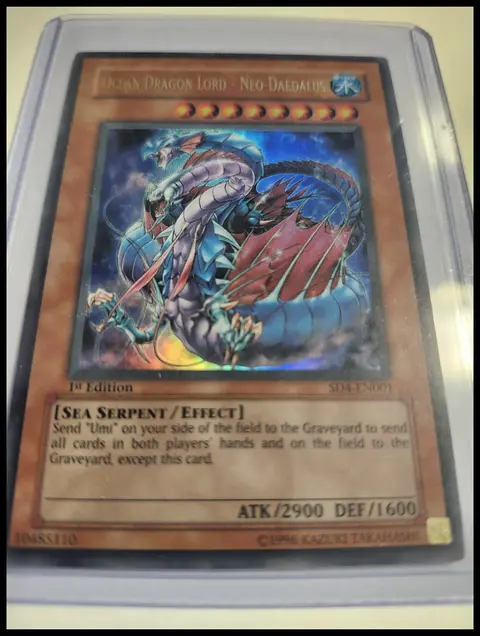
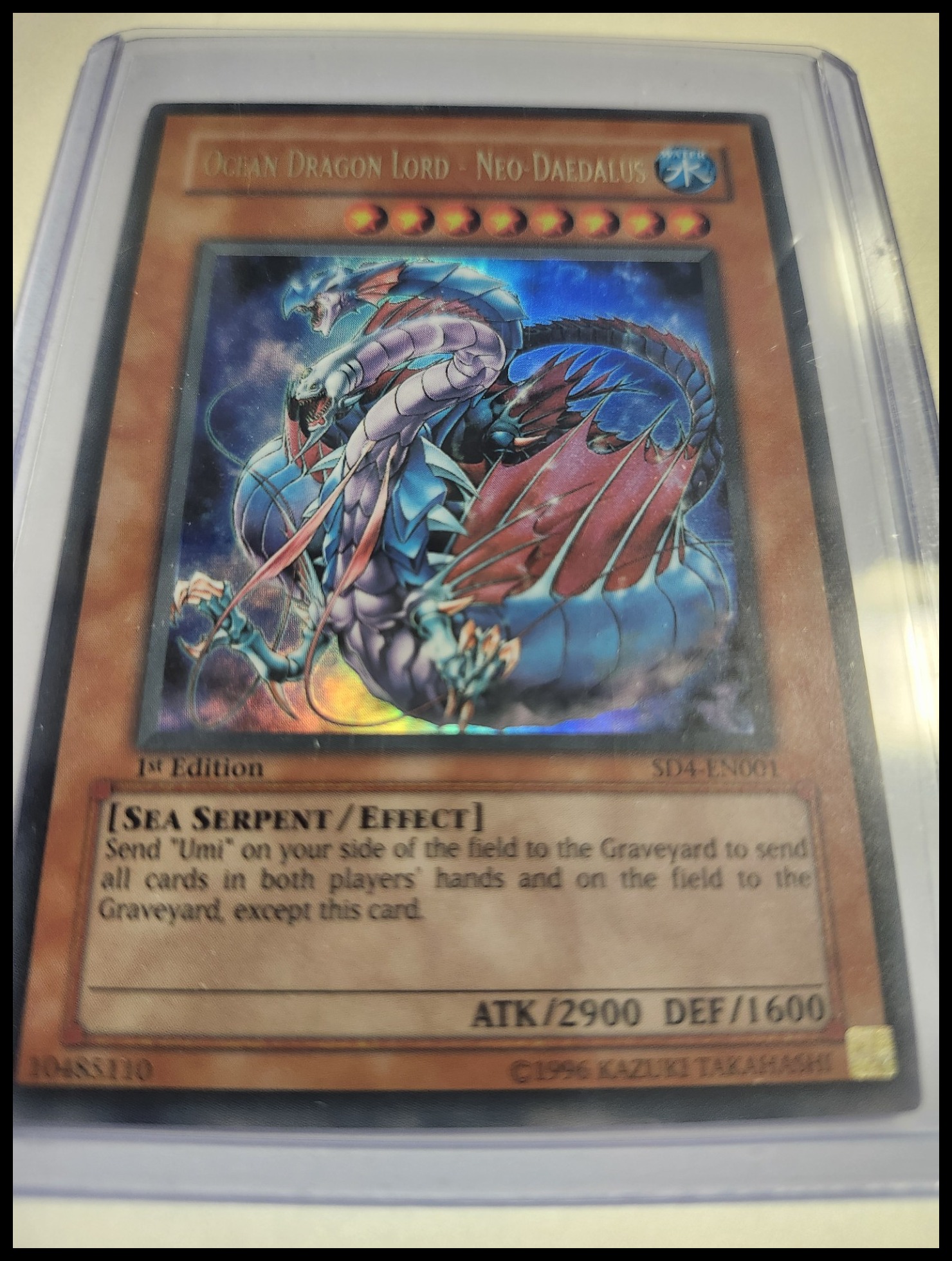
Ocean Dragon Lord - Neo-Daedalus is a Yu-Gi-Oh! Sea Serpent monster associated with the 'Daedalus' line of WATER support, originally tied to the anime/manga-style ocean and Umi strategy and later represented in character form in Yu-Gi-Oh! games and related media.[3][13][15] It is an upgraded evolution of Levia-Dragon - Daedalus and is designed around the iconic field spell Umi, reflecting the series’ recurring Atlantian/oceanic mythos.[1][3][9]
The card was first printed in English as SD4-EN001 in Structure Deck: Fury from the Deep, released on 2005-05-09.[1][3][7]
- It cannot be Normal Summoned or Set, and it can only be Special Summoned by Tributing 1 'Levia-Dragon - Daedalus'.[1][3][5][9]
- Its effect can send Umi you control to the Graveyard to send all cards in both players’ hands and on the field to the Graveyard, except this card.[1][3][5]
- The card’s English printing is Ultra Rare and identified as SD4-EN001; some sources and marketplace listings note the 1st Edition version.[2][4][5]
Rarity and print run
- Tier
- Ultra Rare
- Print run
- Medium
- First printed in
- Structure Deck: Fury from the Deep
- Demand
- Medium
- Supply
- Medium
- Only one known English printing in the cited data
- Pulled from a 2005 structure deck rather than a large booster set
- High-grade copies are harder to find because foil surface wear is common
Collector notes
Condition. Check the usual structure-deck wear points: whitening on corners and edges, edge chipping, surface scratches on the holofoil, print rub on the Ultra Rare foil area, and any bowing or warping from storage. On sealed/opened structure deck pulls, centering and clean borders matter because Ultra Rare foil can hide scratches under light.[2][4]
Storage. Store the card in a penny sleeve and rigid top loader or semi-rigid holder, keep it away from humidity and direct sunlight, and avoid repeated handling of the foil face. For graded-grade candidates, use clean sleeves and minimal friction to preserve the holo surface and corners.
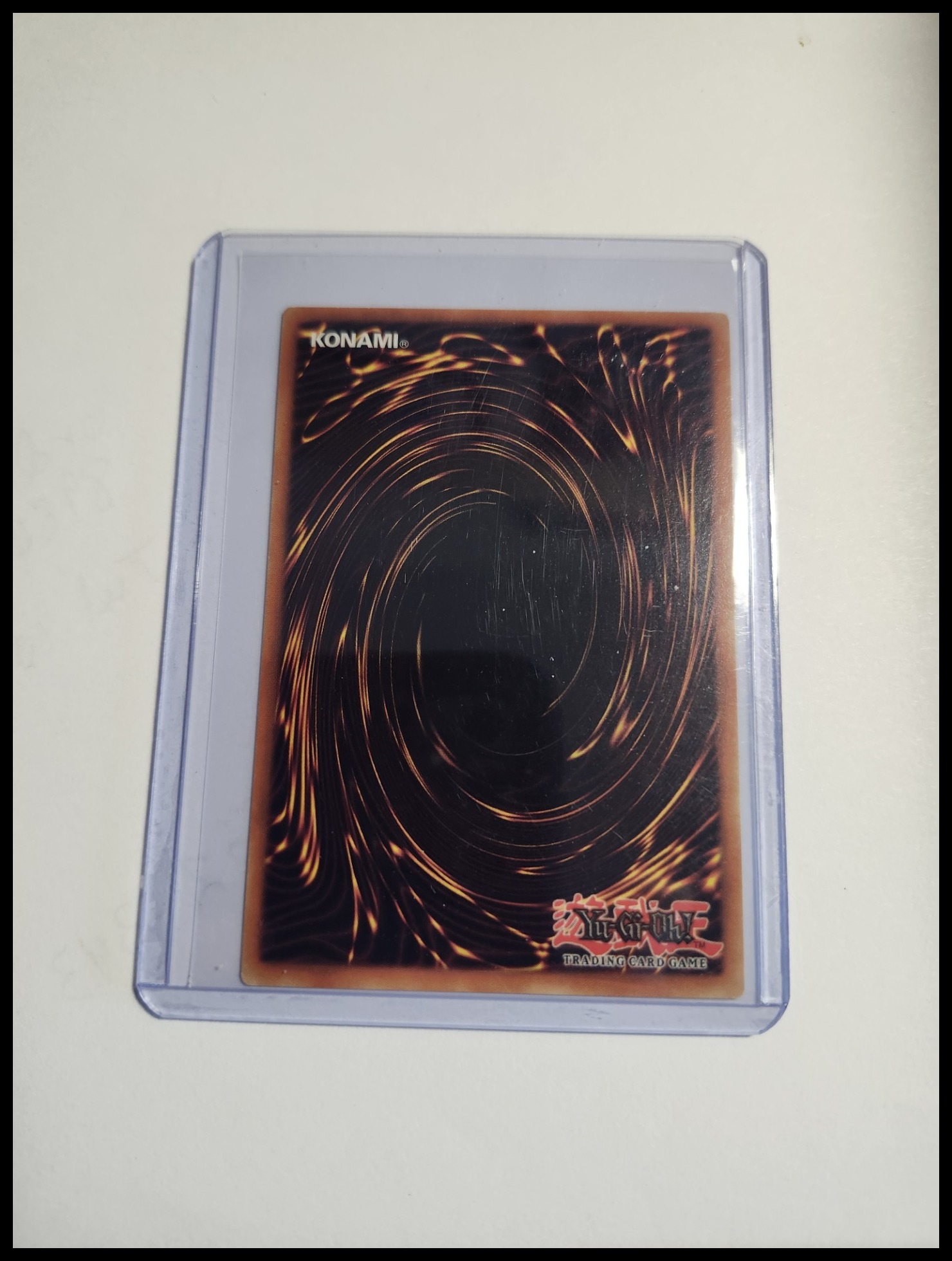
Authenticity. Verify the set code SD4-EN001, the Ultra Rare foiling pattern, and Konami card back/stock texture consistency. Authentic copies should match official card text, passcode 10485110, and the standard English structure deck layout; unusually sharp or blurry print, incorrect font weight, wrong foil pattern, or poor cardstock feel are common counterfeit indicators.[1][2][5]
Sources: yugiohcardguide.com, thegametraders.com, yugipedia.com, pricecharting.com, amazon.com